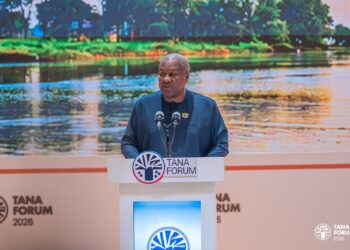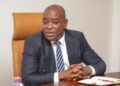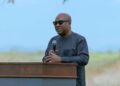
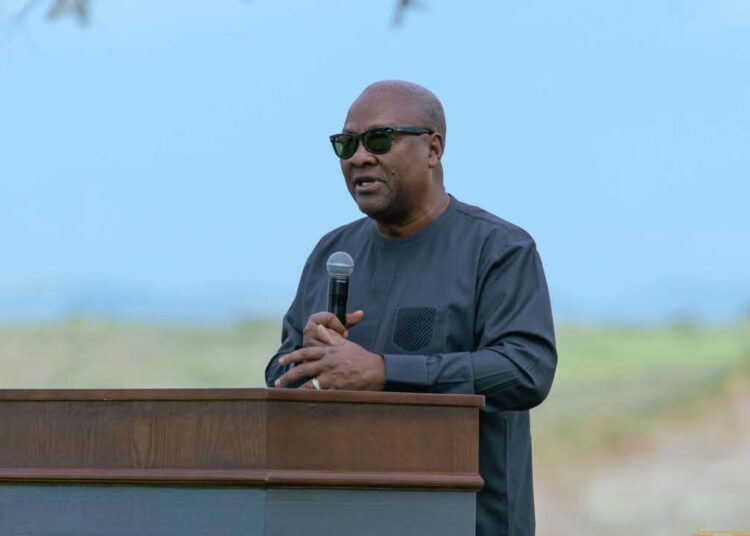
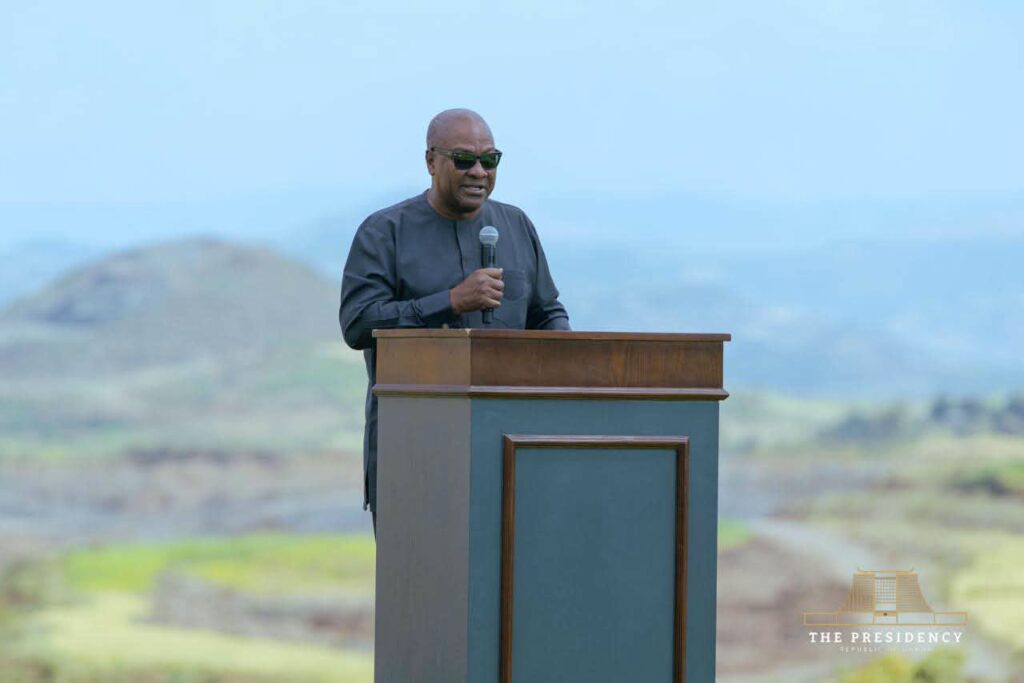
President John Dramani Mahama has opened the 12th Tana High-Level Forum on Security in Africa in Bahir Dar, Ethiopia, with a declaration that Africa must help itself. He addressed delegates as Chairperson of the Tana Forum at the gathering on the shores of Lake Tana.
President Mahama explained that lasting peace depends on economic sovereignty, which he tied to his Accra Reset agenda of processing raw materials at home, building industrial capacity and making the African Continental Free Trade Area work.
He argued that a fragmented global order leaves Africa no room to stand aside, and that the continent must look first to its own strength.
“Sustainable peace in Africa can be built only on the bedrock of African ownership, lived realities, and continental agency.”
President John Dramani Mahama
Return to the Source of the Blue Nile
President Mahama welcomed delegates back to the forum’s traditional home on the shores of Lake Tana, the source of the Blue Nile. The return, he explained, reconnects the forum with its founding vision and recaptures the flavour of an African village gathering under an ancient baobab tree, where communities reflect on matters that affect them.

He described Tana as “an authentic, uninhibited African space for candid reflection, strategic foresight, and sovereign solutions.” For over a decade, he noted, the forum has given the continent a platform to debate peace, governance and security away from rigid diplomatic formality.
This year’s theme, Pathways to Peace in Africa, Economic Sovereignty, and Geopolitical Transformation, speaks to the defining challenge of the era, President Mahama stated.
He pointed to heightened geopolitical rivalries, competition for strategic critical minerals, volatile supply chains and unprecedented technological disruption, all of which are redefining the global order.
In that setting, he insisted, Africa “cannot remain a passive bystander, nor can we allow our continent to become an arena for external contestation.”
He drew on an African proverb to make a point about method. Many roads lead to the market, which means there are many ways to solve a problem. Africa’s diverse experiences, institutional motivations and collective demographic strength offer several pathways to peace.
Economic Sovereignty as the First Line of Defence
President John Dramani Mahama then set out the link between money and security. “Durable security requires economic justice, and lasting peace requires economic sovereignty.”
He tied that principle to the Accra Reset, which he described as a conscious, systemic shift away from structural dependency, debt traps and unfair international financial architecture. “Peace in Africa cannot survive on borrowed stability or conditional aid,” he stated.
The Reset asks African states to restructure their economies, process raw materials at home, build domestic industrial capacity and secure food and energy sovereignty. It also asks the continent to turn the African Continental Free Trade Area from a legal blueprint into a working engine of shared prosperity.
Young people sit at the centre of that argument. “When our youth are economically disenfranchised, peace remains fragile,” President John Dramani Mahama noted. He concluded that economic sovereignty is “the first and most critical security buffer that we must seek.”
Solidarity With the Global South
The President called on Africa to mobilise and align with the wider global South. Together with partners across Latin America, Asia and the Caribbean, he argued, the continent should demand equitable reform of the multilateral system and of global governance institutions.
He grounded the call in numbers of a different kind. “In an increasingly multipolar world, our strength lies in our collective solidarity,” President John Dramani Mahama stated.
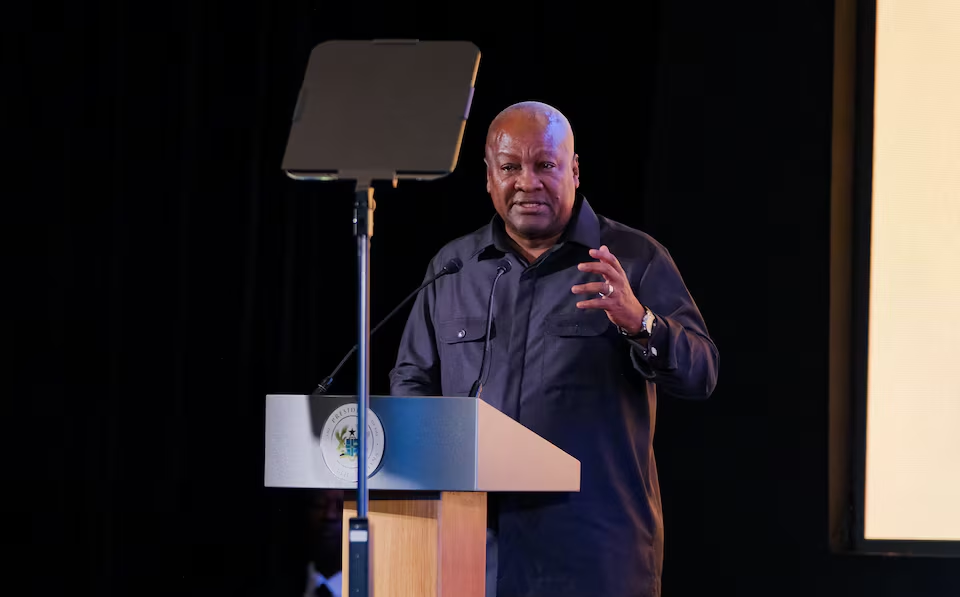
President Mahama insisted that outside partnerships cannot replace home effort. He stressed that “even as we engage outward, our primary strategic focus must be internal.” That line carries the message of his opening, and it frames the forum as a place to settle what Africans can do for themselves before they ask what others can do for them.
He closed by inviting delegates to sit together under the baobab tree, reflect together and resolve together to secure an Africa that is self-reliant, peaceful and sovereign. He welcomed them to Bahir Dar once more, thanked them and wished them fruitful deliberations over the days ahead.
READ ALSO: PIAC Report Exposes Gaps in Ghana’s Oil Revenue Accountability