The General Secretary of the Judicial Service Staff Association of Ghana (JUSAG), Abdulai Yakubu, has warned that a single day of industrial action by judicial service workers could prevent a lot of cases from being heard across the country’s courts if the government fails to approve their outstanding 2026 salary adjustments.
Mr Yakubu explained that the association’s national executive council will proceed with the industrial action by the end of October if the required approvals are not secured. The planned action is as a result of ten months of waiting and repeated appeals for the government to address the salary review and related allowances.
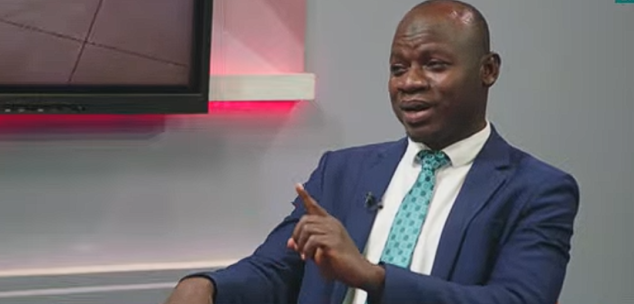
“We have over 400 courts across the country. In each case, a court will have its respective load of cases, let’s say an average of 10 cases a year. That translates to 4,000 cases per day. A single-day strike means that about 4,000 cases will not be heard.”
Abdulai Yakubu
The General Secretary of Judicial Service Staff Association of Ghana acknowledged that a strike judicial service workers could have “serious consequences for court users.” He estimated that, with at least two parties involved in each case, approximately 8,000 litigants could be affected by a single day of industrial action, alongside their lawyers.
The potential disruption, however, has not persuaded the association to abandon its demand for action on the outstanding salary adjustments. Mr Yakubu explained that members have exercised restraint for ten months because of the essential nature of their duties, even as their concerns about the delay intensified.
He further observed that “morale of the staff has deteriorated, with employees frequently contacting association executives during working hours to enquire about the status of their salary approvals.” Such distractions illustrate the mounting frustration among workers who are uncertain about when the government would fulfill its assurances.
Meanwhile, the Judicial Service Staff Association of Ghana has notified the National Labour Commission and relevant government offices of its intended action in accordance with the Labour Act. The association has also communicated with the Office of the President, the Finance Minister, the Labour Minister, the Attorney-General and the Judicial Service.
Although the National Labour Commission has directed the Labour Minister to lead discussions involving the relevant institutions, Mr Yakubu believes the Office of the President should take the initiative because the approval rests with the President acting on the advice of the Judicial Council.
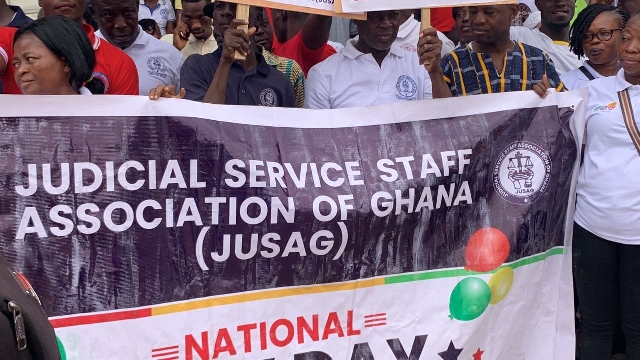
He emphasised that the association’s position reflects the mandate given by its members after months of waiting. Consequently, he called for a timely resolution to prevent the threatened action from disrupting court proceedings and affecting thousands of people who depend on the justice system.
JUSAG Secretary Demands Action On Outstanding Salary Adjustments
Ten months after other public sector workers began receiving their 2026 pay adjustments, employees of Ghana’s Judicial Service are still awaiting approval of their revised salaries and related allowances, according to the General Secretary of the Judicial Service Staff Association of Ghana (JUSAG), Abdulai Yakubu.
Mr Yakubu attributed the delay to the absence of presidential approval for recommendations submitted by the Judicial Council, explaining that judicial service salaries follow a different process from those of other public sector institutions.
“It is not reasonable for any labor union or leadership to sit down for 10 whole months without having a new condition of service and the staff have been complaining continuously.”
Abdulai Yakubu
The JUSAG General Secretary explained that the government concluded negotiations with organised labour in November 2025, resulting in a 9 percent increase in base pay for 2026. However, judicial service employees are yet to receive their corresponding salary review, despite the new arrangements taking effect for other public sector workers from January.
Mr Yakubu elucidated that the association’s conditions of service are governed by Article 149 of the Constitution, which requires the Judicial Council to advise the President on matters relating to judicial service salaries. He explained that the council submitted its recommendations for the necessary approval, but the process is yet to be resolved.
The formal notice issued by the Judicial Service Staff Association of Ghana (JUSAG) on October 23rd outlines the association’s intention to begin an indefinite strike on November 2 if its demands are unmet.
Representing judicial service employees, the association brings together staff who support the administration of justice, including court registrars, clerks, secretaries, bailiffs, typists and more. The notice, signed by General Secretary Abdulai Yakubu, sets October 31 as the deadline for approval of the 2026 salary review, with payment and arrears expected in November.
READ ALSO: Eco-Conscious Coordinator Demands Clarity On Government’s Anti-Galamsey Stance