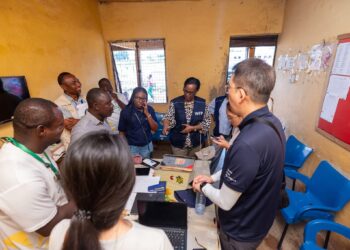
Ghana is intensifying efforts to expand domestic agricultural processing as part of a broader strategy to reduce its exposure to global commodity price fluctuations, retain more economic value locally and strengthen the competitiveness of its exports, Minister for Trade, Agribusiness and Industry, Elizabeth Ofosu-Adjare, has said.
The renewed push follows a sharp decline in international cocoa prices, which fell from approximately US$10,000 per metric tonne in early 2025 to about US$4,000 in early 2026, exposing the economic vulnerabilities associated with exporting raw agricultural commodities without sufficiently developing domestic processing industries.
Speaking at the opening of the EU-Ghana Agribusiness Exhibition Forum and Trade Mission 2026, Mrs Ofosu-Adjare said the experience had reinforced the need for Ghana to transition towards an industrialised agricultural economy in which more of the value generated from its primary commodities remains within the country.
“When global cocoa prices collapsed from their historic peak of US$10,000 per tonne in early 2025 to approximately US$4,000 by early 2026, it exposed with brutal clarity the vulnerability of an economy that exports raw commodities and leaves their value creation to others.”
Minister for Trade, Hon. Elizabeth Ofosu-Adjare
Cocoa Price Volatility Drives Industrialisation
The Minister explained that dependence on unprocessed commodity exports exposes Ghana’s agricultural economy to international market uncertainties, making farmers, exporters and the wider economy vulnerable to fluctuations in global demand and prices.
The development has strengthened government’s determination to increase domestic cocoa processing, with a target of processing at least 50 per cent of national cocoa production locally.
According to the Minister, Ghana already has installed cocoa-grinding capacity exceeding 500,000 metric tonnes, providing an industrial foundation for expanding the production of higher-value cocoa products.
The policy direction is also consistent with broader reforms in the cocoa sector. Government announced plans in February 2026 to allocate at least 50 per cent of cocoa beans for domestic processing from the 2026/27 crop season, alongside measures to strengthen local processing companies.
Export Performance Demonstrates Value Addition Potential
Hon. Ofosu-Adjare pointed to Ghana’s non-traditional export performance as evidence that processing agricultural and industrial products locally can strengthen foreign exchange earnings and diversify the country’s export base.
According to the Ghana Export Promotion Authority’s 2025 Non-Traditional Export Statistics Report, earnings from non-traditional exports reached approximately US$5.006 billion in 2025, representing a 30.7 per cent increase over the US$3.83 billion recorded in 2024.
The report identified processed and semi-processed products as major contributors to export earnings, with cocoa derivatives, including cocoa paste, butter and powder, maintaining a significant position in the export basket.
The growth demonstrates the commercial opportunities available when agricultural commodities are transformed into products that attract additional value in international markets.
Minister for Trade, Hon. Elizabeth Ofosu-Adjare
“The result of this pivot towards value addition is already visible in our non-traditional exports.”
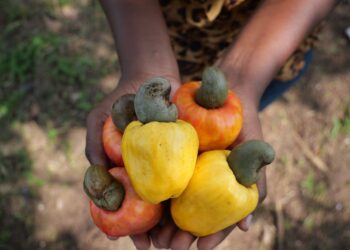
The Minister said Ghana must extend the same approach to other agricultural commodities, particularly cashew, fruits, vegetables, cassava, maize, rice and oil palm.
For instance, increased cashew processing could expand the production of kernels for international markets, while investments in fruit and vegetable processing could support juice production, concentrates, dried products and other packaged foods.
Similarly, developing processing capacity for cassava, maize and rice could strengthen domestic food manufacturing, reduce dependence on imported processed products and create additional markets for local farmers.
European Investment to Strengthen Processing Capacity
Mrs Ofosu-Adjare also disclosed that government, through the Ministry of Trade, Agribusiness and Industry and the Ghana Free Zones Authority, had commenced work on an industrial park at Afienya in Tema.
The facility is intended to provide an industrial location for investors interested in establishing manufacturing operations in Ghana.
“We are inviting European investors to move beyond traditional buyer-seller arrangements and consider joint ventures, processing facilities, technology transfer and supply-chain partnerships with Ghanaian businesses.”
Minister for Trade, Hon. Elizabeth Ofosu-Adjare
The proposed industrial park is expected to complement the country’s investment promotion efforts by providing opportunities for manufacturing companies seeking to establish operations closer to Ghana’s agricultural production and export infrastructure.
For European investors, partnerships with local businesses could provide access to agricultural raw materials, regional markets and Ghana’s growing non-traditional export sector.
Nevertheless, the success of these initiatives will depend on the availability of affordable financing, reliable infrastructure, consistent raw material supplies and an enabling regulatory environment.
Ghana’s agricultural transformation agenda therefore requires more than increasing production. It must also establish the industrial capacity to process, package and distribute agricultural products competitively.
“The direction is set, and it will not reverse,” he stated.
The Minister’s remarks underscore government’s position that domestic processing must become a central component of Ghana’s export development strategy.
With cocoa price volatility highlighting the risks of raw commodity dependence and non-traditional exports demonstrating the potential of value addition, the country is seeking to reposition agriculture as a stronger foundation for manufacturing, employment generation and sustainable export growth.
READ ALSO:Suame MP Accuses GoldBod CEO of Enabling Illegal Mining