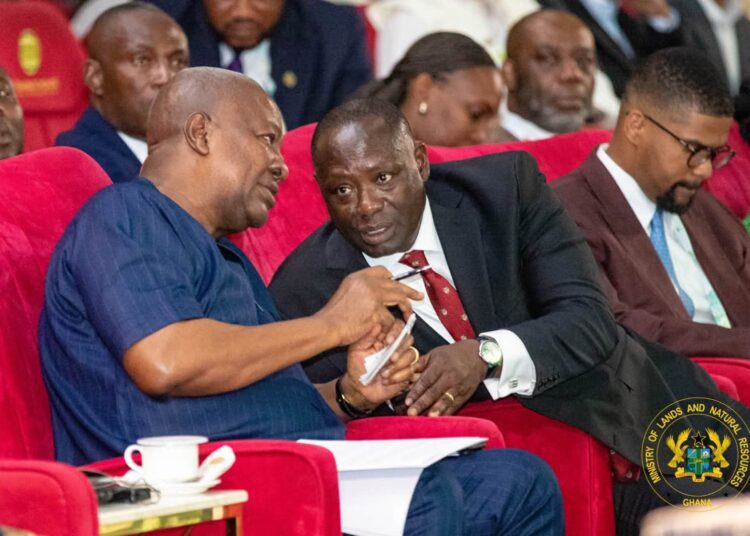
Lands and Natural Resources Minister, Hon. Emmanuel Armah-Kofi Buah announced that Ghana’s new mining law will establish District Mining Committees to prevent miners from arriving in host communities with Minerals Commission licences that local traditional leaders know nothing about.
The Minister explained that these committees form a central pillar of the Minerals and Mining Bill, 2026, which was laid in Parliament on May 26, 2026, and is slated for replacement with a revised version.
The minister stressed that the measure will enforce pre-licensing land-use checks, bridging the gap between national regulatory bodies and local traditional authorities while encouraging students to take a front-line role in combatting illegal small-scale mining, locally known as galamsey.
“Let’s have an agreement with the communities that in the next ten years, the mine is going to help us produce the next geologists and engineers from this village or mining community.”
Hon. Emmanuel Armah-Kofi Buah
Expanding on the legislative roadmap, the replacement draft will restore a 20-year cap on mining leases to address industry concerns while curbing long-term land speculation.
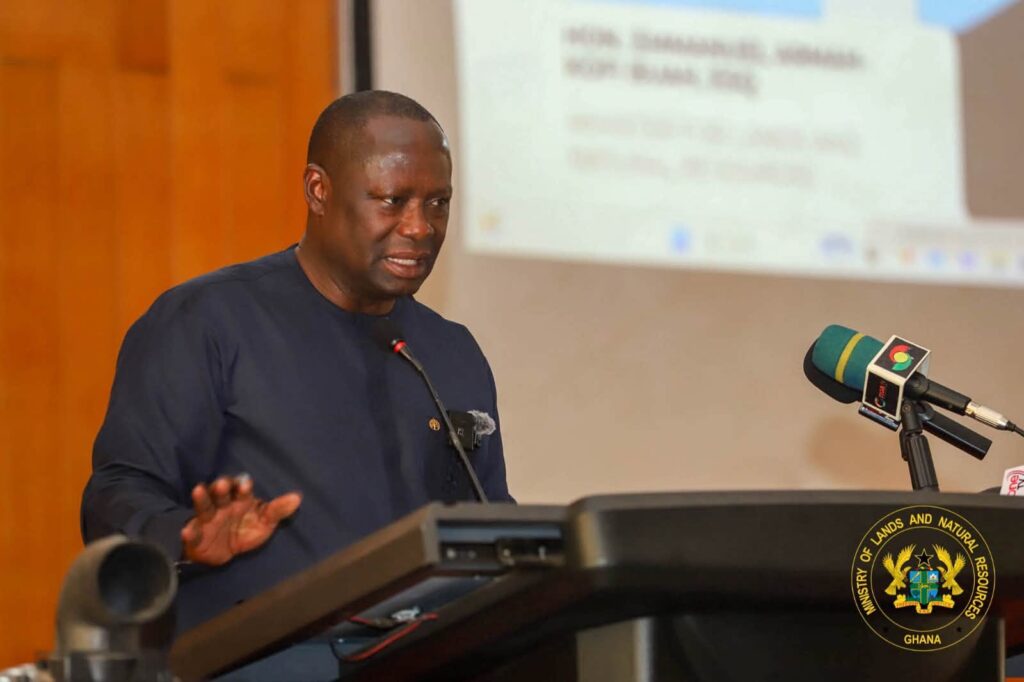
While Parliament’s register of bills confirms the original May draft proposed capping new leases at 15 years or the expected life of the mine, recent revisions follow earlier signals from Buah indicating that a 20-year ceiling offers a balanced timeline for investors and host communities.
Alongside lease duration caps, the legislative overhaul introduces mandatory Community Development Agreements directly tied to mining leases, requiring resource extraction companies to co-design infrastructure projects with local residents.
Furthermore, mining operators will face strict local training obligations to guarantee that native community members are qualified for technical employment over the lifespan of the mine.
Overhauling Exploration and Scrapping Reconnaissance Licences
Under the newly proposed framework, the Ministry of Lands and Natural Resources targets licence holders who secure vast tracts of mineral-rich land only to leave them unworked for years while searching for external investors.
To stop this practice, the government will abolish reconnaissance licences altogether, streamlining the exploratory phase into strictly monitored exploration licences.

These new exploration licences will carry an initial term of two years under specific operational conditions, expandable to a maximum five-year duration.
Crucially, any parcel of land where no commercial mineral deposits are discovered within that timeframe will automatically revert to host communities for agricultural purposes, ensuring productive land use is not permanently locked away by speculative mining entities.
Strengthening Fiscal Returns and State Special Ownership
The structural reforms in the Minerals and Mining Bill, 2026, extend directly into Ghana’s fiscal regime, replacing historic flat-rate royalties with a dynamic sliding scale.
Governed under the Minerals and Mining Royalty Regulations, 2025, royalties now range between 5 and 12 per cent, shifting fluidly in tandem with global commodity price spikes.
Buah noted at the KNUST seminar that this sliding-scale mechanism boosted state royalty receipts to GH¢7.82 billion between January and September alone.

He pointed out that previous regulatory frameworks allowed foreign operators to benchmark production costs at roughly US$1,800 per ounce, locking state revenues into fixed returns even as market gold prices soared to US$4,000 and US$5,000 per ounce.
Furthermore, the revised law tightens state ownership rules: companies failing to issue the Republic its mandatory free special share within two months will face financial penalties scaling up to the cedi equivalent of US$150,000, replacing the current US$10,000 cap.
The Imperative for Institutional Decentralisation and Local Inclusion
The urgency driving these statutory reforms stems from decades of structural disconnect between state regulators in Accra and resource-bearing districts across Ghana.
Previously, central issuance of mineral rights allowed holders of Minerals Commission licences to enter rural jurisdictions unannounced, frequently triggering severe land-use conflicts with indigenous farming families, traditional custodians, and local chiefs who had no prior notification or input into spatial planning.
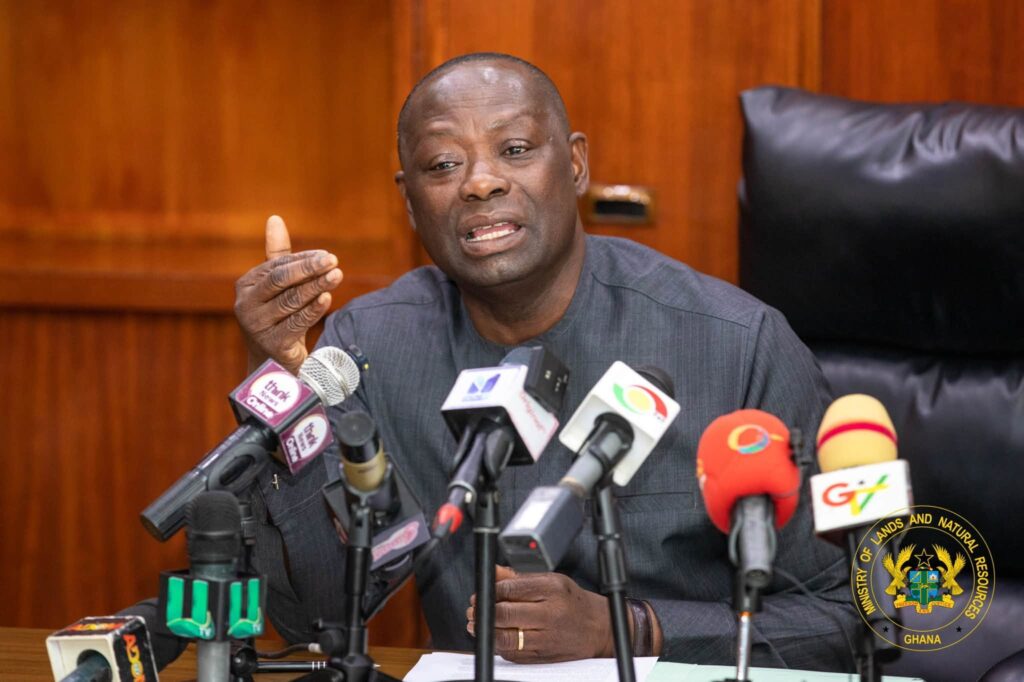
Establishing District Mining Committees directly answers the critical need for grassroots oversight, formal land verification, and environmental stewardship before heavy machinery arrives on site.
By embedding municipal authorities, traditional rulers, and local environmental officers into the approval process, the state addresses chronic regulatory loopholes, strengthens host community sovereignty, and builds a sustainable extractive economy anchored on mutual accountability.
READ ALSO: King Paluta and Fameye Collaboration Drops This Friday