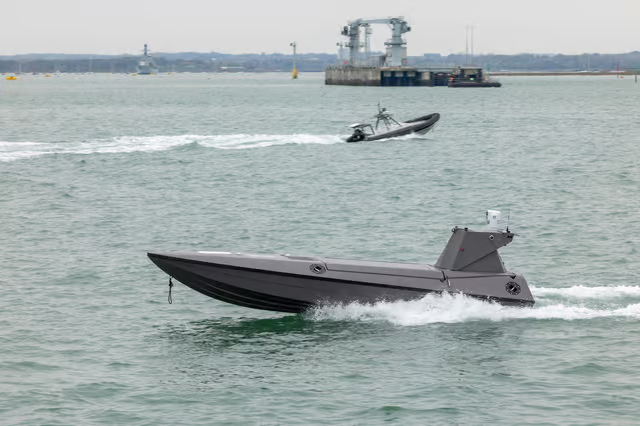
United Kingdom is strengthening its military capabilities against emerging security threats with the launch of the Royal Navy’s first autonomous squadron.
The 1st Autonomous Squadron, formally launched at Portsmouth Naval Base, comprises approximately 180 personnel tasked with operating uncrewed vessels in frontline military operations.
Defence Secretary Wes Streeting maintained that the investments reflect the growing importance of technological innovation in strengthening Britain’s national security and military readiness.
“The threat environment we are facing is fundamentally different from that of recent decades. A major determinant of military power now is who can innovate fastest.
“That’s why we are using the biggest sustained increase in defence spending since the Cold War to put the latest autonomous technology in the hands of our sailors, to help them protect our shores and those of our Nato allies.”
Wes Streeting
Royal Navy Advances Hybrid Fleet
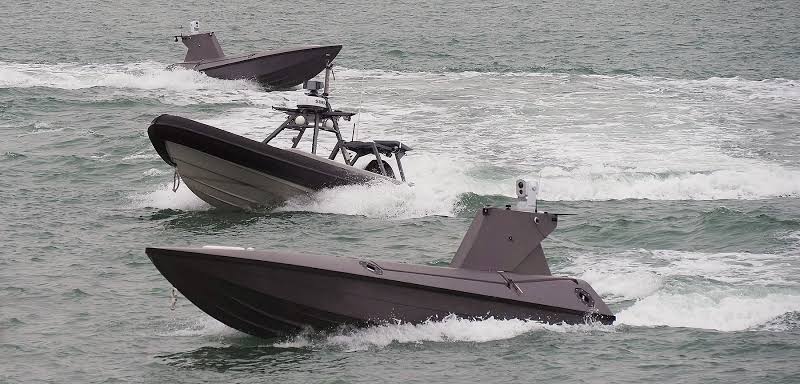
The Rattler training vessels have been developed to perform various naval operations and have already undergone trials escorting warships in Scotland, with the boats remotely piloted from approximately 500 miles away.
The Kraken K3 Scout boats, meanwhile, have an operational range of 600 miles, which can be extended to 1,100 miles. The vessels have also been tested off Britain’s south coast in force protection, surveillance and reconnaissance operations.
Royal Navy Fleet Commander Vice-Admiral Steve Moorhouse described the squadron’s establishment as an important development in the evolution of Britain’s maritime capabilities.
“For generations, the Fleet has been built around ships, submarines, and aircraft, manned by sailors and Royal Marines. From today, an autonomous squadron takes its place alongside them.”
Royal Navy Fleet Commander Vice-Admiral Steve Moorhouse
He explained that the increasing complexity of maritime security threats requires the Navy to adopt technologies that improve its operational reach, striking power and ability to respond to emerging challenges.
The initiative forms part of a wider £1.5 billion investment in developing a hybrid navy over four years, intending to make the Royal Navy more adaptable, resilient and capable of operating in increasingly contested maritime environments.
British Troops Deployed Overseas to Disrupt Cyberattacks

Alongside its investment in autonomous naval capabilities, Britain is expanding its cyber defence operations by deploying specialist military personnel overseas to identify and disrupt cyber threats before they reach critical infrastructure and military networks.
Major General Mike Fayers, Commander of the Defence Cyber and Electromagnetic Force, disclosed that the deployments involve specialist personnel known as a “hunt force” whose operations frequently require authorisation from Defence Secretary Wes Streeting.
The force conducts highly sensitive missions in countries that have agreed to the deployment of British troops, allowing personnel to investigate hostile cyber activity in locations where adversaries prepare attacks against UK military systems.
Explaining the approach in an interview, Maj Gen Fayers explained, “Whereas historically we have defended on our territory, we are now defending ourselves forward of our own networks.”
“We are trying to hunt for our adversaries in places where they prepare before they target UK military systems.”
Major General Mike Fayers
The operations involve physically deploying personnel to foreign locations to investigate cyber threats, with troops able to travel by land, boat, ship or aircraft. Their targets can include state-sponsored actors and criminal groups.
“We’ve seen AI now exploiting vulnerabilities at a speed we have not seen before. Whereas historically we would have had a few days to fix vulnerabilities, we are now in double-digit minutes to respond to those vulnerabilities.”
Major General Mike Fayers
His disclosure follows a series of cyberattacks targeting critical infrastructure and commercial operations across Europe.
In France, hackers recently targeted the country’s national blood bank, manipulating the temperatures of cold storage facilities and threatening the preservation of essential medical supplies.
Several supermarkets across Europe have also experienced cyberattacks targeting refrigeration systems, with hackers reportedly raising temperatures to as high as 80°C in some instances, resulting in significant food losses.
Rising Security Concerns Drive UK Defence Spending
The most recent military advancements speak to Britain’s rising concerns about the evolving nature of security threats, particularly the expanding use of artificial intelligence, autonomous systems, and cyber capabilities in modern conflict.
Earlier, the Ministry of Defence disclosed that it had faced about 90,000 cyberattacks from state-linked sources over the preceding two years, double the number recorded in the previous two-year period.
The Government has also intensified public discussions about national preparedness. Meanwhile, the Labour Government has committed to increasing defence expenditure to 3 per cent of gross domestic product (GDP) by 2030, although government officials are expected to provide further details on how the target will be financed at the next spending review.
The Government is also facing pressure to accelerate its defence spending commitments amid mounting concerns over Russia and the wider European security environment.
Defence Secretary, Wes Streeting maintained that “the more ready we are to fight and win, the less likely we are to have,” adding, “This investment strengthens our warfighting readiness and therefore our deterrence.”
READ ALSO: Security Consultant Urges Faster Drug Prosecutions and NACOC Resources