
Mining Consultant, Ing. Wisdom Edem Gomashie has warned that the government’s proposed three percent discount on artisanal and small-scale mining (ASM) gold purchases will severely erode miners’ earnings, projecting cumulative financial deductions to exceed GH¢10 billion by December 2028.
Introduced in the 2027 Budget Statement, the policy seeks to trim the state’s operational expenses in domestic bullion procurement by passing pricing adjustments directly onto small-scale producers.
The contentious deduction directly contradicts the National Democratic Congress (NDC) administration’s previous pledge to abolish taxes on small-scale gold output, a campaign promise initially fulfilled in the 2025 Budget when the 1.5 percent withholding tax was scrapped.
However, Ing. Gomashie argues that the subsequent creation of the Ghana Gold Board (GoldBod) has consolidated state monopsony power over local gold trading, stripping operators of independent bargaining leverage and enabling authorities to reintroduce fiscal burdens under an administrative label.
“This is thievery! GoldBod and Government are stealing from miners and depriving miners of the economic benefits of their hard-earned gold production.”
Mining Consultant, Ing. Wisdom Edem Gomashie
Fiscal Reversal and Loss of Bargaining Power
Prior to the 2025 fiscal reforms, small-scale operators navigated a 1.5 percent withholding tax maintained by the former New Patriotic Party (NPP) government, which former flagbearer Dr. Mahamudu Bawumia had proposed reducing to one percent.
By contrast, the NDC campaigned on total tax elimination to stimulate formal gold sales and curb illicit cross-border outflows.
While the repeal initially eased compliance pressures, the structural shift toward state-controlled procurement through GoldBod has fundamentally altered market dynamics for local miners.
Ing. Gomashie contends that imposing a three percent discount doubles the former tax burden, effectively functioning as a disguised levy that reduces real farm-gate payouts for hardworking miners.
Expressing deep frustration over the policy pivot, he noted that “Miners have been misled,” emphasizing that operators who trusted the government’s tax-free commitment now face steeper deductions than existed under the prior regime.
Furthermore, the consultant questioned the transparency of the rollout, pointing out that no recognized small-scale mining association has publicly endorsed the arrangement or confirmed meaningful prior consultation.
Rationale Behind the GoldBod Pricing Intervention
From the Ministry of Finance and GoldBod’s operational perspective, the proposed three percent discount is designed to make domestic gold mobilization financially self-sustaining while reducing quasi-fiscal pressures on public finances.
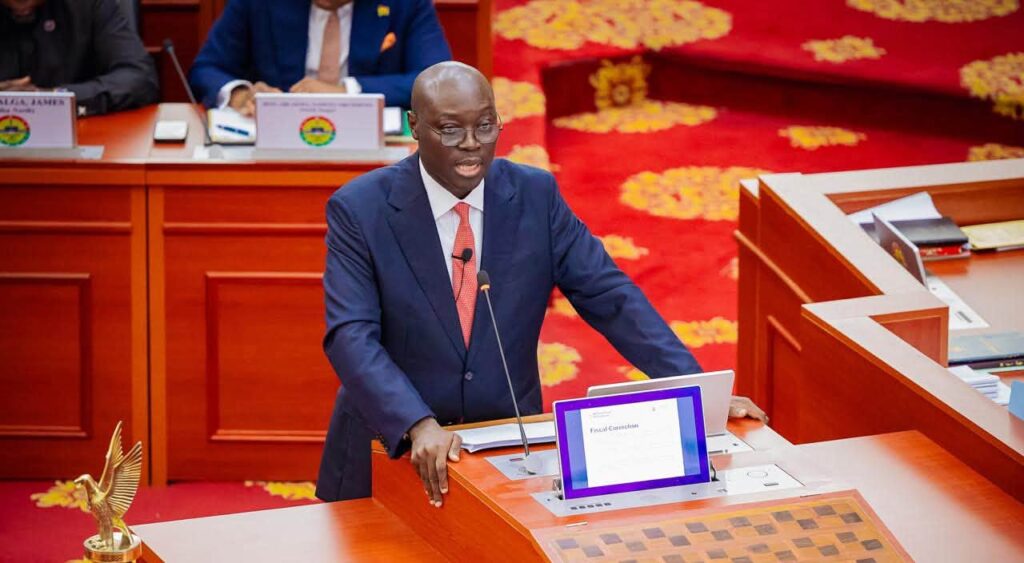
Presented to Parliament by Finance Minister Dr. Cassiel Ato Forson, the initiative aims to lower the baseline cost of generating foreign exchange and accumulating international reserves through local gold purchases from five percent in 2026 to two percent in 2027.

Government data indicates that baseline procurement and reserve accumulation costs previously stood at 16 percent in 2025 before declining to five percent in 2026 following GoldBod’s takeover of doré gold purchasing operations from the Bank of Ghana in April 2026.
The International Monetary Fund (IMF) had similarly flagged operational expenses including assay charges, service fees, trading margins, and foreign exchange pricing differentials as key fiscal risks requiring urgent containment.
Authorities maintain that instituting a structured discount alongside plans to refine at least 70 percent of small-scale gold locally by December 2027 will preserve foreign exchange inflows and support cedi stability.
Risks of Smuggling and Burden-Shifting Allegations
Despite the state’s macroeconomic justification, Ing. Gomashie alleges that the policy unfairly transfers the financial weight of reported losses exceeding US$1.7 billion from GoldBod’s gold purchasing and trading operations onto the backs of small-scale miners.
Rather than absorbing trading inefficiencies or streamlining institutional overheads, the state appears poised to balance its books by discounting the spot value paid to domestic producers.
Industry analysts and the consultant alike warn that widening the gap between official GoldBod buying prices and international market rates carries severe unintended consequences for sector formalization.
When state-mandated deductions become punitive, licensed miners and aggregators face strong financial incentives to bypass formal buying centers in favor of illicit smuggling networks operating across porous borders.
To safeguard sector viability and protect Ghana’s hard-won gains in formal gold mobilization, Ing. Gomashie has urged the Ministry of Finance and GoldBod to abandon the three percent threshold.
Instead, he recommends adopting a modest, mutually agreed rate between 0.5 percent and one percent, ensuring that national reserve accumulation strategies do not undermine the livelihoods of domestic mineral producers or trigger a resurgence in black-market bullion trading.
READ ALSO: Afenyo-Markin Questions Removal of Big Six from New Banknotes