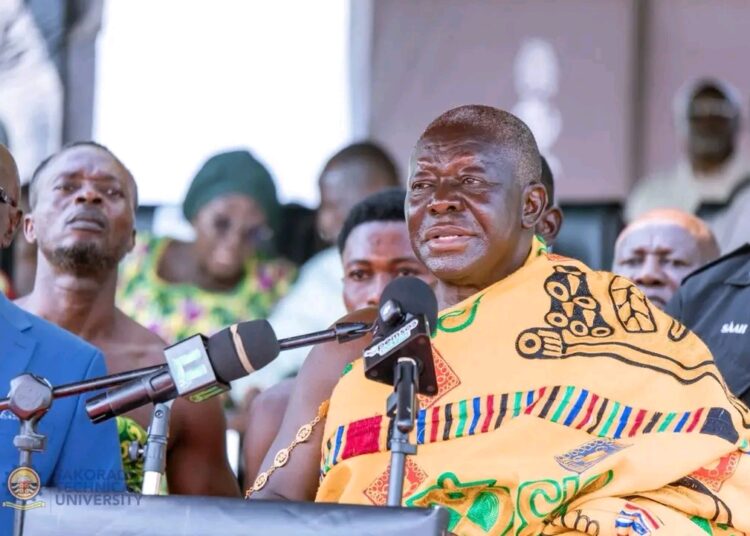
The Asantehene, Otumfuo Osei Tutu II, has challenged Takoradi Technical University (TTU) to strengthen practical, industry-oriented training and preserve indigenous craftsmanship to address Ghana’s shortage of middle-level technical skills.
He made the call on Monday, November 16, 2026, while delivering the keynote address at the Faculty of Applied Arts and Technology (FAAT) Open Day celebration at the Sam Tobbin Stadium in Takoradi.
Held under the theme, “Celebrating Heritage, Innovation and Excellence: A Tribute to Otumfuo Osei Tutu II’s Legacy,” the event brought together traditional rulers, government officials, academics and students to explore the relationship between cultural heritage, technical education and economic development.
The Asantehene maintained that Ghana’s progress in tertiary education must be matched by stronger investment in technical skills, particularly those required in construction, manufacturing and the creative arts.

“Your university has the opportunity to make a great impact upon the economy of the nation by taking the training of the technicians who will fill the skills gap hindering our development efforts.”
The Asantehene, Otumfuo Osei Tutu I
Otumfuo Tasks TTU with Addressing Technical Skills Shortage
Otumfuo Osei Tutu II observed that the shortage of skilled technicians continues to constrain Ghana’s productive capacity, making it necessary for technical universities to prioritise hands-on training and closer collaboration with industry.
He called on TTU to strengthen partnerships with manufacturers, fashion houses, galleries and cultural institutions to ensure that its programmes respond to the changing demands of the labour market. Such partnerships, he explained, should create opportunities for internships, apprenticeships, product development and the commercialisation of students’ work.
The concern reflects findings from a 2025 UNICEF and Ghana TVET Service assessment of skills supply and demand in the Ashanti Region. The study identified a mismatch between the competencies employers require and those possessed by job seekers, including weaknesses in practical and soft skills.

It also found that only one of 57 pre-tertiary TVET institutions assessed offered agricultural training, despite demand for agro-processing skills, while only four provided ICT-related training. The findings reinforce the need for technical institutions to align their curricula with industry requirements and equip graduates with skills that can translate into employment and enterprise development.
Indigenous Heritage Must Inspire Modern Innovation
Beyond technical training, the Asantehene urged the University to integrate indigenous knowledge and traditional craftsmanship into contemporary education, research and production. He argued that Ghana’s cultural heritage should not be preserved merely as a reminder of the past but should serve as a resource for innovation, design and commercial enterprise.
“Our heritage should be a foundation on which we build. We can protect valuable traditions while allowing them to inspire contemporary designs, technology, research and enterprise,” he stated.
Otumfuo Osei Tutu II, Asantehene.
He encouraged students and lecturers to explore how traditional symbols, textiles, sculpture and craftsmanship could be enhanced through digital modelling, computer-aided design and three-dimensional printing. The Asantehene also challenged students to develop entrepreneurial competencies and move beyond preparing solely for conventional employment.
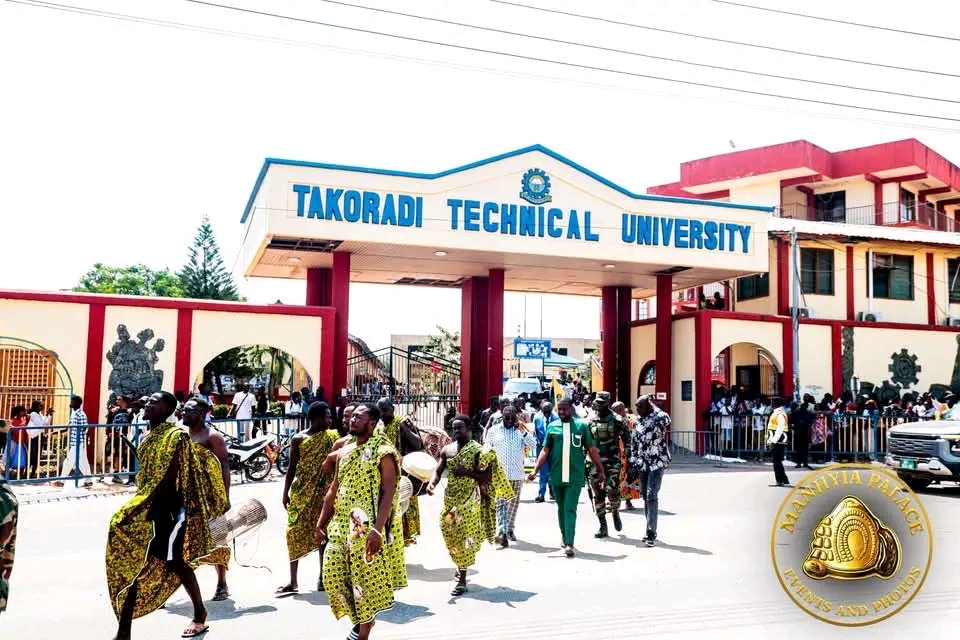
“Students should be prepared not only to seek jobs, but also to create employment, enterprises and cooperatives,” he added. He further urged the University to measure the success of its exhibitions by the partnerships, commercial products and businesses that emerge from students’ projects.
TTU Positions Creative Arts as Economic Driver
Welcoming the Asantehene and his delegation, TTU Vice-Chancellor, Rev. Prof. John Frank Eshun, called for a deliberate shift in how Ghana approaches its cultural and creative industries. He argued that the creative arts must be recognised not only for their cultural significance but also as an organised economic sector capable of attracting investment, generating employment and creating wealth.
“Ghana must move from celebrating its heritage to building an economy around it.”
TTU Vice-Chancellor, Rev. Prof. John Frank Eshun.

Rev. Prof. Eshun reaffirmed the University’s commitment to equipping students with technical knowledge, creativity and entrepreneurial skills to transform cultural resources into marketable products and sustainable businesses.
The University also conferred a Lifetime Achievement Award on the Asantehene in recognition of his contributions to cultural preservation, education, peace and national development.
Dean of the Faculty of Applied Arts and Technology, Prof. Owusu Ansah Ankrah, described the Open Day as an opportunity to showcase students’ creative abilities and demonstrate the practical application of classroom knowledge. He maintained that collaboration among academia, industry, government and traditional institutions was essential to turning cultural knowledge into solutions for society.
Ministers Highlight Investment and Sustainable Development
The Minister for Tourism, Culture and Creative Arts, Abla Dzifa Gomashie, highlighted the potential of tourism and creative enterprises to generate employment, particularly for young people and women. She encouraged students to develop their talents into marketable products and services capable of competing locally and internationally.

Government figures published in August 2026 indicate that Ghana generated an estimated US$4.34 billion in tourism revenue from international arrivals in 2025, underlining the sector’s economic significance.
The Minister for Lands and Natural Resources, Emmanuel Armah-Kofi Buah, also called for environmental conservation, highlighting the connection between natural resources, traditional crafts, festivals and tourism.
Chairman of the programme, Nana Kobina Nketsia V, urged Ghanaians to protect their cultural identity for future generations, warning against what he described as growing cultural illiteracy.
The Open Day featured exhibitions of student artworks, fashion designs and other creative projects, reinforcing TTU’s ambition to connect heritage, practical education and innovation with Ghana’s industrial and economic development.
READ ALSO: Acting Chief Justice Seeks Funds to Expand ADR Nationwide