Ghana’s government has opened a major debt management operation, offering to buy back up to GH¢28.8 billion worth of Domestic Debt Exchange Programme (DDEP) bonds as it moves to confront a significant wave of domestic debt maturities expected in 2027.
The voluntary bond buyback, which opens today, November 23, 2026, gives eligible bondholders an opportunity to receive early repayment rather than wait until February 2027, when the targeted securities are scheduled to mature.
The transaction represents a significant step in the government’s efforts to manage its domestic debt obligations and reduce potential repayment pressures as Ghana prepares for another challenging maturity cycle.
Finance Minister Dr Cassiel Ato Forson has encouraged bondholders to participate in the offer, which seeks to repurchase and cancel up to GH¢28.8 billion of government bonds issued in February 2023 during the country’s controversial domestic debt restructuring exercise.
The offer will remain open until November 25, with settlement scheduled for November 26, 2026.
GH¢28.8bn Buyback Opens as Government Moves Against Maturity Pressure
According to a notice from the Bank of Ghana, the government intends to repurchase four-year government bonds issued under the DDEP in February 2023.
These securities carry an annual coupon rate of 8.23%, forming part of the debt instruments created when the government exchanged existing domestic bonds for new securities with extended repayment periods and reduced interest obligations.
The outstanding principal of the targeted bonds was previously estimated at approximately GH¢29 billion, alongside about GH¢11.1 billion in interest.
The government’s decision to offer an early exit comes at a particularly important moment, as the February 2027 maturity approaches and pressure builds around Ghana’s ability to meet its domestic debt obligations without disrupting broader fiscal and financial stability.
The transaction will be conducted through a Dutch auction, allowing the government to determine the terms of accepted offers through the auction process.
Participation is entirely voluntary. Bondholders who are unwilling to accept the buyback terms can retain their securities until the scheduled maturity date.
Eligible investors can submit their offers through designated dealers, including Absa, CalBank, Fidelity Bank, GCB Bank, Standard Chartered Bank, ARB Apex Bank, Société Générale and Stanbic Bank, alongside other participating financial institutions.
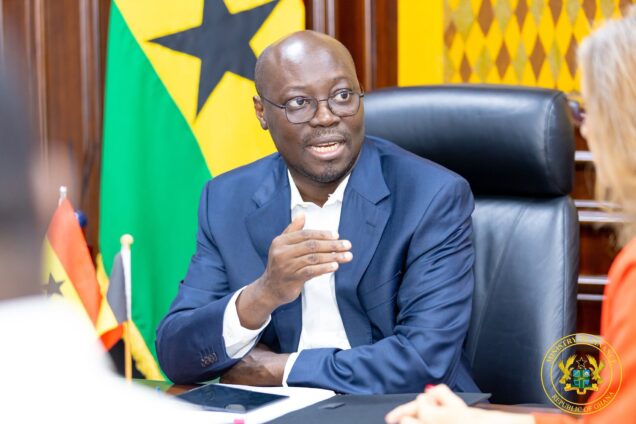
Forson Seeks Bondholder Support Amid 2027 Debt Obligations
Dr Forson has publicly encouraged investors to take advantage of the government’s latest debt management initiative.
In a social media post last week, the Finance Minister urged bondholders to participate in the voluntary offer while assuring them that the government had introduced measures to prevent another Domestic Debt Exchange Programme.
His assurance comes against the backdrop of the economic and financial difficulties created by the original DDEP, which significantly affected Ghana’s financial sector and the investment portfolios of several institutions.
The 2022 debt restructuring programme forced banks, insurance companies, pension funds and individual investors to exchange their existing government securities for new instruments with longer repayment periods and lower interest rates.
Although the exercise helped the government reduce immediate debt servicing pressures, it also imposed substantial financial costs on investors, particularly institutions that had traditionally relied on government securities as relatively dependable investment assets.
The latest buyback therefore carries significance beyond the immediate repayment of the targeted bonds. It also provides an opportunity for the government to demonstrate its commitment to managing debt maturities without resorting to another broad restructuring exercise.
GH¢58bn in 2027 Maturities Raises Stakes for Government
The scale of Ghana’s upcoming domestic debt obligations makes the current transaction particularly important.
Dr Forson has previously disclosed that approximately GH¢58 billion worth of DDEP bonds will mature in 2027, followed by another GH¢53 billion in 2028.
Of the 2027 maturities, approximately GH¢30 billion falls due in February, making the current GH¢28.8 billion buyback a major component of the government’s efforts to address the immediate repayment pressure.
The concentration of these obligations within a relatively short period presents a significant fiscal management challenge.
A poorly managed maturity cycle could create additional pressure on government cash flows, increase refinancing requirements and potentially complicate the domestic debt market’s recovery.
The buyback offers the government an opportunity to retire a substantial portion of the targeted February 2027 obligations ahead of schedule.
However, the extent to which the operation succeeds will depend on bondholder participation and the prices at which investors are willing to tender their securities.
Sinking Fund Becomes Central to Ghana’s Debt Strategy
The buyback is also connected to the government’s broader liability management strategy, particularly its efforts to fully operationalise the sinking fund established to prepare for repayment of restructured domestic debt.
The Ministry of Finance outlined the planned transaction in its government securities issuance calendar published on October 22, 2026.
The calendar also projected net domestic financing of GH¢15.38 billion between October and December 2026.
However, the figure represents the expected difference between funds raised and repayments during the period. It should not be interpreted as the total value of government securities scheduled for issuance or as a dedicated funding allocation for the GH¢28.8 billion buyback.
The distinction is important because the government must manage its broader financing requirements alongside the cost of retiring existing debt.
The effectiveness of the sinking fund will therefore remain an important consideration as Ghana approaches the substantial maturities expected over the next two years.
Bondholders Face Three-Day Window as Debt Market Watches
With the offer closing on November 25, eligible investors have only three days to decide whether to accept the government’s early redemption proposal.
The settlement scheduled for November 26 will mark the next important stage in the transaction, providing an indication of how much of the targeted GH¢28.8 billion the government successfully retires.
The outcome will also attract attention from financial institutions, pension fund managers and other market participants assessing the government’s capacity to manage its domestic debt obligations.
Ghana’s original DDEP was introduced in December 2022 during a period of severe economic and fiscal distress. Nearly four years later, the government is still managing the consequences of that restructuring while attempting to restore confidence in the domestic debt market.
The GH¢28.8 billion buyback is therefore more than an early repayment arrangement. It is a test of the government’s evolving debt management strategy and its ability to confront major repayment obligations without returning to the painful restructuring measures that previously shook investor confidence.
READ ALSO: Belgium Braces For Major Flight Disruption