
Ghana’s proposed overhaul of its downstream petroleum regulatory framework is facing growing resistance from organised labour, with petroleum workers warning that opening inland fuel depots to private operators could weaken the country’s strategic storage network, threaten jobs and increase the cost of maintaining national fuel security.
The General Transport, Petroleum and Chemical Workers’ Union (GTPCWU) of the Trades Union Congress (TUC) has threatened nationwide industrial action if Parliament passes the National Petroleum Authority (NPA) Bill, 2026, without addressing its concerns over the future of the Bulk Oil Storage and Transportation Company Limited (BOSTenergies).
At the centre of the dispute is Clause 103, which the union says would remove BOSTenergies’ exclusive mandate to develop, operate and maintain inland petroleum depots and their interconnecting infrastructure, allowing private companies to enter that segment of the market.
The union argues that the proposed arrangement could divert commercially attractive business away from the state-owned company while leaving it with the financial responsibility of maintaining infrastructure that serves national fuel distribution needs.
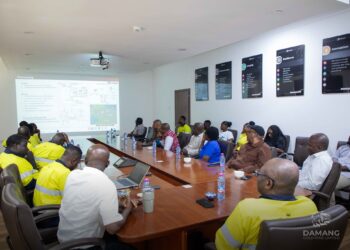
Speaking at a press conference at BOSTenergies’ premises at Kpone on Monday, November 23, the union maintained that it was not opposed to private-sector investment in the downstream petroleum industry.
Its objection, it said, was to a regulatory arrangement that could weaken the state company without providing equivalent commercial opportunities or safeguards.
The union warned that if its concerns were not addressed, it would mobilise petroleum workers across the country for industrial action.
The threat places additional pressure on Government and Parliament to resolve questions about competition, public infrastructure and the long-term financial sustainability of Ghana’s petroleum distribution system before the Bill is passed.
The Dispute Over Inland Depots
The proposed NPA Bill is intended to update the legal framework governing Ghana’s downstream petroleum industry, which covers activities including petroleum importation, refining, storage, transportation, distribution and marketing.
The existing National Petroleum Authority Act, 2005 (Act 691), established the NPA to regulate, oversee and monitor activities in the downstream petroleum industry, including protecting consumers and petroleum service providers.
Government has argued that developments in the industry require a modernised legal framework.
When the Bill was presented to Parliament, the Minister for Energy and Green Transition, Dr John Abdulai Jinapor, explained that the sector had changed considerably since the existing legislation was enacted.
“This bill is expected to replace the current act. There’s been a lot of development following the promulgation of the current bill. We now have about four different refineries. Fuel consumption is increasing. Renewable energy is forming part of Ghanaian petroleum consumption. And so the time has come that we come up with a new bill that reflects the current exigencies and the circumstances pertaining to the sector,”
The Minister also disclosed that the draft legislation had been inherited from his predecessor and subjected to consultations before its presentation to Parliament.
However, the union believes that the proposed changes could create an uneven competitive environment between BOSTenergies and private depot operators.
Its concern is that private companies could compete for profitable inland storage and distribution activities while BOSTenergies remains responsible for maintaining a national network whose commercial and strategic functions extend beyond individual profitable locations.
This raises a central policy question: how will the proposed legislation ensure that competition does not undermine the infrastructure required to maintain reliable fuel distribution across the country?
Jobs and Public Investment at Risk
The employment implications are another major source of resistance.
According to the union, BOSTenergies increased its permanent workforce from 440 in 2024 to 743 by November 2025, representing 303 additional permanent, unionised jobs.
The union argues that if private operators capture significant volumes from the state company’s inland depot network, BOSTenergies could experience a substantial reduction in business and be forced to reconsider its workforce.
It warned that the company could potentially lose close to half of its workforce if the proposed changes significantly undermine its operations.
These projections are the union’s assessment and have not been established as an inevitable consequence of the Bill.
Nevertheless, they highlight the need for Government to examine the employment implications of the proposed reform before Parliament makes a final decision.
The debate is particularly relevant to Government’s 24-Hour Economy agenda, which places emphasis on expanding productive activity and creating sustainable employment.
The union’s position is that weakening an existing state-owned enterprise with an established workforce could undermine those objectives, particularly if the reform does not provide a clear transition framework for affected workers.
It is also questioning the implications for public investments in petroleum storage facilities, terminals and pipelines.
BOST’s mandate, as outlined by the State Interests and Governance Authority, includes developing storage tanks, pipelines and other bulk transportation infrastructure across the country, as well as maintaining strategic reserve stocks for Ghana.
This makes the company’s role broader than operating commercial storage facilities. Its infrastructure is also connected to national fuel supply preparedness.
Could Competition Increase Fuel Distribution Costs?
Beyond employment and infrastructure, the proposed reform raises questions about the cost of maintaining Ghana’s petroleum distribution system.
The union argues that the existing zonalisation arrangement helps sustain throughput across the national depot network and supports the relatively low cost of maintaining the country’s strategic fuel reserves.
It has warned that removing the arrangement could increase the BOST margin from GH¢0.12 to approximately GH¢0.56 per litre.
That would represent an increase of more than 360 per cent, based on the union’s estimates.
The figures should be treated as the union’s projection rather than an established increase in pump prices.
Any actual effect would depend on the final regulatory arrangements, the cost of operating the depot network and how petroleum pricing components are determined.
Nevertheless, the warning deserves scrutiny because changes to the distribution structure could have consequences beyond the commercial interests of depot operators.
Private operators may naturally prioritise routes and locations where business volumes are highest and returns are more attractive.
The union fears that this could leave BOSTenergies carrying a disproportionate responsibility for maintaining supply to less commercially attractive parts of the country, particularly northern Ghana.
If that happens, the state company could face higher costs while losing some of the revenue needed to support its infrastructure.
Government must therefore demonstrate how the proposed framework will protect nationwide distribution, ensure fair access to storage infrastructure and prevent the cost of maintaining strategic petroleum facilities from being transferred disproportionately to consumers.
Government’s Consultation Commitment Under Pressure
The dispute is unfolding despite Government’s recent efforts to reopen consultations on the proposed legislation.
On November 18, the Information Services Department reported that the Ministry of Energy and Green Transition had renewed stakeholder engagements to obtain further input before finalising the Bill.

Dr Jinapor said the consultations were intended to ensure that industry participants could contribute to legislation reflecting the operational realities of the downstream petroleum sector.
“These engagements provide an important platform for stakeholders to share perspectives, address concerns, and contribute to shaping legislation that responds to the needs and realities of the downstream petroleum industry,”
He further stated: “We will continue an inclusive and transparent process that promotes a more efficient, competitive, sustainable, and well-regulated downstream petroleum sector.”
However, the union says its earlier engagements with the Presidency, the Energy Ministry and Parliament have not produced the changes it wants to see in the proposed legislation.
It is demanding a revision of Clause 103, publication of the final stakeholder engagement report and release of the Ministry’s impact assessment on BOSTenergies.
It also wants BOSTenergies to be given greater commercial flexibility, including the ability to sell petroleum products directly to Oil Marketing Companies, and is calling for restrictions on its import cargo windows to be removed.
The union has further called for approval of proposed private inland depots to be suspended until the concerns surrounding the legislation are resolved.
Parliament Must Resolve the Infrastructure Question
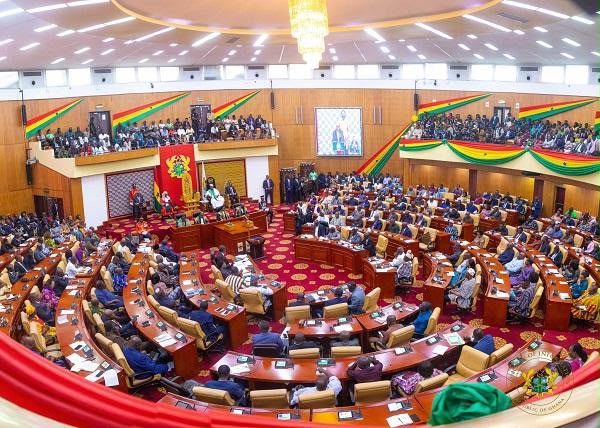
The controversy presents Parliament with a difficult policy balancing act.
Private-sector participation can introduce capital, improve operational efficiency and expand storage capacity.
However, competition must be structured in a way that recognises the strategic responsibilities attached to existing public infrastructure.
The central question is not whether private companies should be allowed to participate in Ghana’s downstream petroleum industry.
It is whether the proposed legislation provides a fair commercial environment while ensuring that the country retains sufficient control and capacity to maintain strategic fuel reserves and reliable nationwide distribution.
Government must also explain how BOSTenergies will recover the costs of maintaining infrastructure that serves national interests, particularly if private operators are allowed to compete for the same commercial volumes.
Without clear safeguards, the reform could create a situation in which private operators benefit from commercially attractive activities while the state-owned company retains expensive public-service responsibilities.
The nationwide strike threat is therefore more than a labour dispute. It is a warning that the design of Ghana’s downstream petroleum reforms could have consequences for employment, fuel distribution costs, public infrastructure and national energy security.
For Parliament, the task is to ensure that modernising the regulatory framework does not create new vulnerabilities in the very infrastructure that keeps petroleum products moving across the country.
READ ALSO: Nvidia Reinstates Jensen Huang As CEO