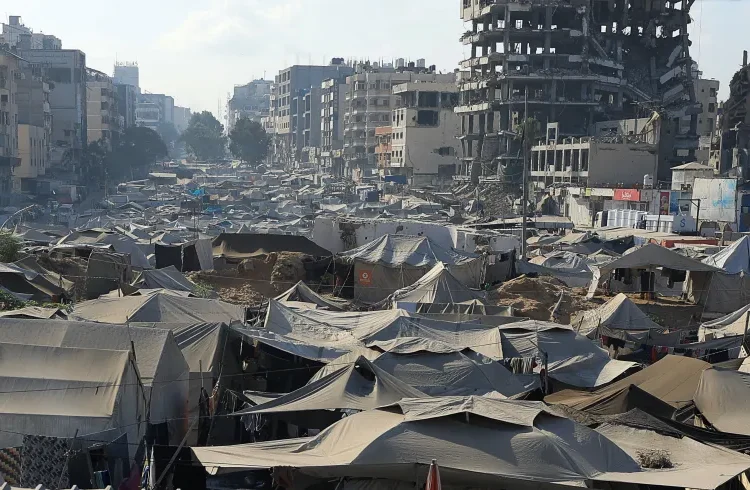
According to a new report by Oxfam and the Conflict and Environment Observatory (CEOBS), more than three years of Israeli military operations have left Gaza facing an extensive environmental crisis, with contaminated soil, polluted water and hazardous debris threatening the health and survival of Palestinians across the enclave.
The report, which describes Gaza as a “toxic wasteland,” estimates that more than 99 per cent of the territory has at least one potential source of environmental contamination linked to the destruction caused by Israeli military operations.
It warns that pollutants released by bombardments, fires, damaged infrastructure and untreated sewage are exposing Palestinians to hazardous substances through the air they breathe, the water they drink, the food they consume and direct contact with contaminated soil and debris.
Amitabh Behar, Oxfam’s international Executive Director, said the destruction of Gaza’s environment had created risks that could persist for generations.
“Israel’s ongoing genocide in Gaza includes military assaults on its environment, which are environmental war crimes threatening life now and for generations to come.
“The destruction and contamination of Gaza will have fundamentally degraded the environmental conditions necessary for human safety and survival. This would breach Israel’s legal obligations under international humanitarian and human rights law.”
Amitabh Behar
The report draws on satellite imagery, remote sensing, scientific analysis and other publicly available information to assess the environmental consequences of the conflict. It calls for a full independent investigation to identify contamination sources, assess their effects and reduce the risks facing Palestinian communities.
Bombardments Leave Widespread Environmental Contamination
According to the report, explosions, fires and the destruction of buildings and infrastructure have released pollutants that settle on rubble and surrounding soil.
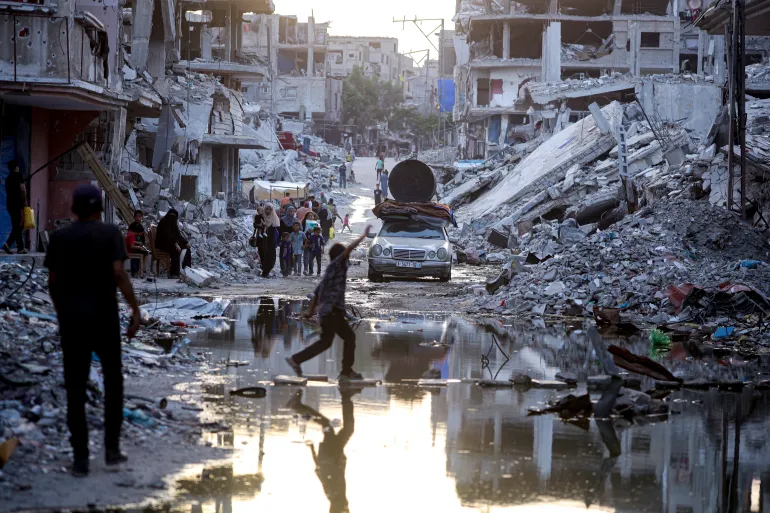
These substances can subsequently return to the air through wind, vehicle movement and debris-clearance activities, exposing residents and workers to potentially harmful materials.
Oxfam identified Gaza City, Jabalia and the North Gaza governorate among the areas with particularly high concentrations of potential contamination sources.
Other locations with significant overlaps of environmental hazards include Khan Younis, Rafah and the Salah al-Din Street corridor.
The report also identifies unexploded munitions as a continuing source of contamination. As their casings corrode, they can release hazardous substances into the soil and groundwater.
Damaged military and civilian vehicles, batteries and fuel storage facilities also contribute to the risks, particularly along military routes and around former military positions.
The environmental consequences extend beyond immediate exposure. Workers involved in clearing rubble, repairing buildings and restoring agricultural land could encounter asbestos, silica and other hazardous materials for years.
Oxfam argues that without proper investigation and safeguards, reconstruction activities could expose more people to pollutants already present in the environment.
Gaza’s Water Crisis Deepens
The destruction of water infrastructure has further intensified the humanitarian consequences of the conflict.
Figures from the Palestinian Water Authority cited in the report show that Gaza’s daily water supply fell from 334,107 cubic metres before October 2023 to 54,747 cubic metres in June 2024, representing a decline of approximately 84 per cent.
Emergency repairs had increased daily supply to 130,315 cubic metres by April 2026. However, the figure remained 61 per cent below pre-conflict levels.
The report warns that contamination of water sources, combined with damage to sanitation infrastructure, poses additional risks to communities already facing severe shortages.
The decline in agricultural production has also reduced access to locally produced food. Before October 2023, Gaza’s farms supplied approximately 95 per cent of the fresh vegetables consumed by its population.
By late 2025, more than 87 per cent of the enclave’s cropland had reportedly been damaged, while Oxfam estimated that only 3 per cent remained accessible and undamaged.
The report also identified more than 7,200 damaged greenhouses and documented the destruction of facilities used to preserve and distribute Palestinian seeds.
By October 2024, the United Nations had reported that more than one million olive trees had been uprooted, further damaging agricultural livelihoods and the local food system.
The destruction of farmland, greenhouses and seed facilities has weakened the capacity of Palestinian farmers to resume production, increasing the challenges associated with food security and economic recovery.
Millions of Tonnes of Rubble Complicate Reconstruction
The scale of physical destruction has created another major environmental challenge, with millions of tonnes of debris requiring removal before reconstruction can proceed.
The United Nations Environment Programme estimates that Israel’s military assault since October 7, 2023, generated approximately 61 million tonnes of debris.
Based on Gaza’s current population, the report equates this to roughly 29 tonnes of rubble for every resident.
Oxfam estimates that removing the debris would require approximately 2.1 million dump truckloads, equivalent to 736 journeys around the circumference of the Earth.
The report compares the volume with the estimated 7.65 million tonnes of rubble generated in Iraq’s Mosul during the 2017 conflict, describing Gaza’s debris burden as approximately eight times greater.
Beyond the physical challenge of clearing the rubble, the report warns that debris could contain hazardous substances from destroyed buildings, military equipment and unexploded weapons.
It also estimates that the bombardment generated substantial greenhouse gas emissions. A study cited in the report put direct conflict-related emissions at more than 1.3 million tonnes of carbon dioxide equivalent by January 2025.
Further emissions are expected from debris removal, reconstruction and the transportation of materials needed to rebuild damaged infrastructure.
The destruction of Gaza’s environment has also undermined economic activity and the ability of residents to rebuild their livelihoods.
Damage to farms, workshops and factories has deprived many Palestinians of their sources of income and the facilities needed to resume work.
Oxfam’s findings also come amid continued international debate over the environmental and humanitarian consequences of the war. The report follows a United Nations international commission of inquiry finding in September 2025 that Israel had committed genocide in Gaza, while a separate genocide case against Israel remains before the International Court of Justice. In January, the court had found that the rights asserted by South Africa under the Genocide Convention were plausible for the purposes of its provisional measures ruling.
The report concludes that Gaza’s environmental destruction cannot be treated separately from the wider humanitarian crisis. It calls for an independent investigation into contamination, alongside measures to protect residents and workers from hazardous materials during relief and reconstruction efforts.
With water supplies, agricultural land and industrial facilities severely damaged, the environmental consequences of the conflict are expected to remain a major challenge for Palestinians long after the immediate fighting ends.
READ ALSO: Belgium Braces For Major Flight Disruption