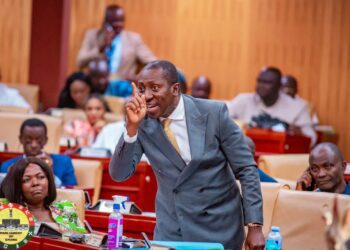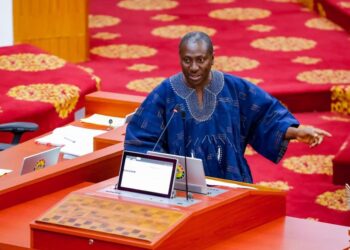
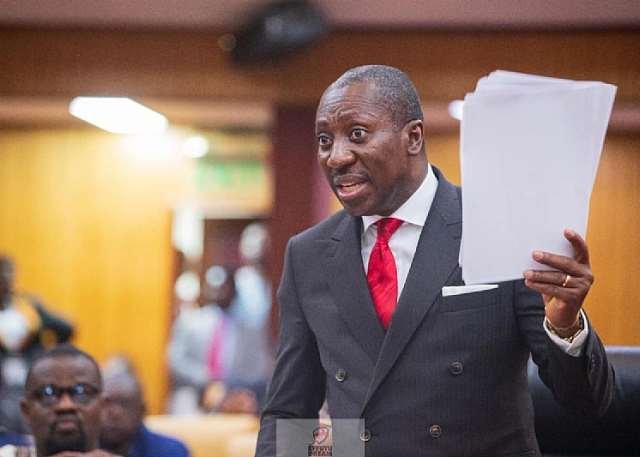
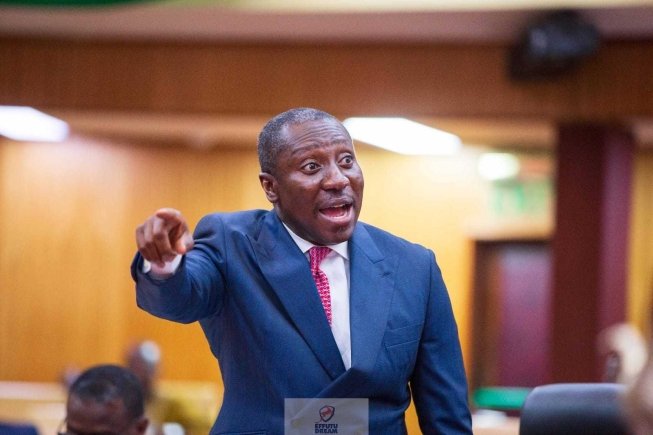
Minority Leader Alexander Kwamena Afenyo-Markin has demanded greater accountability from the Economic and Organised Crime Office (EOCO), warning that alleged disregard for due process by law enforcement agencies could expose the state to costly lawsuits and weaken investor confidence.
Concluding debate on the 2027 Budget presented by Finance Minister Dr Cassiel Ato Forson in Parliament, the Effutu MP argued that EOCO must exercise its powers in accordance with Article 296 of the 1992 Constitution, which requires public authorities to act fairly, without arbitrariness or bias, and in keeping with due process.
“We the mighty minority, demand full accountability and requests of EOCO to act within the tenet of Article 296 of the Constitution.”
Minority Leader and Member of Parliament for Effutu, Hon Alexander Afenyo Markin
He maintained that the conduct of law enforcement agencies has consequences beyond individual investigations, insisting that unlawful actions could ultimately impose financial liabilities on the state and discourage investors seeking a predictable legal environment.
Afenyo-Markin warns of judgment debts
Hon. Afenyo-Markin argued that actions taken by EOCO and other law enforcement institutions could result in successful legal challenges against the state, leaving taxpayers to bear the cost of judgment debts.
He questioned the financial implications of investigations and enforcement measures that, in his view, fail to respect constitutional safeguards. He maintained that the state should not be compelled to compensate individuals because public institutions exercise their powers improperly.

His argument centred on the relationship between accountability in law enforcement and the country’s broader economic interests. According to the Minority Leader, the government must recognise that the manner in which state agencies exercise their authority can influence the willingness of foreign investors to commit resources to Ghana.
“Investors who know that there is certainty and there is fairness in the enforcement of our laws.”
Minority Leader and Member of Parliament for Effutu, Hon Alexander Afenyo Markin
Hon. Afenyo-Markin warned that conduct perceived as arbitrary could undermine that confidence and weaken the government’s efforts to attract investment and stimulate economic growth.
He argued that the protection of citizens’ rights should not be treated as separate from the country’s economic development agenda, particularly when the government is seeking private-sector participation in its proposed New Economy.
Article 296 and the duty to exercise discretion fairly
To support his demand, the Minority Leader read provisions of Article 296 to Parliament, highlighting the constitutional obligations attached to the exercise of discretionary powers by public authorities.
The provision states that where discretionary power is vested in a person or authority under the Constitution or another law, that power is deemed to imply a duty to act fairly and candidly.
It further provides that the exercise of such discretion must not be arbitrary, capricious, or influenced by resentment, prejudice, or personal dislike. It must also comply with due process of law.
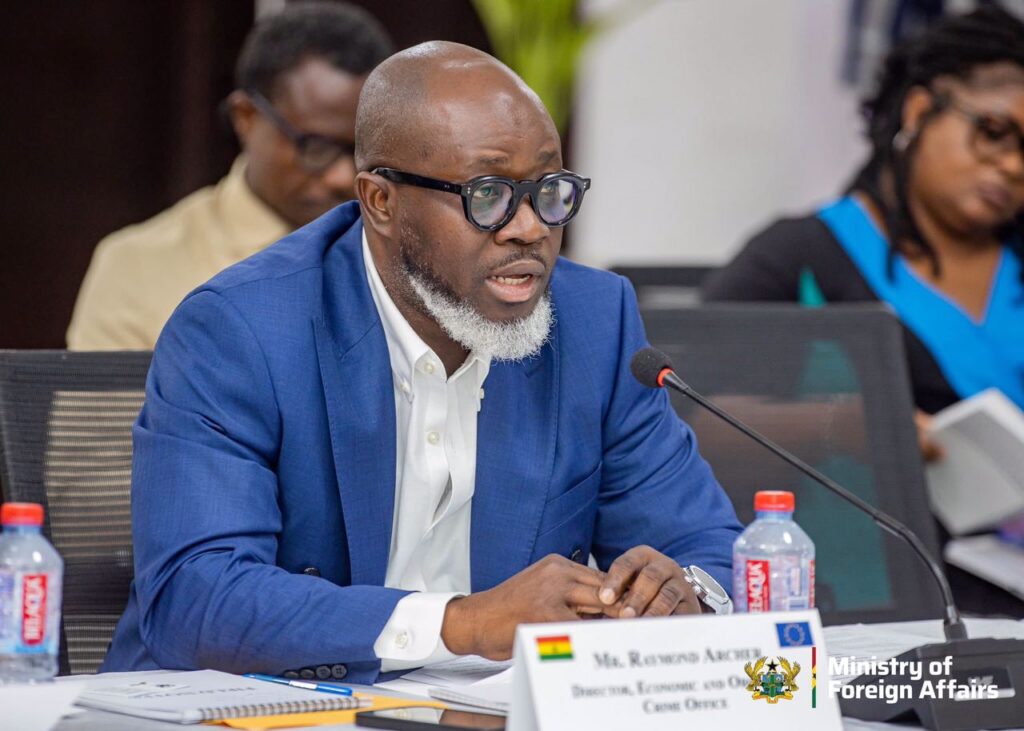
Afenyo-Markin argued that these requirements should guide EOCO’s operations and the conduct of other institutions responsible for investigating and enforcing the law. He maintained that adherence to due process would demonstrate that Ghana respects the rule of law and offers a fair environment for citizens and foreign business partners.
“When you ensure due process of law, it gives assurances to foreigners that in your country there is rule of law.”
Minority Leader and Member of Parliament for Effutu, Hon Alexander Afenyo Markin
He cautioned that the alleged abuse of citizens’ rights could send an unfavourable signal to potential investors, who may become reluctant to enter partnerships or undertake projects in an environment they consider legally uncertain.
His position was that the government’s economic ambitions would be difficult to achieve if the institutions responsible for enforcing the law failed to uphold the constitutional standards that guarantee fairness.
Attorney-General’s position questioned
Hon. Afenyo-Markin also welcomed recent comments by the Attorney-General drawing the attention of law enforcement agencies to the consequences of their actions. However, he questioned what he described as inconsistency in the Attorney-General’s own public conduct, citing earlier radio comments concerning Kwabena Adu-Boahene.

According to the Minority Leader, the Attorney-General had previously indicated that Adu-Boahene, who had not at the time been prosecuted, would spend a long time in prison.
Hon. Afenyo-Markin questioned whether the Attorney-General’s more recent position reflected a change in approach, raising political questions about the timing of the comments and the government’s remaining period in office.
Those remarks formed part of his broader argument that constitutional principles must be applied consistently, regardless of the political identity or circumstances of the individuals involved.
He did not accept that a public official could demand restraint and accountability from law enforcement agencies while allegedly departing from the same standards in earlier public statements.
Calls for consistency in law enforcement
The Minority Leader urged the government and its agencies to demonstrate consistency in their conduct and ensure that the law applies equally to all citizens.
He argued that public confidence in state institutions depends on the assurance that investigations and enforcement actions are guided by evidence, fairness and established legal procedures rather than personal or political considerations.
His intervention linked the conduct of EOCO to the wider question of whether Ghana can build an investment climate anchored in legal certainty. For Hon. Afenyo-Markin, respect for Article 296 is not merely a constitutional obligation but a condition for protecting public finances and sustaining investor confidence.
He maintained that where public authorities disregard due process, the consequences could extend from successful legal claims and judgment debts to a loss of confidence among investors.
He therefore called for full accountability and urged EOCO to operate within the constitutional limits governing the exercise of its powers, arguing that fairness in law enforcement must remain central to the country’s democratic and economic development.
READ ALSO: New Aircraft to End Constraints Posed by Aging Fleet – President Mahama