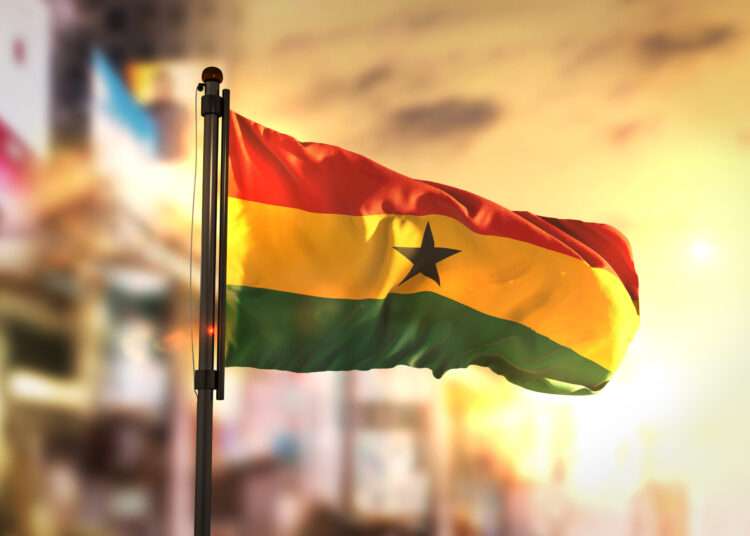
As the first country in sub-Saharan to gain independence, Ghana became a beacon of hope and an example that other countries then wanted to emulate. Ghana’s journey through the years has been one of constant struggle to attain economic growth and economic independence devoid of international interference.
Contrary to the future of wealth and social development envisioned at independence in 1957, Ghana has been challenged with a retarded economy coupled with massive debt arrears owed to both internal and external sources and the over-reliance on foreign assistance.
Ghana’s economic challenges were undoubtedly cemented in the Busia Regime from 1969 to 1972. Within these three years, Ghana’s economy was run on a co-opted economic diplomacy policy. During this time, the country saw a devaluation of the cedi to the dollar from ₵1.02 to $1 to ₵1.82 to $1.
There was massive interference from the international community, the World Bank especially, as Ghana’s economic decisions were largely made by Harvard-educated economists present at the country’s Finance Ministry.
Subsequently, Ghana’s woes were compounded by the Structural Adjustment Program (SAP) during the Rawlings PNDC regime in 1983. The SAP like the co-opted economy under the Busia regime also witnessed the interference of the Bretton Woods institutions; the World Bank, and the International Monetary Fund (IMF). These institutions dictated the trajectory of the country’s economy.
During this time, there was a massive privatization of state companies and enterprises. The privatization of these enterprises was a requirement that the government had to meet to secure assistance from the IMF. Poverty was on the rise as the middle class fumbled with the continuing depreciation of the cedi and increase in food prices. Eventually, the SAP failed to address the country’s economic challenges.
Kuffour’s administration in 2000-2008 is no different. This administration began the new era of the country’s continuous reliance on the international community. During this time, the country was declared HIPC (Highly Indebted Poor Country) by the IMF. While this resulted in the forgiveness of debts, the country’s currency suffered once again as it was devalued. The government then branded the devaluation as a re-evaluation.
The IMF-supported HIPC program did nothing to the country’s economy as Ghana accrued new debts in the Kuffour regime which was recently paid in 2017 by the current NPP administration. The economic story of the country since then has been a constant return to the IMF and other foreign donors like China, a tradition started by the Atta-Mills regime.
The Road Not Taken
What the country has failed to achieve over the years is economic independence which ensures that there is no or less interference in the government’s internal affairs.
In 1957, after Ghana’s independence, the main objective of Nkrumah was to build a self-reliant nation driven by industrialization. In the bid to achieve this goal, Nkrumah undertook projects like the Adomi Bridge, the Akosombo Dam, and the self-sufficient industrial city of Tema built around the Tema harbor, which would enhance industrialization.
Nkrumah’s regime saw a strong resistance to foreign interference, especially from the West. The self-reliant policy of the regime ensured that the country could decide its internal issues without factoring in external influences.
The Acheampong regime followed the same trajectory of self-reliance. The regime introduced policies like debt repudiation popularly known as the “Yentua Policy”, and the “Operation Feed Yourself”.
These policies protected the country against external influence as the regime had broken ties with the West which the Busia regime before it, had depended on heavily for financial assistance. The Operation Feed Yourself policy was grounded in the agricultural revolution. It aimed to ensure that the country “produces what it eats and eats what it produces”.
In the exception of these regimes, the Nkrumah and Acheampong regimes, no other government has made a conscious decision to be self-reliant. The incumbent NPP government when in opposition promised Ghanaians a self-reliant government that is void of international influence, a promise which has not materialized in the past seven years.
Conclusively, while self-reliance seems like a refreshing idea to pursue, the reality on the ground is that Ghana does not have the necessary tools to be self-reliant. Currently, the country relies massively on imported goods to run the economy. Export is low and the amount of finished products exported is discouraging. Until the country, takes further steps to industrialize and engage in import substitution, Ghana’s goal of attaining economic independence and reducing external interference is unreachable.
READ ALSO: Ghana At 67, Navigating The Shadows Of Independence