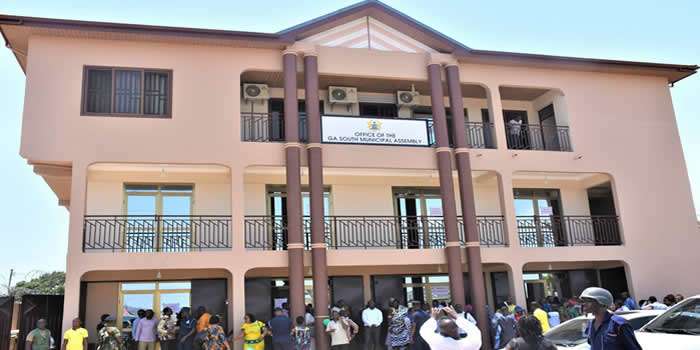
Prof. Kwaku Azar Asare, a Democracy and Development Fellow at CDD-Ghana, has called for urgent reforms to Ghana’s decentralization system.
He emphasized the need for swift action to address what he describes as administrative fragmentation and inefficiency within the system.
According to Prof. Asare, Ghana’s decentralized governance structure has become excessively fragmented, comprising 261 districts, 16 regions, and over 3,000 sub-district administrative units.
This, he argues, has resulted in overlapping functions, bureaucratic inefficiencies, and a drain on public resources, ultimately hindering effective service delivery and local development.
“Administrative overlap leads to inefficiency, lack of accountability, and resource mismanagement.
“District creation has been politically driven, especially during election cycles, contributing to malapportionment rather than development”.
Prof. Kwaku Azar Asare
Drawing a comparison with Kenya, Prof. Asare further highlighted that despite Kenya having a land area 143% larger than Ghana and a population of 50 million (compared to Ghana’s 34 million), it operates a more streamlined single-tier governance system.
According to him, Kenya is divided into just 47 counties, each of which elects a governor who serves as the county’s chief executive officer (CEO).
Each county also has an elected assembly responsible for approving the county’s budget, expenditure, borrowing, and development plans.
Prof. Asare suggested that Ghana could draw lessons from this model to enhance the efficiency and effectiveness of its decentralization system. “This streamlined structure ensures effective local governance and fiscal autonomy, avoiding unnecessary administrative bloat”.
Prof. Asare argued that Ghana’s current decentralization system weakens local governance, as many districts lack the financial capacity to deliver essential services.
This, he indicated, is largely due to their limited revenue-generating authority, leaving them heavily dependent on central government funding.

As a result, local development initiatives are constrained.
He further highlighted two forms of poverty traps within the system. First, the District Poverty Trap, where smaller districts struggle to generate sufficient revenue, forcing them to remain reliant on central government support and perpetuating local poverty.
Second, the Metro-Municipal Poverty Trap, where migration from poorer districts to urban centers puts pressure on urban infrastructure, leading to increased congestion and worsening urban poverty.
Prof. Asare emphasized that addressing these structural flaws is crucial for fostering equitable development and improving local governance.
Prof. Asare Advocates for Fewer Districts, Elected Mayors
Prof. Kwaku Azar also identified political manipulation as a key flaw in Ghana’s decentralization system.
He noted that the creation of new districts has often been driven by political interests aimed at securing electoral advantage, rather than promoting economic and social development.
He proposed a constitutional reform to cap the number of districts at 50 to address this issue.
This, he argued, would ensure that districts are large enough to generate sustainable revenue and effectively administer public services.
By limiting the number of districts, Ghana could reduce fragmentation, enhance efficiency, and minimize the use of district creation as a political tool.
“[He proposed for the government to] Establish Elected Mayors and Assemblies: Introduce direct elections for mayors/DCEs and district assemblies to promote local representation, accountability, and transparency.
“Fiscal Autonomy for Districts: Allow districts to levy property taxes and manage essential public services such as schools, utilities, and local infrastructure [and] create mechanisms for equitable revenue distribution from the national government to districts based on population and development needs”.
Prof. Kwaku Azar Asare
He proposed several measures to strengthen local governance, including allowing districts to borrow within sustainable limits and enter into public-private partnerships (PPPs) to develop infrastructure and commercial ventures.
Prof. Asare also recommended establishing independent district attorney offices to handle local crimes, free from interference by the Attorney General or President, thereby promoting local justice and reducing centralized legal control.
Additionally, he emphasized the need for districts to have elected leadership and revenue-raising authority, enabling them to address local needs better, attract investment, and ease the pressures of urban migration. “Larger, fiscally empowered districts will break poverty traps through sustainable development projects”.
Prof. Asare emphasized that reducing central government control would curb politically motivated district creation and strengthen voter influence at the local level.
He called on the public to advocate for a constitutional amendment to address Ghana’s decentralization challenges.
He encouraged citizens, civil society, and political stakeholders to rally behind reforms to enhance local governance, reduce poverty, and promote equitable development nationwide.
READ ALSO: Greece Joins List Of Countries To Suspend Syrian Asylum Processing