Ghana is on the verge of receiving another major tranche of funding from the International Monetary Fund (IMF) as the country successfully meets the critical conditions necessary for the Fund’s Executive Board to convene on July 7, 2025.
According to sources familiar with the matter, all required documents were submitted to the IMF this week, paving the way for the fourth programme review of Ghana’s economic reforms under the Extended Credit Facility (ECF).
The anticipated approval is expected to unlock a disbursement of approximately $370 million, bringing total inflows under the programme to over $2.3 billion since Ghana signed the agreement in May 2023.
Ghana’s ECF-supported programme has centered on three ambitious objectives: restoring macroeconomic stability, ensuring debt sustainability, and laying the groundwork for more resilient and inclusive growth.
The government has made notable strides toward these goals over the past two years. One of the most significant achievements has been the substantial reduction in the country’s debt-to-GDP ratio. According to the latest data from the Bank of Ghana, the ratio has fallen sharply to 55% of GDP as of April 2025, largely driven by the cedi’s strong appreciation against the US dollar.
This marks a dramatic turnaround for an economy that, just two years ago, was grappling with soaring debt levels and dwindling investor confidence.
The Cedi’s Remarkable Rally
The cedi has been one of the star performers in emerging markets this year. Data from commercial banks indicate that the currency has appreciated by over 40% against the US dollar since January 2025.
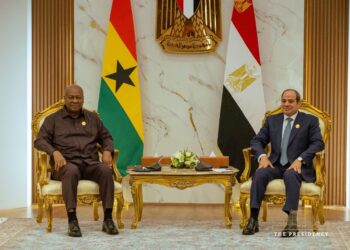
President John Mahama, speaking at the African Development Bank’s annual meeting in Ivory Coast, noted that the stronger cedi had effectively shaved off 150 billion cedis from the country’s total debt stock, providing critical fiscal relief.
“The appreciation of our currency has been one of the most important factors in restoring confidence in the Ghanaian economy,” President Mahama said.
The currency’s stability has also helped to ease inflationary pressures and improve Ghana’s purchasing power, which has contributed to stronger import cover and enhanced reserves.
Reserves at Record High
Ghana’s international reserves have also seen a significant improvement. The Bank of Ghana’s latest Economic Report showed that as of April 2025, reserves stood at $10.6 billion, equivalent to 4.7 months of import cover.
This is a substantial improvement compared to reserve levels in previous years, when the country struggled to maintain even three months of cover.
If the IMF Board gives its expected approval on July 7, the incoming funds could push reserves even higher. In addition to the $370 million from the IMF, Ghana is also set to receive approximately $360 million from the World Bank before the end of July.
These combined inflows are expected to further fortify the central bank’s buffers and provide additional stability to the currency and broader economy.
A Milestone for the IMF Programme
The anticipated disbursement will bring Ghana’s total receipts under the ECF arrangement to more than $2.3 billion, a milestone reflecting the government’s commitment to economic reforms and fiscal discipline.
The IMF’s programme has been closely watched by investors and credit rating agencies alike, who see it as a barometer of Ghana’s ability to manage debt and navigate global economic uncertainty.
Analysts have pointed out that while risks remain—particularly around external shocks and commodity price fluctuations—the successful completion of the fourth review will be a strong endorsement of Ghana’s policy framework.
In the intervening time, the government aims to sustain the positive momentum by continuing fiscal consolidation, enhancing domestic revenue mobilization, and supporting policies that drive inclusive growth.
Among the key priorities is to further reduce debt vulnerabilities and maintain the target of bringing the debt-to-GDP ratio below 55% by 2028.
Finance Ministry officials have emphasized that the country will also prioritize investments in social programmes and infrastructure to sustain economic recovery while protecting the most vulnerable segments of the population.
READ ALSO: GSE Indices Dip Marginally Amid Sharp Decline in Trading Activity