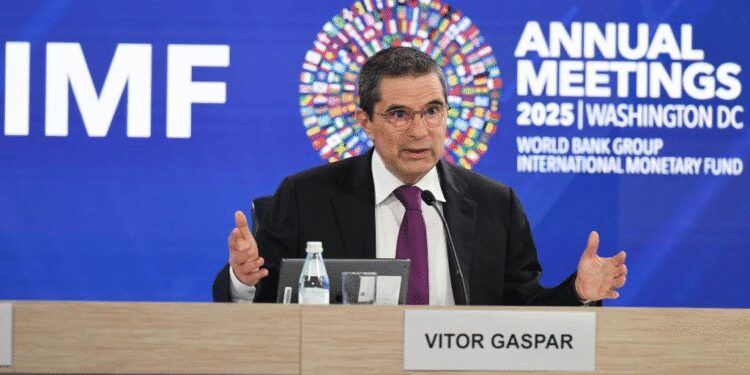
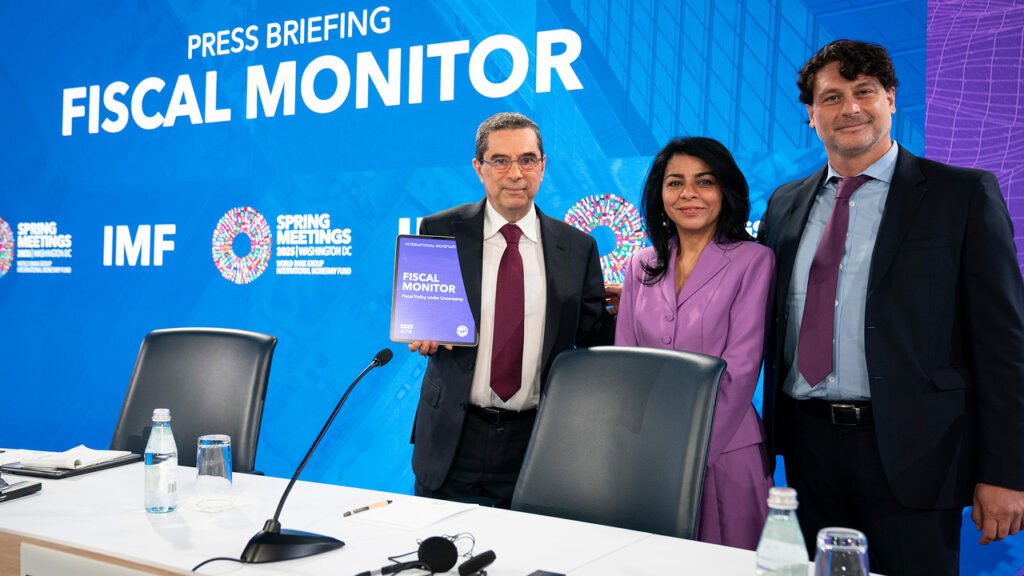
In a Fiscal Monitor briefing for October, the IMF projected global public debt to exceed 100% of global GDP by 2029 and calls for governments to build buffers to cushion shocks.
This projection is directed to governments and policy makers to act decisively to unearth growth prospects and strengthen the trust in their respective governments.
“In the Fiscal Monitor, we project global public debt to go above 100% of GDP by 2029. Public debt risks are widespread and tilted towards debt accumulating even faster. Policymakers must act now to keep debt under control and contain debt risks.”
Vitor Gaspar, Director of the Fiscal Affairs Department, IMF
This alarming projection would represent the highest level of global debt to GDP since 1948. Leading up to this peak period, war engulfed the world’s largest economies for 6 years (World War II, 1939-1945) and rebuilding cost ravaged countries.
Fiscal Monitor
The IMF’s Fiscal Monitor explores how governments can promote efficiency and constitute their public spending to improve economic growth prospects. In the face of global economic fiscal challenges, such surveillance on fiscal development becomes necessary.
The department redirects public spending into infrastructure, education, health, and research and development while maintaining overall spending targets to increase output in the long term. Further gains can be achieved through institutional efficiency and effective strategizing.
Analysis from the Fiscal Monitor provides new global and time-varying datasets of public spending efficiency and rigidity.
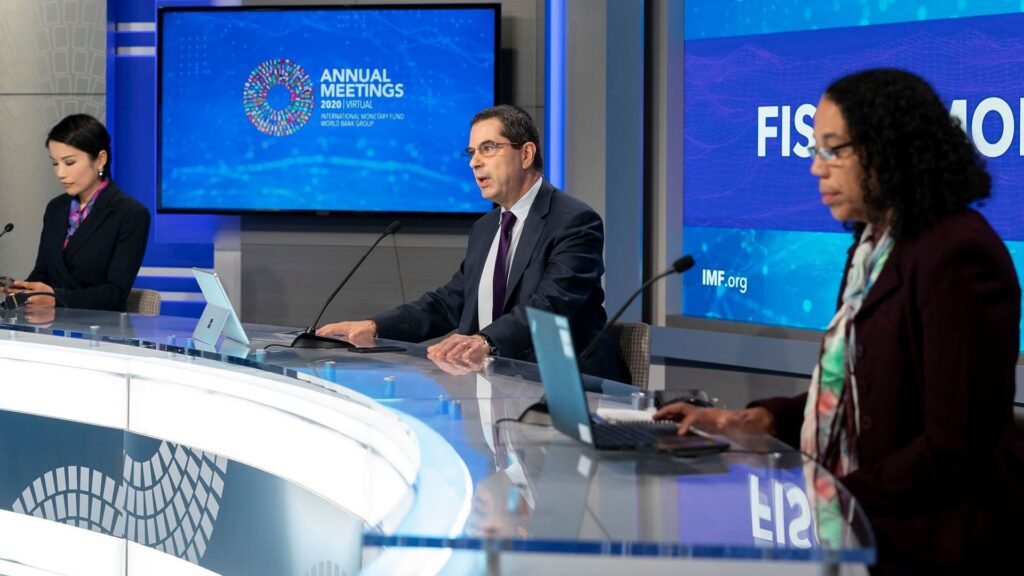
The IMF’s Fiscal Affairs Department prepares the Fiscal Monitor twice a year providing projections using the same database as the World Economic Outlook (WEO) and the Global Financial Stability Report (GFSR).
Unlike the April’s release which was on “Fiscal Policy under Uncertainty” where they mentioned that increasing uncertainty and policy shifts are reshaping the fiscal outlook, the current one (October) explores government’s economic growth improvements through efficiency and reduced spending.
Prioritize fiscal policy
The period between the global financial crisis (between mid-2007 and early 2009) and the Covid-19 pandemic witnessed a relatively easy debt sustenance, according to the IMF. Adding that though debt rose, interest rates fell culminating in an overall stable interest bill on budget.
Governments and policymakers within the period cushioned citizens to sustain businesses. Spending of governments supported key sectors to bolster world debt and economy making it sustainable, the IMF recounts.
The situation we have this year narrates a different story where global interest rates have increased in the market with an uncertain path.
According to Vitor Gaspar, the past few years has seen rising debt with falling interest rates. The different environment we live in today, where interest rates are moving parallel with the debt level have stretched financial asset valuations. He added that “the greatest concern is financial turmoil, driven by fiscal financial feedback loops. The time is now to mobilize fiscal policy to deliver debt sustainability and create buffers against future adverse shocks.”
He cautioned that, governments and policy makers across the world should prioritize fiscal policy and maintain debt sustainability while fiscal buffers are prepared to absorb adverse shocks, even in times of financial crises.
“Fiscal policy should ensure debt sustainability and create buffers against future adverse shocks and heighten uncertainty. While the politics challenges are significantly, the solutions lie in improving growth prospects and strengthening the trust in the government.
“Better governance and institutions are key. They support both public trust and economic growth.”
Vitor Gaspar, Director of the Fiscal Affairs Department, IMF
Effect on Ghana’s economy
The IMF’s projection serves fiscal, budgeting, and macroeconomic policy restructuring for world countries, both developing and developed countries alike.
The global outlook creates a spill over effect and a contagion on the Ghanaian economy. The impact affects Ghana’s macroeconomic and fiscal growth progress. The Bank of Ghana alongside the government and all stakeholders require adequate preparation to absorb this external shock.
Ghana’s fiscal space will shrink as significant revenue goes to service debt, leaving less money to make payments transformative impact projects like infrastructure, education, healthcare, and employment creation. A significant progress has been made in the economy’s debt servicing, however, measures should be taken to build resilience in the face of this eminent threat.
Borrowing becomes more expensive going forward. A better option is to seek investment opportunities. Instead of borrowing from larger global economies for projects, the policy makers should encourage both private individuals, organisations, and countries to invest in the Ghanaian economy.
The government is currently championing the “Ghana is open for business” campaign. More work, however, is needed. More capacity to absorb external shocks should be built and the current trajectory should be continued.
Read Also: UBA Ghana Defies Market Pressures, Posts GH¢1.08 Billion Earnings in Q3 2025