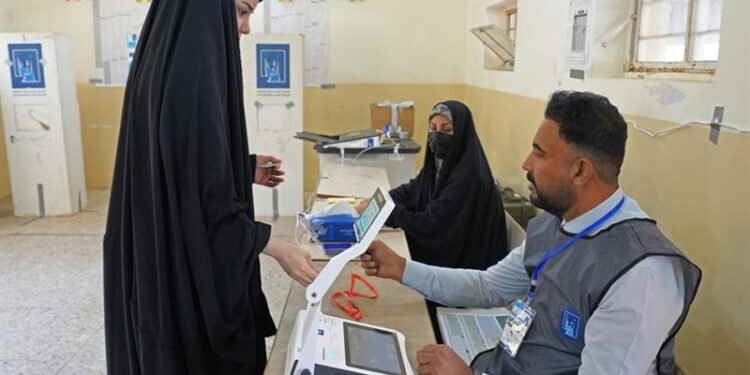
Polls have opened in Iraq for parliamentary elections.
Voting started across the country at 7am (04:00 GMT), in a vote that will be closely watched in Iran and the United States.
It is the sixth election since the US-led invasion toppled longtime ruler Saddam Hussein in 2003 and voting takes place in a relatively stable country.

According to reports, nearly 21 million Iraqis are eligible to vote across 4,501 polling stations nationwide. More than 7,750 candidates, nearly a third of them women, are running for 329 seats in parliament.



Under the law, 25 percent of seats are reserved for women, while nine are allocated for religious minorities. Under the electoral law that many believe favours larger parties, just 75 independent candidates are standing.
Few new potential candidates have emerged recently, with the same veteran politicians at the forefront. Current Prime Minister Mohammed Shia al-Sudani, elected in 2022 with the backing of pro-Iran parties, is expected to secure a sizeable bloc in parliament as he seeks a second term.
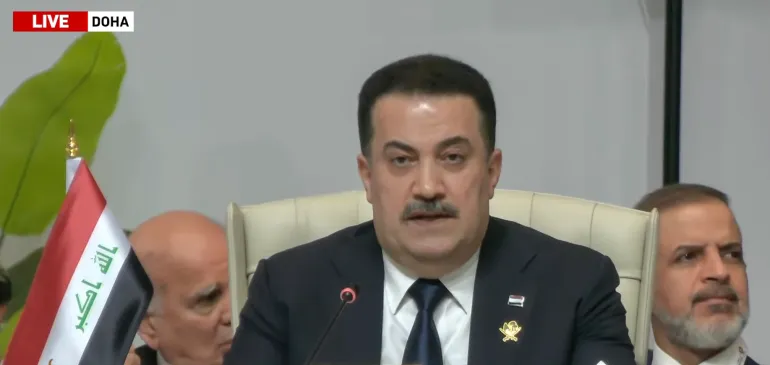
However, securing a big bloc does not guarantee him a second term: the next Prime Minister will be voted in by whichever coalition can secure enough allies to become the largest bloc.
Although they run separately, Shia parties within the Coordination Framework are expected to reunite after elections and pick the next Premier.
Throughout his time in office, al-Sudani has sought to balance Iraq’s relations with Tehran and Washington. He has highlighted his success in keeping Iraq relatively unscathed by the turmoil engulfing the Middle East.
Other frontrunners include influential Shia figures, former Prime Minister Nouri al-Maliki and Muslim scholar Ammar al-Hakim.
Sunni parties are running separately, with the former Parliament Speaker, Mohammed al-Halbousi, expected to do well. The ballot is marked by the absence of influential Shia leader Muqtada al-Sadr, who has urged his followers to boycott the “flawed election.”
By convention in post-invasion Iraq, a Shia Muslim holds the powerful post of prime minister and a Sunni that of parliament speaker, while the largely ceremonial presidency goes to a Kurd
The Independent High Electoral Commission (IHEC) announced that more than 1,200 international observers and 500,000 political party agents have been accredited to monitor the 2025 parliamentary elections across Iraq.
Hassan Hadi Zayer, a member of the IHEC’s media team, stated that the commission, through the Ministry of Foreign Affairs, extended invitations to 90 embassies to participate in election monitoring.
“So far, 1,200 international observers representing various countries and organizations have registered, including the League of Arab States, the European Union, multiple Arab electoral administrations, and the United Nations, which has assigned 37 monitors to oversee the voting process in all polling stations.”
Hassan Hadi Zayer
He added that 55 Arab and international media outlets, including television networks, newspapers, and news agencies, have also been accredited to cover the elections, ensuring comprehensive media transparency throughout Iraq’s provinces.
Zayer emphasized that the IHEC has coordinated closely with all observers and media institutions to ensure full transparency and to facilitate broad coverage of the electoral process.
He also noted that more than one million domestic observers from local organizations have been registered to monitor polling activities, reinforcing Iraq’s commitment to open and democratic elections.
Fear Of Low Turnout In Iraq’s Parliamentary Elections
However, many Iraqis have lost hope that elections can bring meaningful change to their daily lives, feeling that the vote benefits only political elites and regional powers.
Observers fear that turnout might dip below the record low of 41 percent in 2021, reflecting voters’ apathy and scepticism in a country marked by entrenched leadership, allegations of mismanagement and endemic corruption.
Analysts and observers believe the voter turnout will indicate whether Iraqis have any confidence left in the current political system to provide security and improve basic services.
The polls will close at 6pm (15:00 GMT), with preliminary results expected within 24 hours.
READ ALSO: Government to Rollout 1-Day Passport Delivery Service on Nov. 13