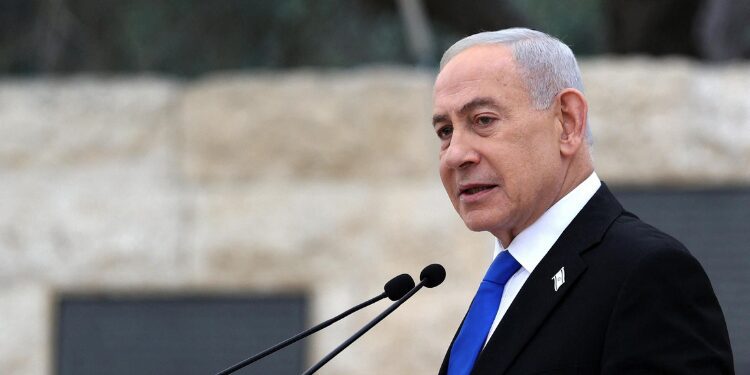
Israeli Prime Minister Benjamin Netanyahu has ordered new military strikes on Hezbollah-linked targets in Beirut’s southern suburbs, a move that signals a new escalation in the conflict in Lebanon and risks further complicating diplomatic efforts aimed at ending broader regional hostilities involving Iran and the United States.
The latest development comes as international mediators attempt to preserve fragile diplomatic momentum surrounding negotiations to end the months-long U.S.-Iran conflict, with Lebanese and Iranian officials warning that continued violence in Lebanon could undermine prospects for a wider agreement.
Netanyahu and Israeli Defence Minister Israel Katz instructed the military to target what they described as terrorist infrastructure in Dahiyeh, a densely populated southern suburb of Beirut that has long served as a stronghold for Hezbollah.
According to a statement released by Netanyahu’s office, the strikes were ordered in response to what Israel described as repeated violations of the ceasefire and continued attacks against Israeli communities and civilians.
The order marks a significant escalation after several weeks during which Israeli attacks on Beirut had become relatively rare.
Although Israel heavily bombarded Dahiyeh during the early stages of the conflict, only two strikes have been reported in the area since U.S. President Donald Trump announced a ceasefire arrangement for Lebanon.
Despite the relative calm around Beirut, hostilities have continued elsewhere, particularly in southern Lebanon, where clashes between Israeli forces and Hezbollah fighters have intensified in recent days.
Iran reacted sharply to the latest Israeli move, linking the renewed violence directly to the stalled diplomatic process aimed at ending the wider regional conflict.
Iranian Foreign Ministry spokesperson Esmaeil Baghaei said Israeli military actions in Lebanon were among the factors slowing negotiations and stressed that any lasting agreement involving Iran must also address the situation in Lebanon.
According to Tehran, a sustainable ceasefire in Lebanon remains an essential component of any broader regional settlement.
The strikes on Beirut follow a series of military developments in southern Lebanon over the weekend.
Israeli forces reportedly captured the historic Beaufort Castle, a strategic hilltop fortress dating back roughly 900 years, during an operation that Israeli officials described as part of an effort to expand military control in the area.
Netanyahu subsequently instructed the military to broaden its ground campaign, saying the objective was to deepen Israeli control over territories previously held by Hezbollah.
Moreover, the Israeli leader stated military operations would continue with the aim of expanding Israel’s presence in areas formerly under Hezbollah influence.
According to the Lebanese government, more than 3,370 people have been killed since March 2, when Hezbollah entered the conflict by launching attacks on Israel in support of Iran following U.S.-Israeli military operations against Iranian targets.
Israeli officials also reported that 24 soldiers and four civilians have been killed during the same period.
The tension has also triggered a major humanitarian crisis. Lebanese authorities estimate that more than one million people have been displaced from their homes as a result of the conflict, making it one of the largest population displacements in the region in recent years.
Furthermore, Israel has established a security zone inside southern Lebanon, arguing that the buffer area is necessary to protect communities in northern Israel from Hezbollah attacks.
Israeli forces have carried out extensive operations in villages across the area, noting that Hezbollah has embedded military infrastructure within civilian locations.
For its part, Hezbollah has rejected Israeli accusations and insists it retains the right to resist what it calls Israeli occupation and aggression.
The group claimed responsibility for 21 military operations on Sunday alone, including rocket attacks targeting Israeli military infrastructure in the northern Israeli city of Nahariya.
International Pressure Mounts to Halt Escalating Israel-Hezbollah Conflict
Concern around the world is growing as a result of the recent escalation. Citing the worsening security situation and the possibility of a larger regional conflict, France asked for an urgent meeting of the UN Security Council on Monday.
Paris has frequently cautioned that prolonged hostilities in Lebanon might further complicate ongoing diplomatic attempts and destabilise the Middle East as a whole.
Additionally, the US has stepped up its diplomatic efforts. Washington has held many unprecedented meetings with representatives from both Israel and Lebanon. Hezbollah has strongly objected to direct diplomatic engagement between Israel and Lebanon, but the talks have continued.
But indications of development seem more brittle.
According to a Lebanese source with knowledge of the current negotiations between Beirut and Washington, Netanyahu’s most recent move was part of a larger decline in the U.S.-led diplomatic path in recent days.
A plan to progressively lower tensions and establish circumstances for a longer-lasting end to hostilities has been developed by American officials.
Additionally, U.S. Secretary of State Marco Rubio had separate conversations on the idea with Netanyahu and Lebanese President Joseph Aoun. As a first step toward fostering confidence, the proposal would demand that Hezbollah cease all assaults against Israel. Israel would refrain from escalating the situation in Beirut in return.
However, major challenges persist. Lebanese Parliament Speaker Nabih Berri, a close Hezbollah ally who has often served as a mediator, voiced support for a ceasefire but raised doubts about whether Israel would also end its military actions.
Berri indicated that he would ensure “full and immediate commitment to a ceasefire by the resistance.” “But the question is, who will compel Israel to stop its aggression?” he added.
READ ALSO: NDC Council of Elders Bans Early 2028 Presidential Campaign Bids