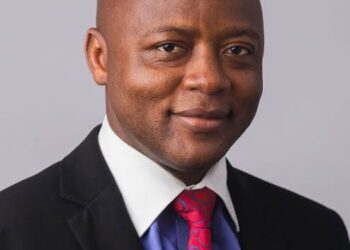

A Fellow of the Center for Democratic Development, Ghana, Dr. John Osea-Kwapong, has argued that the Minority staging a walkout from the appointment committee vetting of the Chief Justice nominee, Justice Paul Baffoe-Bonnie, does not delegitimize the vetting process.
He stated that the actions of the minority rather robbed the process of an “important element,” which is the voice of the minority caucus in parliament.
He recalled that the minority had earlier raised some concerns and objections on the floor of parliament prior to the scheduled date for the vetting, calling for the postponement of the process until all outstanding legal issues surrounding the removal of the former Chief Justice had been resolved.
However, he noted that those concerns and objections had been addressed by the ruling of the Speaker of Parliament, Rt. Hon. Alban Kingsford Sumana Bagbin.
“The speaker ruled, and one of the speaker’s reasonings was that, look, if we do this, then we may be setting a precedent where anybody who objects to a parliamentary procedure can hold it up. Is it the sort of precedent we want to set? So, for me, it doesn’t delegitimize the process or even the vetting of the Chief Justice nominee.
“I just think that it robbed the process of something very important, which is the participation of the minority who are part of the governance setup, whatever questions they would have asked, and all of those things to be able to also get their views, disagreements, and substantive questions.”
Dr. John Osea-Kwapong, Fellow at the Center for Democratic Development, Ghana (CDD-Ghana)
He further emphasized that inasmuch as the actions of the minority do not make the process illegitimate, such actions still leave the ending of the process with “that bit of a cloud still hanging over it, knowing that we still have unresolved grievances that have, as it ended, even the vetting of the Chief Justice nominee.”

The minority caucus had raised some concerns, accusing the Chief Justice nominee, who is also the acting Chief Justice, of intentionally ignoring the cases involving the former Chief Justice, Justice Gertrude Araba Esaaba Sackey Torkornoo.
However, Dr. Osea-Kwapong emphasized that the Chief Justice nominee’s clarity on the processes involving the listing of cases in court and the empaneling of judges to sit on such cases was a good education for himself and the general public to understand the dealings of the courts and to be able to give a fair evaluation of the claims of the minority.
“I appreciated the fact that he, in no uncertain terms, pushed back on that narrative that, in some way, somehow, he has some motive as to why these cases are not being empaneled.
“For me, it was a good educational piece for me to understand the process it goes through in terms of rightful hearing, listing, and then the Chief Justice empanels. I didn’t have that education prior to this. So, it was good to be able to share that with the public in very unambiguous ways.”
Dr. John Osea-Kwapong, Fellow at the Center for Democratic Development, Ghana (CDD-Ghana)
He noted that institutions such as the judiciary are currently facing a troubling moment where they suffer from a twin crisis: low public trust and high perceptions of corruption, as consistently highlighted by Afrobarometer, adding that “our institutions are trying to find a way to sort of restore faith and confidence in them in terms of the way the public sees them.”
He further emphasized that this kind of partisan “fight,” as was displayed yesterday, also highlights the partisan angles to the challenge facing the judiciary in terms of low trust and high perception of corruption, as it only perpetuates that sort of narrative in the minds of citizens.

“If you disaggregate the Afrobarometer data, you would notice that for those who identify with a particular political party, when their party is in power, their trust in institutions goes up; when their party is in opposition, their trust in institutions goes down.
It’s also the other dimension of the trust challenge that we are facing, and for me, the more these partisan fights occur, the deeper the disagreements over constitutional processes, and the more the reading of all kinds of political motives into what happens or what doesn’t happen, the consequence for us is our democracy continues, in my opinion, to suffer from this perception that citizens are having about our institutions, which is that they can’t be trusted, and they can only be trusted if those we feel close to are in power.”
Dr. John Osea-Kwapong, Fellow at the Center for Democratic Development, Ghana (CDD-Ghana)
Dr. Osea-Kwapong noted that in his opening remarks, the Chief Justice nominee himself acknowledged that the judiciary finds itself at a crossroads, noting that it is a very important moment for the nominee to recognize the challenges of the judiciary.
He therefore emphasized that at the time that the judiciary is aiming for a rebuild, it has to be devoid of partisan disagreements of the nature of that which occurred yesterday.
READ ALSO: Government Launches Innovative Tax System to Drive Digital Financial Inclusion for MSMEs