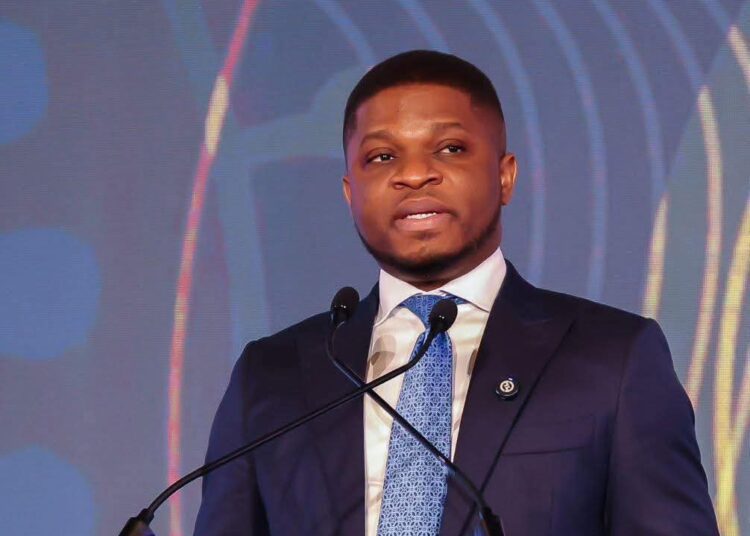
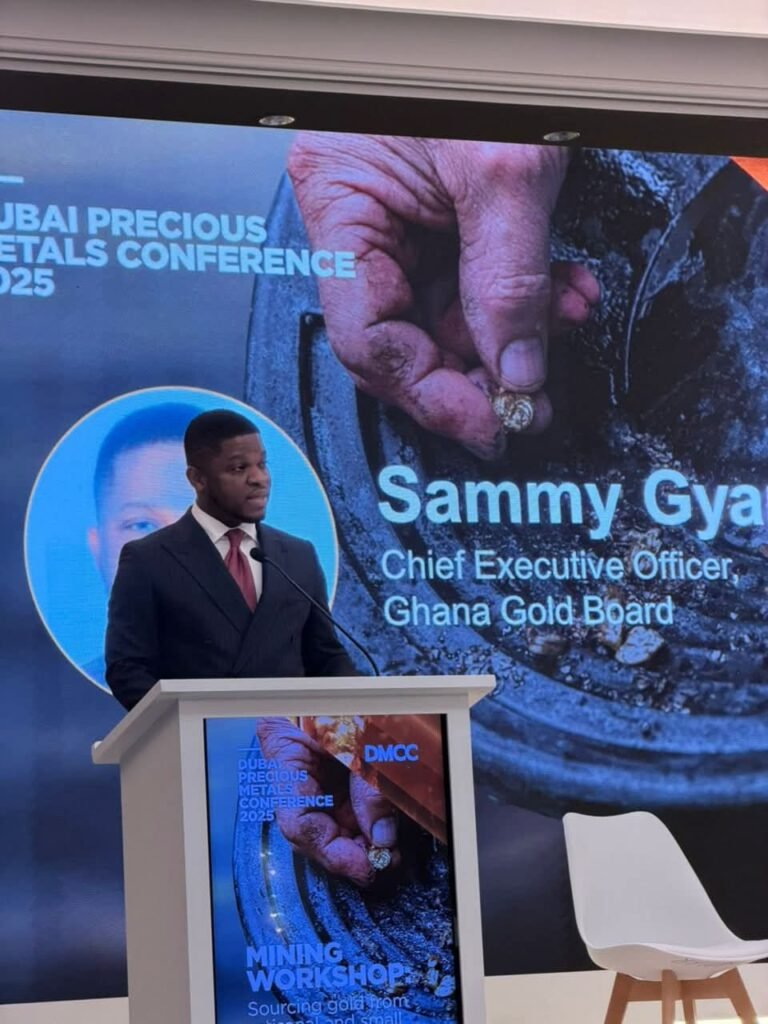
Ghana’s artisanal and small-scale mining (ASM) sector received major international attention at the Dubai Precious Metals Conference, where Chief Executive Officer of the Ghana Gold Board, Sammy Gyamfi, Esq., outlined the sector’s unprecedented contribution to Ghana’s economic rebound in 2025.
Addressing global industry leaders, Mr Gyamfi said the performance of Ghana’s ASM industry had “for the first time in our history, outperformed the large-scale mining sector,” reshaping both the domestic economy and the international gold supply chain.
Mr Gyamfi described artisanal mining as the “engine behind Ghana’s sterling economic turnaround in 2025,” attributing key macroeconomic gains to the vast production and exports from small-scale miners.
“As we speak, Ghana’s foreign reserve and balance of payment positions have improved considerably.
“The country has also recorded a trade surplus of US$2.1 billion.”
Sammy Gyamfi, Esq., Chief Executive Officer of the Ghana Gold Board
He added that the Ghana cedi, long considered one of Africa’s most volatile currencies had seen its strongest performance in years.
He said, “Our national currency, the Ghana Cedi, has this year appreciated against the US dollar by a cumulative 35% year to date,” noting that this strengthening helped ease inflation, now at single digits for the first time in four years, and reduced debt-servicing pressures.
These improvements, he stressed, “could not have been achieved without the ASM sector,” which has contributed 90 tonnes of gold in 2025, representing 53% of Ghana’s total export earnings from gold.
According to him, the sector has already generated over US$9 billion in foreign exchange revenue this year.
A Lifeline for Over One Million Ghanaians
Mr Gyamfi reminded the global industry that gold carries a deeper meaning in Ghana beyond export receipts.
“For the millions of youth who partake in artisanal and small-scale mining, gold is a path to realising their economic aspirations and social relevance.
“These are breadwinners of families who depend on the economic impact of ASM for their survival.”
Sammy Gyamfi, Esq., Chief Executive Officer of the Ghana Gold Board
Current estimates indicate that ASM provides over one million direct and indirect jobs, making it one of the country’s largest employment sectors.
“This is not mere data; these are real human lives.
“With the necessary reforms, the ASM sector can play an even bigger role in the global gold supply chain.”
Sammy Gyamfi, Esq., Chief Executive Officer of the Ghana Gold Board
Despite celebrating its economic value, Mr Gyamfi said government remains deeply concerned about illegal and irresponsible mining activities that endanger ecosystems and communities.
“Illegal and irresponsible ASM operations pose significant threat to our rivers, forest reserves and lands. “This menace pollutes our environment with chemicals that are hazardous to life.”
Sammy Gyamfi, Esq., Chief Executive Officer of the Ghana Gold Board
He issued a strong ethical reminder: “No volume of gold is worth a human life. The lives and sustainable future of our people are far more important.”
Formalisation Becomes a Central Pillar of National Mining Policy
Mr Gyamfi said Ghana is prioritising the formalisation of small-scale mining as the only sustainable way to maximise benefits while protecting communities and the environment.
“Formalizing the ASM sector and ensuring responsible sourcing is an imperative to making gold a blessing to our countries rather than a curse.”
Sammy Gyamfi, Esq., Chief Executive Officer of the Ghana Gold Board
This direction, he said, is at the heart of the new administration’s mining and economic reform agenda under President John Dramani Mahama.
One of the administration’s first major steps was the establishment of the Ghana Gold Board (GoldBod), a state institution with a mandate to streamline gold trading, enhance oversight, and ensure Ghana maximises national value from its vast mineral wealth.
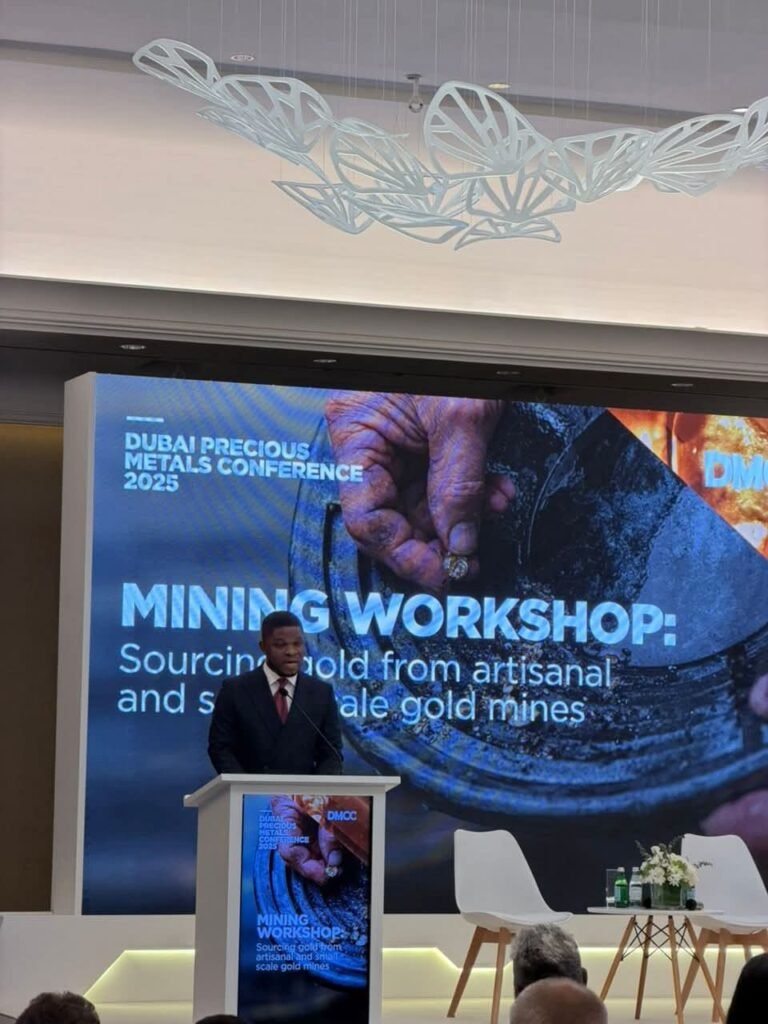
Mr Gyamfi described the Board as a “strategic creature of law” designed to professionalise gold trading, strengthen export governance, and unlock new pathways for national growth.
GoldBod’s reforms, including traceability, licensing improvements, and regulated export channels, are expected to position Ghana as a global reference point in responsible ASM development.
With artisanal miners now contributing the majority of Ghana’s gold exports, the sector’s transformation has become both an economic and developmental priority.
Mr Gyamfi’s address in Dubai signals Ghana’s intent to reshape perceptions of small-scale mining not as a back-end, informal activity, but as a vital pillar of global mineral supply that, with the right reforms, can drive sustainable growth for decades to come.
READ ALSO: Agriculture Stakeholders Protest Against Inadequate Budgetary Allocation to Sector