
The Ghana Enterprises Agency (GEA) has intensified its efforts to drive inclusive industrial development by strengthening support for high-growth Micro, Small, and Medium Enterprises (MSMEs) across the country.
Through a series of high-level engagements in the Upper West and Greater Accra regions, the Agency highlighted the critical role of agro-processing and operational efficiency in achieving the government’s industrialization agenda.
In the Sissala East District of the Upper West Region, the Agency participated in the launch of a new product line by KEDAN Limited, an agribusiness that has become a model for cross-border trade.
“KEDAN Limited is a strong example of how agriculture, value addition, and cross-border trade can transform local economies. Through agro-processing and trade between Ghana and Burkina Faso, the company is reducing post-harvest losses, creating reliable markets for farmers, and strengthening regional food systems”
Ghana Enterprises Agency
Under the leadership of Chief Executive Officer (CEO) Ms. Margaret Ansei, the GEA is prioritizing market access and technology adoption to ensure local businesses can compete on both regional and global stages.
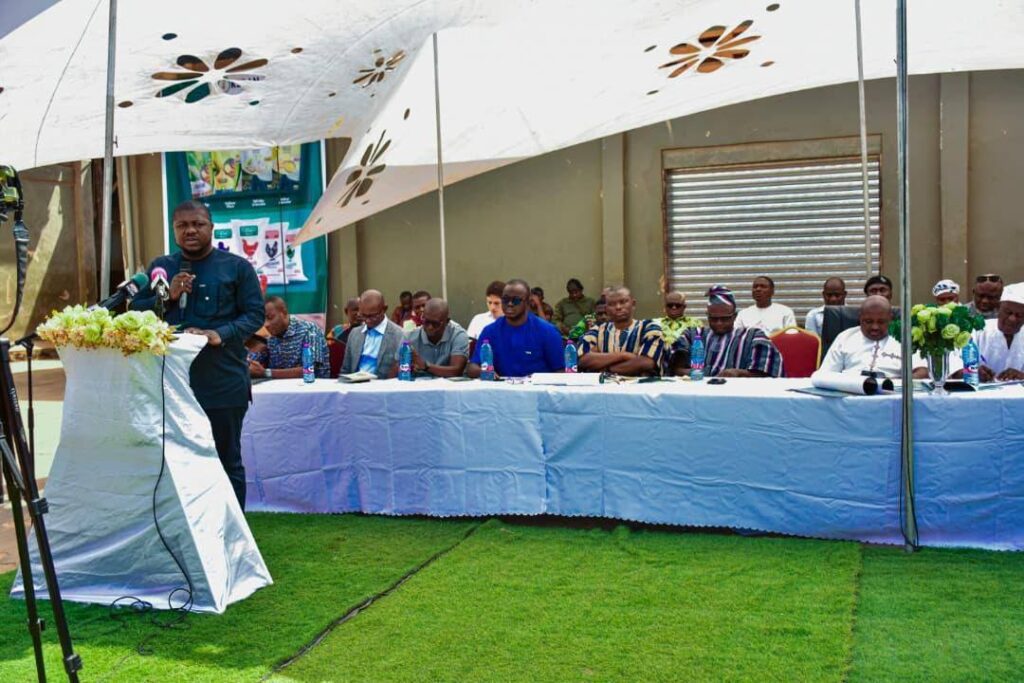
Representing the CEO at the launch, the Deputy CEO of GEA, Mr. Mahmoud Iddrisu, noted that the company’s success in trading between Ghana and Burkina Faso demonstrates the transformative power of value addition.
Enhancing Efficiency
Parallel to the expansion in the north, the GEA is focusing on operational excellence within the manufacturing sector.
Earlier, during a working visit to Solutions Oasis Limited, a Ghanaian firm specializing in the processing of shea and cocoa butter into skincare products, Ms. Margaret Ansei commended the “adoption of Kaizen principles within the company’s operations.”
According to her, this Japanese management philosophy, which focuses on continuous improvement and waste reduction, has been instrumental in boosting the productivity of the women-led enterprise.
“The integration of these principles allows local firms to produce high-quality personal care products that meet international standards, facilitating entry into more lucrative export markets. The engagement reaffirmed the importance of sustained collaboration between GEA and beneficiary enterprises in driving productivity and innovation”
Ghana Enterprises Agency

The visit underscored the GEA’s mandate to move beyond mere financing and toward providing comprehensive business development services. By empowering entrepreneurs like Francesca Brenda Opoku, CEO of Solutions Oasis, with the tools to improve efficiency, the Agency is building a more resilient MSME ecosystem.
Expanding Market Access
A key pillar of the GEA’s 2026 strategy is the utilization of digital platforms to increase the visibility of Ghanaian-made goods. During the KEDAN launch, the Agency reiterated its commitment to featuring high-potential products on the GEA Ghana Mall, an online marketplace designed to connect local producers with a global audience.
This digital integration is paired with physical market access opportunities and participation in international trade exhibitions to ensure that the “Made in Ghana,” brand gains significant traction.
Furthermore, the Agency noted that it is facilitating technology adoption and value-chain development to ensure that businesses do not operate in isolation. By linking primary producers with processors and exporters, the Agency is creating a seamless industrial loop that supports the President’s vision for a diversified economy.
For the GEA, the recent activities in Tumu and Accra reflect a broader mission to ensure that industrial growth is geographically and socially inclusive.

By supporting agribusinesses in the north and women-led manufacturing in the south, the GEA is addressing regional economic disparities. Its focus remains on fostering long-term business sustainability, ensuring that MSMEs can transition into large-scale industrial players.
As the GEA continues to deliver on its mandate, the emphasis on sustained collaboration remains paramount. The Agency’s leadership believes that the combination of capacity building, financial facilitation, and strategic management practices like Kaizen will serve as the bedrock for Ghana’s industrial future.