
The Minister for Trade, Agribusiness and Industry, Hon. Elizabeth Ofosu-Adjare, has demanded a radical restructuring of Ghana’s trade strategy to permanently pivot the nation away from raw material dependency toward a job-intensive industrial economy.
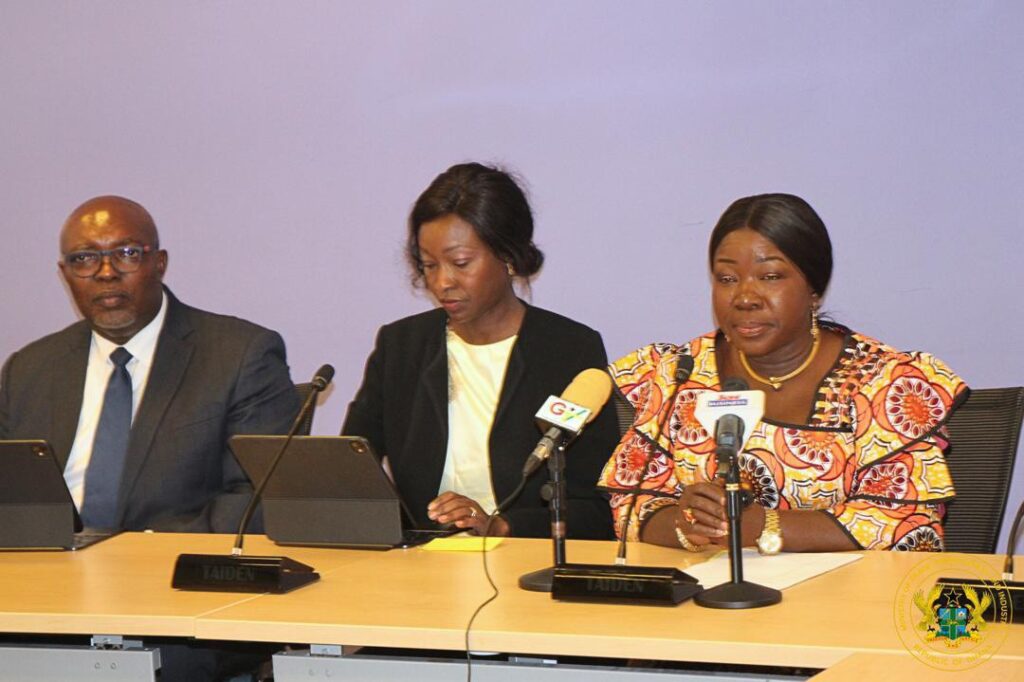
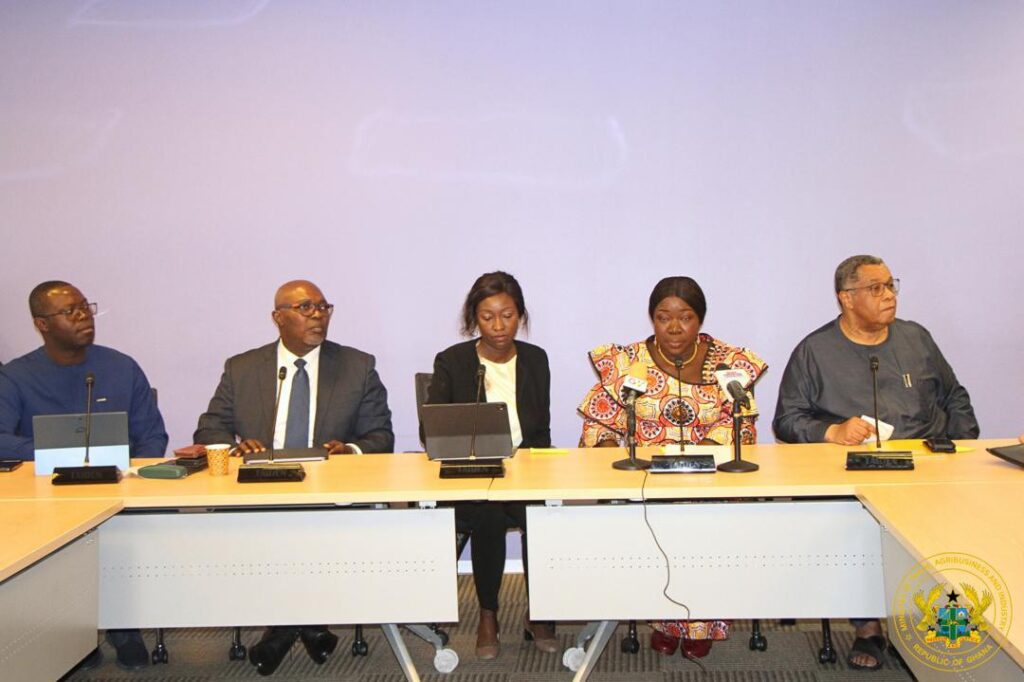
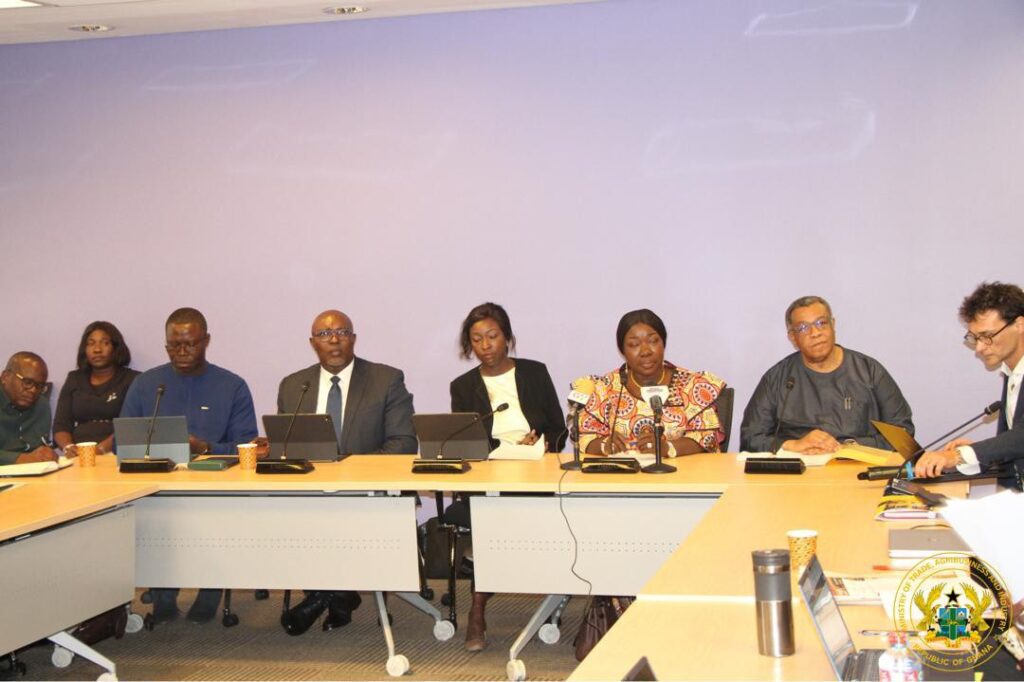
Speaking at a high-level joint seminar convened by the World Bank, the African Center for Economic Transformation (ACET), and the Institute of Statistics, Social and Economic Research (ISSER), the Minister signaled that the government is moving beyond mere macroeconomic recovery.
While the nation has secured a historic trade surplus, the Ministry of Trade, Agribusiness and Industry’s (MoTAI) new mandate is to weaponize these gains into a value-driven ecosystem that prioritizes local processing and manufacturing over the archaic model of shipping out raw wealth.
“The impressive figures reflect deliberate reforms and disciplined economic management under the leadership of President John Dramani Mahama, but true prosperity will come only through industrialization, value addition, and export diversification”
Hon. Elizabeth Ofosu-Adjare, Minister for Trade, Agribusiness and Industry
This bold rethinking comes at a pivotal moment for the Ghanaian economy. According to the Minister, the era of relying on the export of raw cocoa beans and unrefined gold as the primary drivers of the economy is reaching its structural limit.
The reset being championed by the Ministry is designed to capture the “missing middle of the value chain,” ensuring that the wealth generated by Ghana’s natural resources is retained within its borders through domestic refining and industrial transformation.
Hon. Ofosu-Adjare was quick to acknowledge the significant macroeconomic milestones achieved over the past year, most notably a staggering trade surplus of US$13.6 billion recorded in 2025. This surplus, coupled with record international reserves, serves as the foundation for the next phase of the industrial agenda.
However, she issued a sharp warning against complacency, noting that a trade surplus based purely on commodity prices is a fragile success. The objective now is to ensure that these surpluses are fueled by processed and semi-processed goods, which offer more price stability and a higher capacity for job creation than raw commodities.
Framing the trade surplus as a tool for industrialization rather than just a fiscal achievement, the Ministry is setting a new benchmark for economic performance. The focus has moved to the quality of the surplus – specifically, how much of that revenue is generated by Ghanaian factories and industrial hubs.
The Minister emphasized that the current economic recovery provides the necessary “fiscal space to take risks and invest heavily” in the infrastructure required to turn Ghana into the manufacturing heartbeat of West Africa.
Breaking the Cycle
A critical demonstration of this value-addition strategy is found in the cocoa sector. For decades, Ghana’s role in the global cocoa market was largely confined to the supply of raw beans. Under the new trade strategy, the Ministry has set an aggressive target to process at least 50 percent of all cocoa produced domestically.
To support this ambition, the government has already overseen the installation of grinding capacity exceeding 500,000 metric tonnes. This is a massive industrial leap that allows Ghana to capture the higher margins found in cocoa derivatives such as paste, butter, and powder.
“Ghana’s non-traditional exports reached a record US$5 billion in 2025, representing a 30.7 percent increase over the previous year, with cocoa derivatives, including paste, butter, and powder, emerging as the highest earners”
Hon. Elizabeth Ofosu-Adjare, Minister for Trade, Agribusiness and Industry
This 30.7 percent increase is the direct result of reforms that incentivize local processing. By moving up the value chain, Ghana is not only increasing its export earnings but also creating a demand for technical expertise in molecular processing and food science, effectively professionalizing the agricultural workforce.
To address the long-standing issue of industrial under-capacity, Hon. Ofosu-Adjare highlighted the “Feed the Industry Programme” – a flagship initiative that will act as the logistical and supply-chain backbone of the “Industrial Reset.”
Many Ghanaian manufacturers have struggled to maintain consistent production levels due to a lack of reliable, high-quality raw materials. The Feed the Industry framework creates a direct, synchronized link between the farm gate and the factory floor, ensuring that local industries have the primary inputs they need to operate at full capacity year-round.
This programme is the solution to the problem of seasonal stagnation, stabilizing the supply of raw materials, lowering the operational risks for manufacturers and making the sector more attractive to private equity and development finance.
Hon. Ofosu-Adjare noted that engagements with trade associations and exporters are ongoing to ensure that this programme is not just a top-down directive but a collaborative effort that addresses the specific bottlenecks faced by different industrial sub-sectors.
Regional Hegemony
The final pillar of the Minister’s address focused on the broader geopolitical implications of Ghana’s trade reform. With the African Continental Free Trade Area (AfCFTA) providing a massive unified market, Ghana is positioning itself as the primary exporter of high-quality, standardized goods within the ECOWAS region.
This requires a rigorous harmonization of trade standards and the removal of cross-border logistical hurdles. The Minister revealed that the Ministry is actively engaging in bilateral dialogues to improve trade compliance and ensure that Ghanaian products are the most competitive on the continent.
The World Bank’s endorsement of this direction, voiced by Regional Director Madam Seynabou Sakho, reinforced the validity of the Ministry’s approach. Ghana is removing the invisible costs that often hamper African trade by streamlining logistics and enhancing the quality certification ecosystem.
As the seminar concluded, the Minister’s message remained clear: the historic US$13.6 billion trade surplus is not an endpoint, but the fuel for an industrial engine that will eventually replace raw exports with high-value, job-rich manufacturing. The Industrial Reset is no longer a plan for the future; it is the current operational reality of the Ghanaian economy.
READ ALSO: Cocoa Crisis Pushes Ghana Into Bond Market to Raise $1 billion