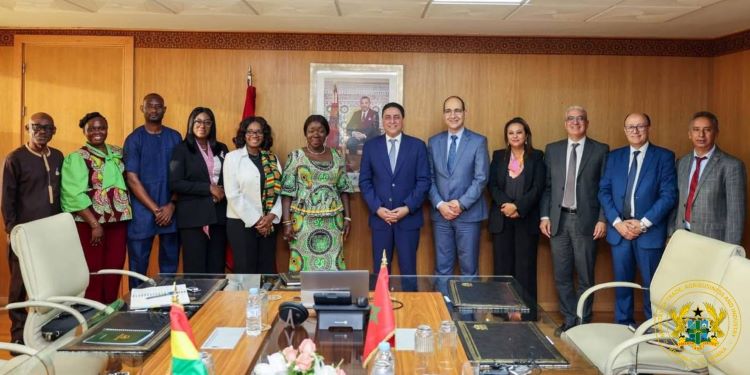
The diplomatic corridors of Rabat are currently serving as the backdrop for a significant pivot in Ghana’s North African economic strategy, as the Minister for Trade, Agribusiness and Industry, Hon. Elizabeth Ofosu-Adjare, advances a high-level three-day mission to Morocco.
According to the Ministry of Trade, Agribusiness and Industry (MoTAI), this visit is a calculated effort to integrate Ghana’s industrial “Reset” with the advanced manufacturing and logistics ecosystem of one of Africa’s most sophisticated economies.
“Hon. Minister Elizabeth Ofosu-Adjare expressed her appreciation for the invitation extended by the Moroccan authorities and underscored Ghana’s commitment to strengthening economic ties with Morocco, particularly in the automobile and agro-processing sectors”
Ministry of Trade, Agribusiness and Industry
By engaging directly with Moroccan leadership, the Ghanaian delegation is seeking to turn decades of friendly relations into a series of concrete, business-to-business industrial partnerships that leverage the full potential of the African Continental Free Trade Area.
The strategic importance of this mission cannot be overstated, as it represents a shift toward a more aggressive pursuit of industrial synergy. Morocco has successfully positioned itself as a global hub for the automobile and aviation industries, while Ghana is currently implementing a robust automotive development policy aimed at making the country a regional leader in vehicle assembly.
Minister Ofosu-Adjare’s meetings with Hon. Karim Zidane, Morocco’s Minister of Investments, Convergence, and Public Policy Evaluation, focused on how these two markets can complement rather than compete with one another, with Ghana specifically looking to attract Moroccan expertise and investment into its domestic automobile and agro-processing sectors.
At the heart of the discussions is a vision for an integrated value chain that spans the continent. As Ghana builds its capacity for vehicle assembly and high-value food processing, Morocco offers a proven roadmap for success.
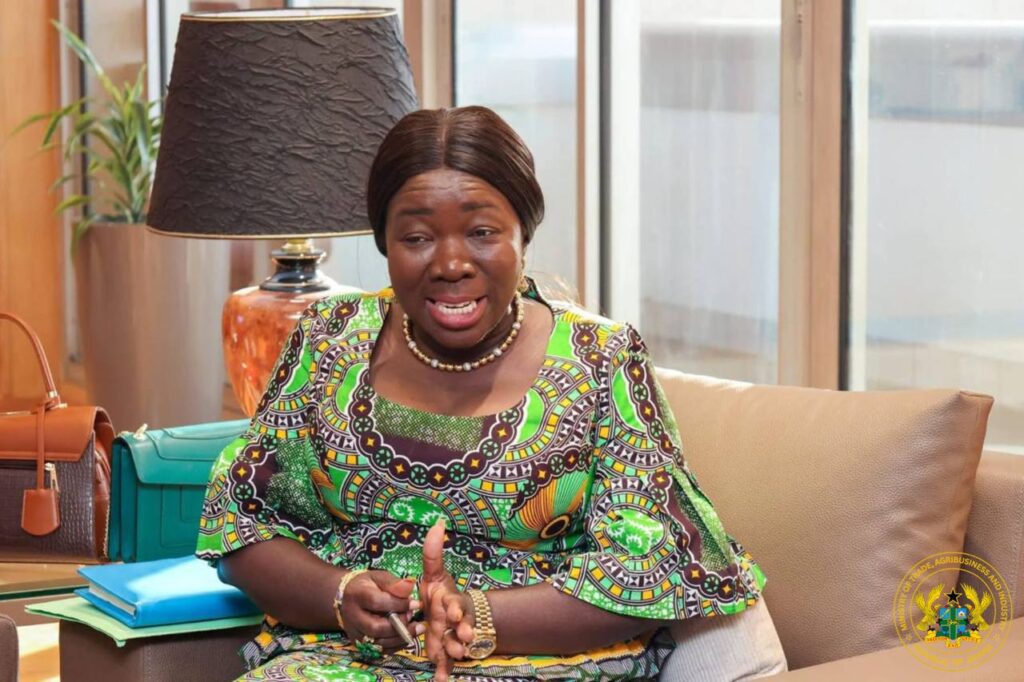
The Ghanaian delegation is looking to understand the incentives and infrastructure that enabled Morocco to bridge the gap between primary production and advanced manufacturing, as the country aims to become the West African production hub for brands and technologies that have already found a home in the North.
This strategic sectoral focus has moved the conversation beyond simple import-export dynamics and into the realm of joint ventures. During high-level talks, the Minister emphasized that Ghana’s goal is to create a symbiotic relationship where Moroccan components and Ghanaian assembly lines work in tandem to serve the burgeoning African market.
This approach is intended to provide Moroccan firms with a secure, stable, and highly productive base of operations within the ECOWAS sub-region, further solidifying the two nations as the twin engines of African industrialization.
Exporting 24-Hour Economy
A unique feature of the ongoing mission is the promotion of Ghana’s domestic 24-Hour Economy policy as a central value proposition for foreign investors. Hon. Ofosu-Adjare pitched the policy as a productivity guarantee that matches the high-velocity demands of global supply chains.
“The Hon. Minister further highlighted Ghana’s flagship 24-Hour Economy policy, positioning it as a key driver for industrial growth and investor attraction. She again drew attention to Ghana’s revised GIPC investment law, which enhances incentives and creates a more enabling environment for foreign investors”
Ministry of Trade, Agribusiness and Industry
For Moroccan firms looking to establish a presence in West Africa, the promise of continuous, multi-shift operations backed by state-guaranteed security and infrastructure support is a powerful incentive.
It ensures that capital-intensive investments, such as pharmaceutical plants or renewable energy component manufacturing, can maximize their output and return on investment in a shorter timeframe, especially when combined with the revised GIPC investment law, which has been specifically tailored to provide stability and incentives that institutional investors from Morocco require.
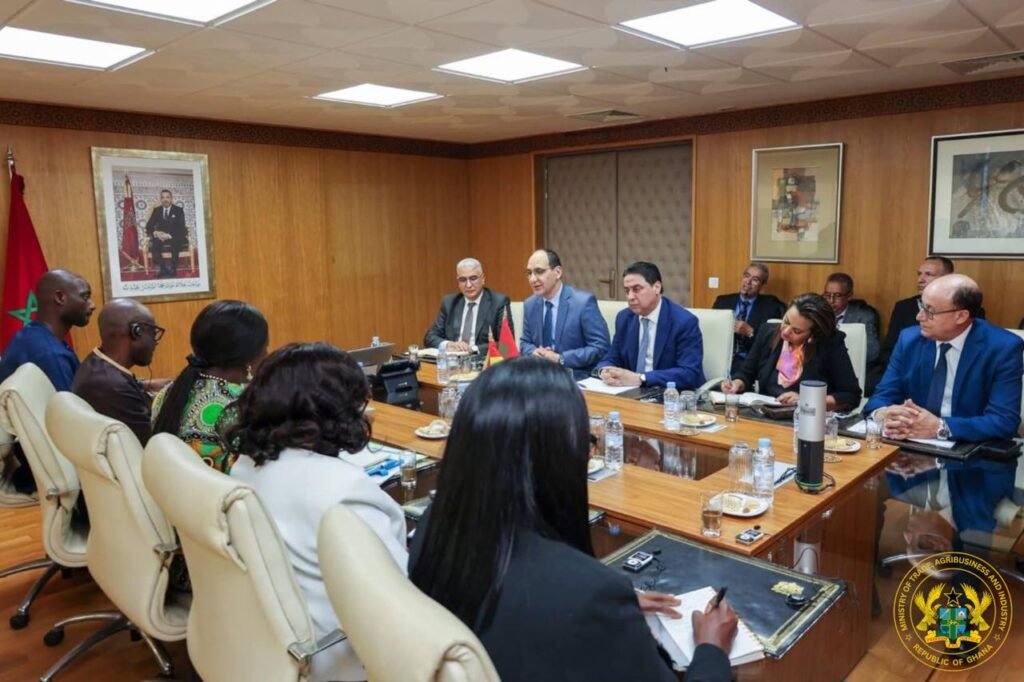
The Ghanaian delegation is making the case that the country is not just a market, but a secure and efficient production base for the wider continent. This legal clarity is essential for Moroccan investors who are accustomed to the sophisticated regulatory environments of the European and North African markets.
While the diplomatic tone remains warm, the economic realities of the relationship were addressed with professional candor. Hon. Karim Zidane noted that the landmark 2017 visit of His Majesty King Mohammed VI to Ghana was a turning point, yet the current trade balance remains significantly skewed in favor of Morocco.
Moroccan officials are now calling on Ghana to match its industrial rhetoric with actual export volumes. This necessitates a shift in Ghana’s export strategy, moving away from raw materials and toward the value-added products that the Moroccan market is increasingly demanding.
This call to action is a critical moment for the Ghana Export Promotion Authority, which is part of the delegation. For Ghana to benefit truly from the continental trade framework, it must be able to sell finished and semi-finished goods to markets like Morocco.
The Moroccan side’s proposal for an urgent Business and Investment Forum in Ghana is a direct response to this need, providing a dedicated space for Ghanaian businesses to showcase their export-ready portfolios to a new class of Moroccan buyers and partners who are eager to diversify their supply chains.
Neutralizing Trade Barriers
The discussions also took a turn during a separate engagement with Hon. Omar Hejira, Morocco’s Minister of Foreign Trade. Minister Ofosu-Adjare took the opportunity to advocate for the removal of non-tariff barriers that currently hinder the flow of goods between the two nations.
Under the trade framework, the reduction of tariffs is only half the battle; the real work lies in simplifying the customs procedures, standards certifications, and logistics bottlenecks that act as invisible walls to trade.
Hon. Hejira provided comprehensive insights into the Moroccan economic trajectory, which has been defined by aggressive expansion in renewable energy and port infrastructure alongside established dominance in finance, pharmaceuticals, and human capital development, while maintaining world-class standards in the automobile and aviation industries.
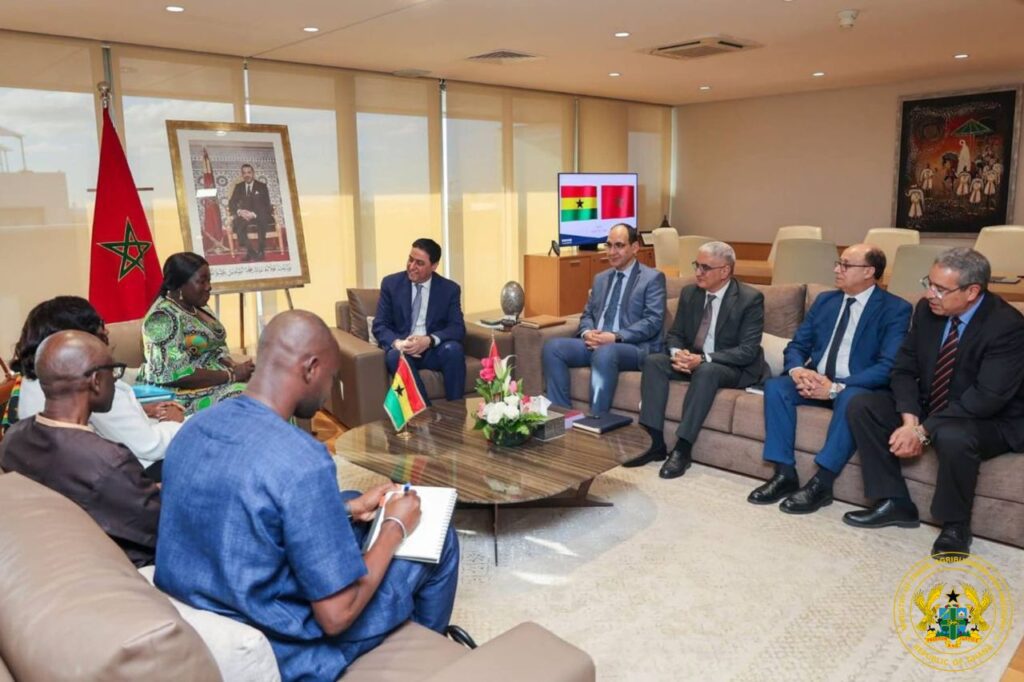
“Hon. Hejira described Ghana as a strategic trading partner and emphasized that the Minister’s visit represents a significant opportunity to elevate trade relations. Both parties reaffirmed their commitment to swiftly organizing the proposed Business and Investment Forum to catalyze business-to-business engagement”
Ministry of Trade, Agribusiness and Industry
As the visit concludes, the focus moves from the ministerial offices in Rabat to the planning rooms in Accra. The commitment to host a Business and Investment Forum is by far the most tangible outcome of this mission, signaling that both governments are ready to step aside and let the private sector take the lead.
With H. E Charity Gbedawo, Ghana’s Ambassador to Morocco, and senior officials from the Ministry managing the follow-up, the expectation is a surge in high-level engagements before the end of the second quarter of 2026.
READ ALSO: Relief for Borrowers As Ghana Loan Rates Set to Fall