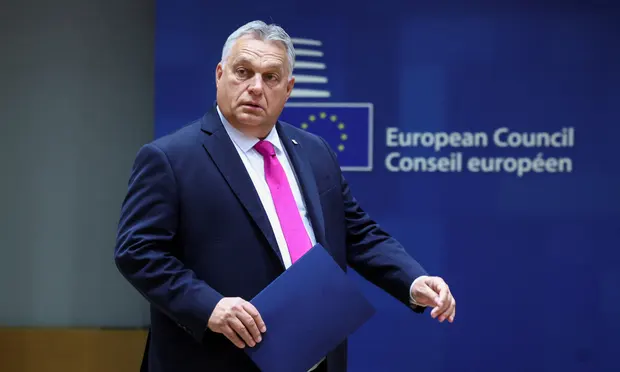
Hungarian Prime Minister Viktor Orbán has claimed that Ukraine was attempting to disrupt Hungary’s energy system and has ordered extra security at critical energy infrastructure sites.
The decision for extra security was reportedly made after an extraordinary meeting of the Defense Council, convened due to the halt in oil supplies via the Druzhba pipeline.
In a video posted to social media, Orbán said that the Ukrainian government was using “an oil blockade” to exert pressure on Hungary and that Hungarian national security services showed Ukraine was “preparing further actions to disrupt the operation of Hungary’s energy system.”
He didn’t provide details or evidence for his claims.
“We will deploy soldiers and the necessary equipment to repel attacks near key energy facilities. The police will patrol with increased forces around designated power plants, distribution stations and control centers.”
Viktor Orbán
Budapest has recently accused Kyiv of deliberately holding back Russian oil deliveries through the Druzhba pipeline, which crosses Ukraine’s territory.
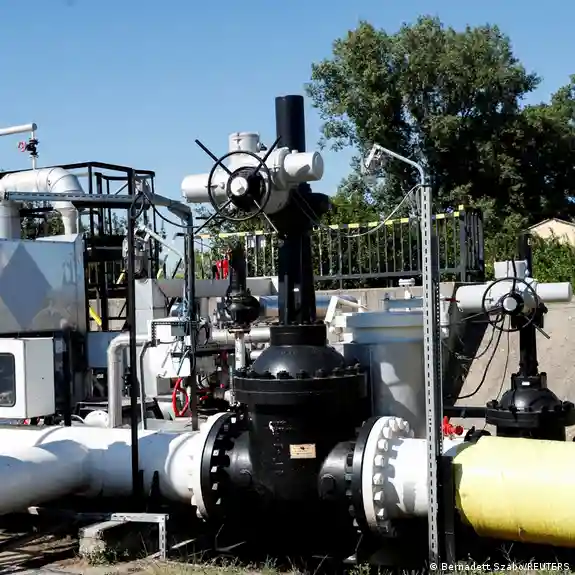
Ukrainian officials have denied the allegations, saying the pipeline, which feeds refineries in Hungary and Slovakia, was hit in a Russian drone attack.
Druzhba has been out of commission since January 27. Repairs are hazardous and the pipeline can only operate reliably if Russia stops targeting energy infrastructure, according to Ukrainian officials.
Orban has repeatedly accused Ukraine of “blackmail” to force him to give up his anti-Ukrainian positions, and of seeking to drive up energy prices in Hungary just weeks before a pivotal election.
Orbán has in recent weeks launched an aggressive anti-Ukraine campaign ahead of elections in April which will likely be the toughest he’s faced in his 16 years in power.
Orbán, who retook office in 2010, faces the strongest challenge to his power in an election set for April 12. The EU’s longest-serving leader and his right-wing Fidesz party are trailing in most independent polls to an upstart center-right challenger, Péter Magyar.
His party has pushed the message that if it loses the election, the Tisza party will drag the country into the war in Ukraine, bankrupting Hungary and getting its youth killed on the front lines.
Orbán is widely seen as the Kremlin’s strongest ally in the E.U. While almost all of the bloc’s other 26 nations have distanced themselves from Russia since it launched the war on February 24, 2022, Hungary has deepened cooperation.
The prime minister has cast his relationship with Russian President Vladimir Putin as pragmatic, stemming from Hungary’s access to reliable supplies of Russian oil and gas.
However, Orbán’s anti-LGBTQ+ policies, crackdowns on the media and nongovernmental organizations, and his labeling of critics as “foreign agents” have led to accusations that he’s reading from Putin’s authoritarian playbook.
He has cast the neighboring country as a grave threat to Hungary’s security, and himself as the only guarantor of its safety
On Sunday, Hungary threatened to block a major, 90-billion euro ($106 billion) EU loan for Kyiv, and vetoed a new round of EU sanctions against Russia on Monday. Orbán has vowed to block any other EU measures to assist Ukraine until oil shipments resume.
Nearly every country in Europe has significantly reduced or entirely ceased Russian energy imports since Moscow launched its war in Ukraine on Feb. 24, 2022.
Yet Hungary and Slovakia, both EU and NATO members, have maintained and even increased supplies of Russian oil and gas, and received a temporary exemption from an EU policy prohibiting imports of Russian oil.
Orbán Orders Ban On Drone Operations In Szabolcs-Szatmár-Bereg
Orbán also ordered a ban on drone operations in Szabolcs-Szatmár-Bereg County, which borders Ukraine.
Meanwhile, a Spokesperson for the European Commission, Anna-Kaisa Itkonen said that both Hungary and Slovakia had alternative sources of oil supply, such as the Adria pipeline that passes through Croatia. This came after a meeting of experts to discuss the situation in both countries.
“Croatia confirmed at the meeting that non-Russian crude oil is being transported through the Adria pipeline to Hungary and Slovakia.”
Anna-Kaisa Itkonen
Itkonen added that it remains the main alternative pipeline for Hungary and Slovakia to cover their needs, and the pipeline has sufficient capacity to increase volumes to fully cover the Hungarian and Slovakian requirements.
READ ALSO: Trump Touts Economy In State Of The Union Address