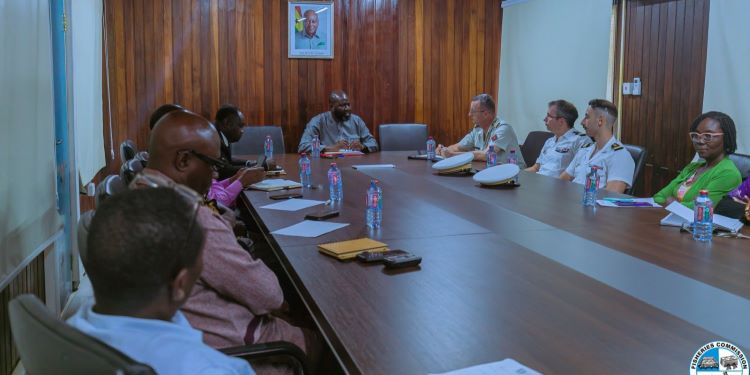
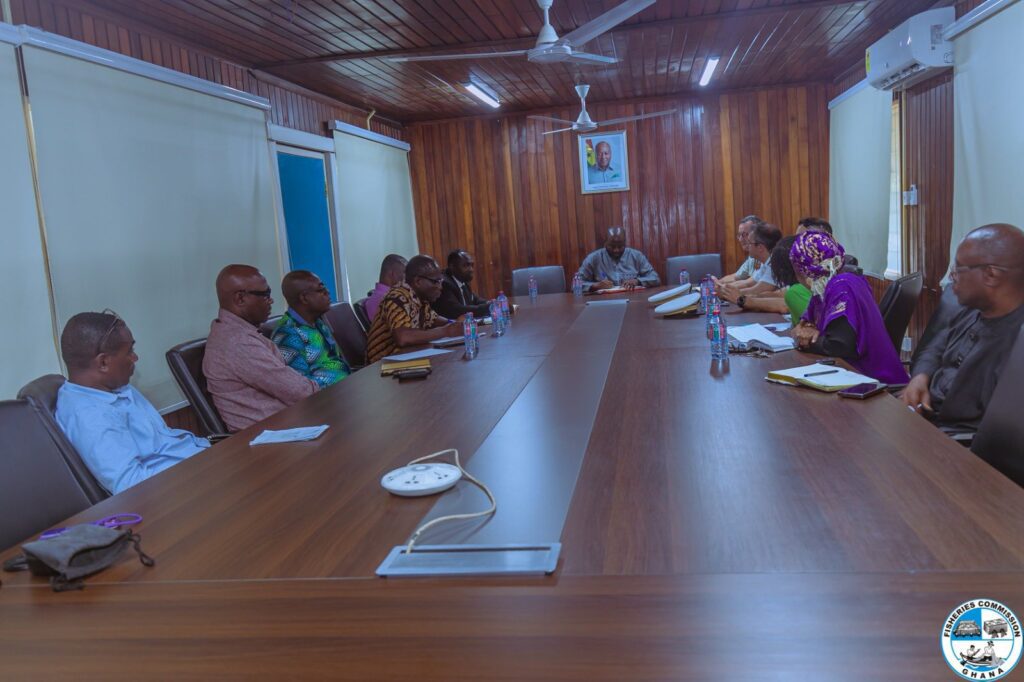
In a significant reinforcement of Ghana’s “Blue Economy,” defenses, the Fisheries Commission (FC) has hosted a high-level delegation from the French Navy to internationalize the protection of Ghana’s territorial waters and ensure the long-term sustainability of its marine resources.
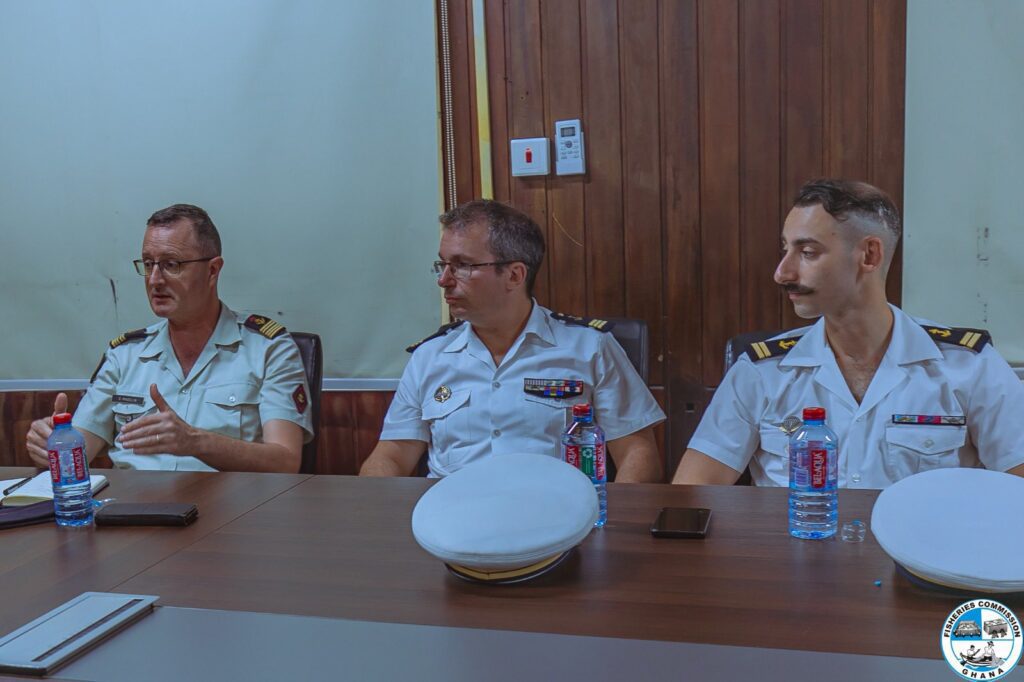
The diplomatic and technical engagement, held at the Commission’s headquarters, coincided with the strategic port call of the French Navy Offshore Patrol Vessel (OPV), Commandant Bouan, at the Tema Harbour and marked a critical juncture in the Mahama Administration’s maritime effort.
“Discussions focused on strengthening bilateral and multilateral cooperation between Ghana and France, particularly to address the growing challenge of Illegal, Unreported and Unregulated (IUU) fishing, piracy and robbery activities in the Gulf of Guinea”
Fisheries Commission
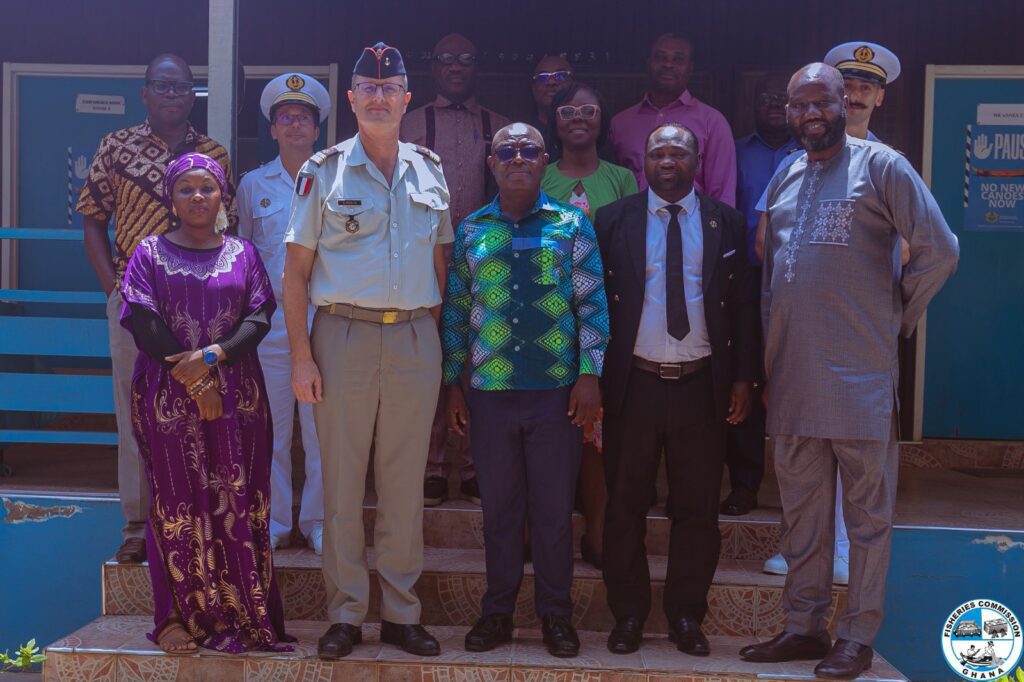
By focusing on a unified response to the asymmetrical threats facing the Gulf of Guinea, the dialogue between Prof. Benjamin Betey Campion, Executive Director of the Fisheries Commission, and the French naval officers advanced Ghana’s interest in safeguarding the protein source and livelihoods of millions of citizens.
As Ghana pushes forward with its “Economic Reset,” this has become a matter of national security. The presence of the Commandant Bouan in Ghanaian waters serves as a powerful symbol of the bilateral cooperation required to deter criminal actors on the high seas.
The discussions on the growing menace of Illegal, Unreported and Unregulated (IUU) fishing highlighted how Minister-led initiatives within the Administration have identified IUU fishing as a primary cause of dwindling fish stocks and economic leakage.
The French Navy, with its extensive experience in international maritime policing, shared insights on advanced detection methods for “dark vessels,” – trawlers that intentionally disable their transponders to evade local authorities.
In addressing the surge in piracy and armed robbery that has historically plagued the region, the Fisheries Commission sought to align Ghana’s monitoring efforts with French naval intelligence, to create a “surveillance shield” that makes it impossible for pirate vessels to operate undetected.
This partnership is viewed as a force multiplier for the Fisheries and Aquaculture Act, 2025 (Act 1146), which provides the legal mandate for stricter enforcement and heavier penalties for maritime crimes.
Capacity Building and Information Sharing
A key outcome of the engagement was the commitment to practical avenues for collaboration as the Fisheries Commission’s Divisional Heads and the French delegation explored frameworks for real-time information sharing – noting that in the modern maritime environment, data is the most effective weapon.
“The meeting also explored practical avenues for collaboration, including information sharing, capacity building, and enhanced operational coordination to support Ghana’s fisheries monitoring, control, and surveillance efforts”
Fisheries Commission
By integrating Ghana’s Vessel Monitoring Systems (VMS) with international naval databases, the state can achieve a comprehensive Common Operating Picture (COP) of its maritime domain.
Furthermore, according to the Commission, the partnership will prioritize capacity building for the Fisheries Commission’s Monitoring, Control, and Surveillance (MCS) personnel, including specialized training in boarding and inspection techniques, evidence gathering for maritime prosecution, and the use of drone technology for coastal reconnaissance.
These efforts are designed to ensure that Ghanaian officers are equipped with the skills necessary to manage a technologically advanced 24-hour maritime economy.
Protecting the Industrialization
The FC noted that engagement with the French Navy was deeply rooted in Ghana’s broader Industrialization agenda for its fisheries sector. For the government to successfully attract investment into fish processing plants and aquaculture ventures, the raw material – the fish – must be protected from foreign exploitation and criminal theft.
The Executive Director emphasized that a secure sea is a prerequisite for a thriving industrial sector. By coordinating operations with international partners like France, Ghana is sending a clear message to the global community: the Gulf of Guinea is no longer a lawless frontier.
The presence of the Commandant Bouan and the subsequent technical exchanges demonstrate that Ghana is leveraging its strategic partnerships to build a resilient and sovereign maritime industry. This is a central pillar of the 2026 industrial strategy, which aims to turn the blue economy into a primary driver of GDP growth.
“The courtesy call reaffirmed the importance of international partnerships in safeguarding marine resources and underscored the shared commitment of both parties to sustainable fisheries management and maritime security in the region”
Fisheries Commission
The visit concluded with a reaffirmation of the shared values between the two nations regarding sustainable fisheries management. Beyond security, the collaboration touches on the ecological health of the Atlantic.
Overfishing by unregulated foreign fleets not only robs the state of revenue but also destroys the biodiversity required for future generations. The French Navy’s commitment to supporting Ghana’s surveillance efforts is, therefore, a commitment to global environmental security.
As the French vessel departs Tema Harbour, the technical working groups established during this meeting will begin the work of operationalizing the new coordination protocols.
For the fishers of Ghana, this international alliance provides a new layer of hope. With the Administration securing the seas through both local legislative reform and global military cooperation, the future of Ghana’s fisheries looks increasingly secure.
READ ALSO: Ghana Records No Casualties in US-Iran War, Steps Up Evacuation