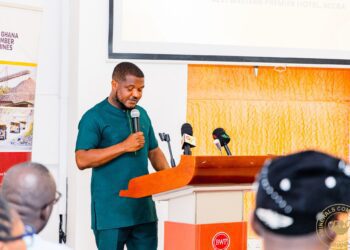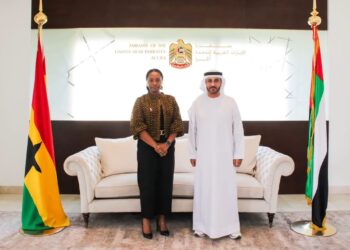

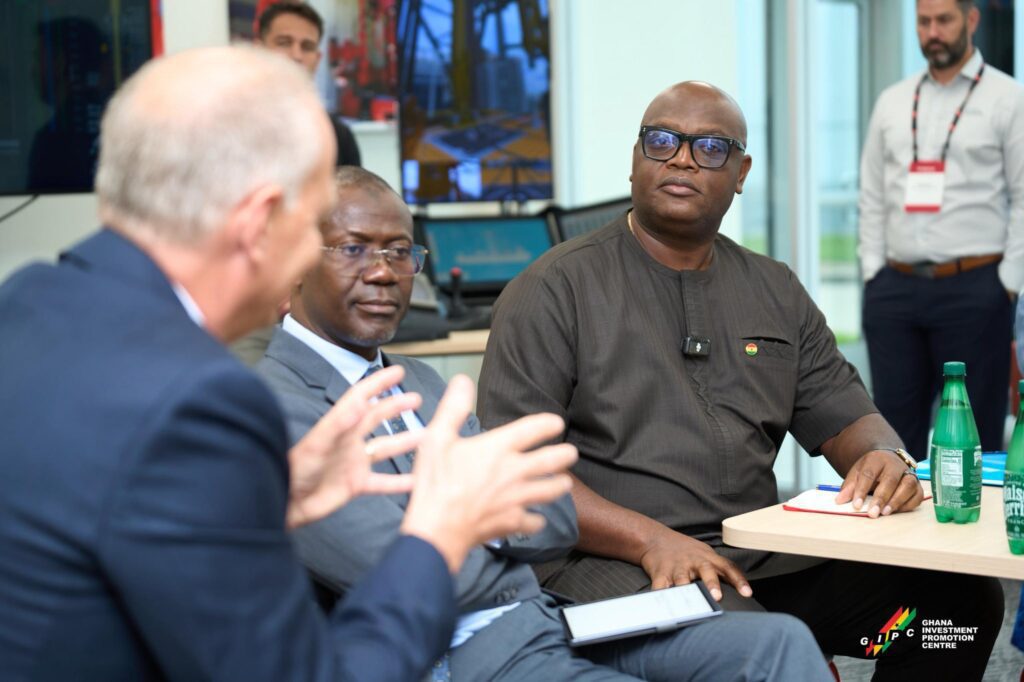
Ghana Investment Promotion Authority (GIPA) CEO, Mr. Simon Madjie, recently convened a high-level strategic meeting with key representatives from the UK-Ghana Gold Programme (UKGGP), including Team Leader Mr. Chris Aston and Programme Director Ms. Samira Amarquaye, to establish actionable frameworks for advancing responsible mining, expanding capital inflows, and fostering long-term development across Ghana’s gold and critical minerals value chains.
The collaborative dialogue centered on aligning institutional capabilities to drive sustainable resource governance, elevate operational practices among industry actors, and position the nation’s extractive domain as a premier regional destination for ethical private capital.
By targeting joint initiatives in regulatory compliance and market expansion, both entities seek to accelerate sector transformation while protecting environmental integrity.
“The meeting explored opportunities for collaboration to identify investment-ready projects, address barriers to investment and attract the capital and technical expertise needed to develop the sector responsibly”
GIPA

Expanding on these preliminary strategic objectives, the primary deliberations focused heavily on strengthening institutional governance models, institutionalizing supply chain traceability, and unlocking high-value commercial ventures throughout the mineral resource landscape.
Both delegations emphasized that achieving sustainable financial growth requires targeted capital deployment in mineral exploration, localized refining infrastructure, industrial processing capacity, and domestic value addition.
Furthermore, the discussions highlighted the fundamental necessity of generating precise, standardized, and publicly accessible geological data.
Establishing dependable geological surveys serves as the critical foundation needed to mitigate early-stage exploration risks, empower domestic regulatory oversight, and accurately guide prospective foreign and local investors toward commercially viable mining developments.
Accelerating Value Retention Through Institutional Governance
Retaining a significantly higher proportion of mineral revenues within host territories has emerged as an imperative economic policy across developing mining nations.
For decades, traditional extractive frameworks across Sub-Saharan Africa have operated predominantly under export-oriented models, where raw unrefined ores leave local shores with minimal domestic processing.
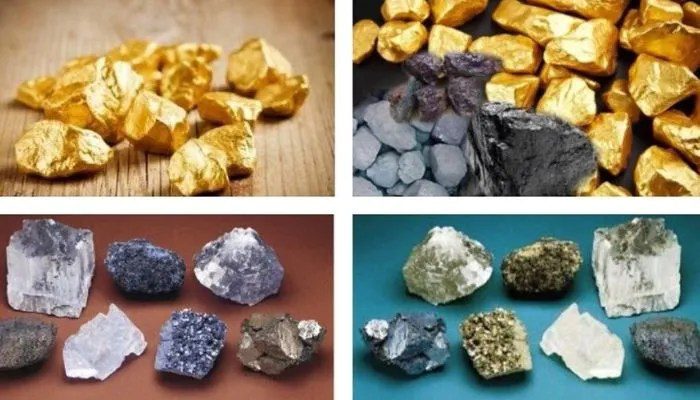
This historical reliance on raw material exports leaves national economies highly vulnerable to international commodity price volatility while transferring major refining profits and industrial manufacturing jobs to external jurisdictions.
By prioritizing responsible investment mechanisms, GIPA and the UK-Ghana Gold Programme aim to systematically overhaul this legacy system by incentivizing local processing hubs, state-of-the-art gold refineries, and mineral processing facilities within Ghanaian borders.
Capitalizing on domestic midstream processing transforms raw extraction into a resilient catalyst for broad-based economic industrialization, expanded taxation revenues, direct job creation, and sustainable local community infrastructure.
Overcoming Investment Barriers and Modernizing Geological Mapping
Unlocking private capital for critical minerals and precious metals requires eliminating deep-seated administrative, technical, and regulatory bottlenecks that historically deter institutional financiers.
Unclear land tenure, lengthy permitting schedules, informal mining competition, and opaque supply chain tracking mechanisms routinely elevate project risk profiles, driving up borrowing costs for legitimate operators.
The UKGGP partnership directly addresses these structural impediments by establishing standardized governance protocols, introducing transparent mineral tracing mechanisms, and streamlining formal investment gateways.

Simultaneously, the lack of comprehensive modern geological mapping across vast mineral-bearing zones limits the sector’s growth potential. Without high-resolution geophysical and geochemical data, initial exploration phases remain prohibitively speculative.
Upgrading national geological surveys drastically shortens project development lifecycles, accurately quantifies commercial reserves, and provides international investment consortia with the analytical confidence required to fund complex, long-term extraction and processing ventures.
Mobilizing Capital via Strategic Platforms and the Invest Ghana Summit
Strategic industry forums provide the indispensable bridge between institutional capital allocators, legal regulators, and project developers seeking technical partnerships.
Platform engagements such as the forthcoming Invest Ghana Summit serve as dynamic marketplaces to showcasing pre-vetted, investment-ready natural resource projects directly to vetted global investors.
These summits enable policymakers to directly address legal uncertainties, highlight competitive tax incentives, and demonstrate national readiness for large-scale industrial partnerships.
As global demand for green transition minerals and certified, ethically sourced gold accelerates, convening targeted investment summits allows Ghana to proactively project its stable macroeconomic climate and progressive regulatory landscape.
Through direct dialogue between state promotion agencies and international technical groups, the nation actively secures the modern machinery, clean technologies, specialized operational expertise, and long-term funding necessary to build a transparent, highly lucrative, and sustainable minerals economy.
READ ALSO: PRETAG Urges Government to Honour Promotion Arrears Deadline