JD Vance has rejected claims that the US is interfering in Hungarian politics.
This came as the US Vice President spoke at a think tank and educational institution linked to Hungary’s leader, Viktor Orbán, a day after criticising the EU and accusing it of being behind one of the “worst examples” of foreign interference.
The German government shot back at Vance’s claim that the EU was interfering in Hungary’s election, with a government spokesperson saying that the fact that Vance was in Hungary “already shows, or speaks for itself, who is interfering in what.”
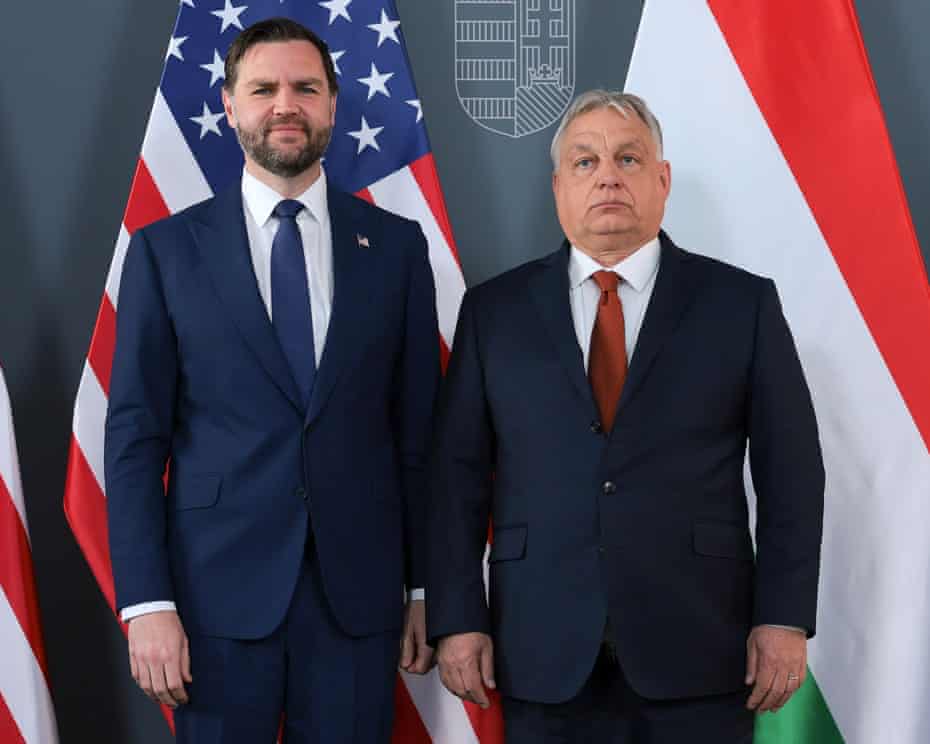
Vance insisted, however, that his efforts to bolster the campaign of the rightwing, populist leader, Viktor Orbán did not constitute foreign interference. “I find it darkly ironic that people are accusing me of engaging in some kind of foreign influence,” he said.



With four days to go until Hungarians cast their ballots and with Orbán trailing the opposition in most polls, Vance acknowledged the singular nature of his visit. “It’s unprecedented for an American Vice President to come the week before an election,” he said.
Nonetheless, he said that he had decided to come because of what he described as the “garbage happening against” Orbán in the election.
“We had to show that there are actually lots of friends across the world who recognise that Viktor and his government are doing a good job and they’re important partners for peace.”
JD Vance
As Vance and his wife, Usha, landed in the Hungarian capital yesterday, Péter Magyar, the leading opposition candidate, issued a pointed statement decrying election interference.
“No foreign country may interfere in Hungarian elections. This is our country. Hungarian history is not written in Washington, Moscow, or Brussels – it is written in Hungary’s streets and squares.”
Péter Magyar
The US Vice President laid blame with the EU for Hungary’s ills, even as research shows that the country has received more in EU funds than any other major post-communist EU country, both as a share of GDP and per capita, and that Orbán’s time in power has correlated with the country becoming the most corrupt in the EU.
Vance also took aim at Volodymyr Zelenskyy, describing comments by the Ukrainian leader as “completely scandalous” and accused Kyiv of using energy supplies to influence Hungary. It was a reference to controversial comments Zelenskyy made after Orbán vetoed further EU sanctions on Russia as well as an additional €90bn loan for Ukraine.
The Ukrainian leader was prompted to say he could give the address of whoever was responsible to the Ukrainian army. The comment reportedly led European allies to ask Zelenskyy to tone down his rhetoric.
Vance said that he was “disappointed” by Europe’s political leadership as it appeared to him that they were not “particularly interested” in solving the conflict.
He contrasted this with Orbán, who has broken with most EU countries by refusing to help Ukraine with financial assistance or weapons, and who, he said, had been “the one who encouraged us to truly understand” the perspective of both the Ukrainians and Russians.
Polls Suggest Win For Tisza party In Hungary’s Election
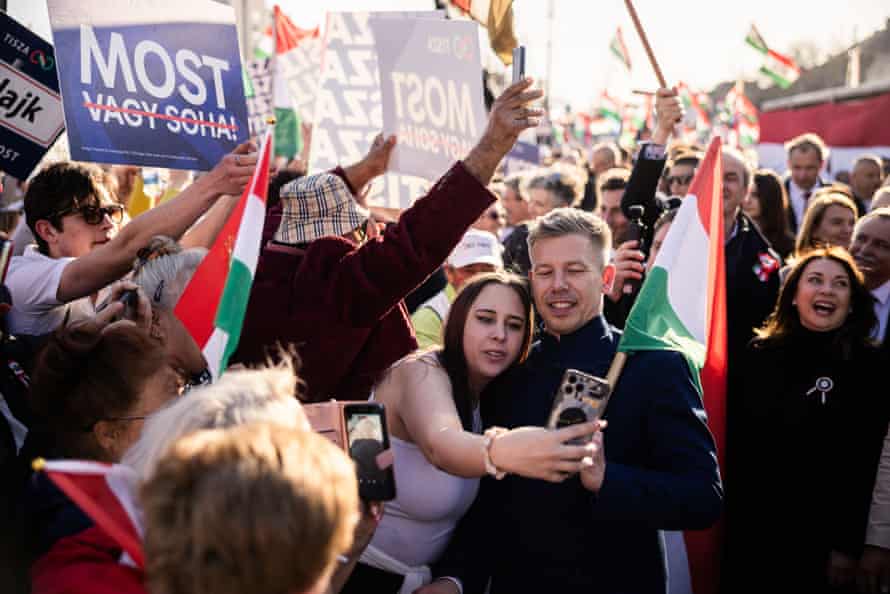
Meanwhile, a set of polls suggested the opposition Tisza party could win a supermajority in the upcoming elections.
A projection from the polling agency Median suggested that Tisza could win a two-thirds majority in the country’s 199-seat parliament. While accusations of vote-buying and gerrymandering make the outcome of the election incredibly difficult to predict, a Tisza supermajority would give the party enough power to amend the constitution and key laws, meaning they could unlock EU funds.
Péter Magyar, a former member of the Fidesz party’s inner circle and now the leading opposition candidate, burst into public view two years ago after he broke ranks to accuse Orbán’s party of rampant corruption.
The claims culminated into a campaign that has steadily swelled, transforming the upcoming election into one of the most consequential of recent times, as it galvanised voters’ frustration over issues such as deteriorating public services, soaring housing prices and economic stagnation.
The result has been a deeply polarising campaign in which Orbán and Fidesz have sought to argue that the EU and Ukraine represent the gravest threats to Hungary, portraying the election as a stark choice between war or peace, while Magyar has focused on domestic issues.
READ ALSO: Ghana’s Crude Oil Production Suffers 9% Decline in 2025 – PIAC Report