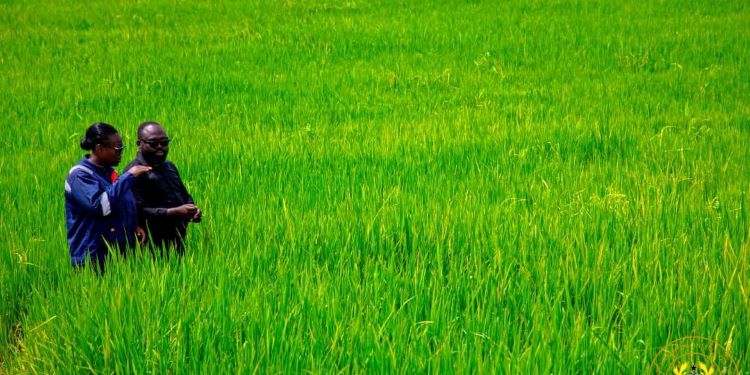
The Afram Plains, long characterized by its vast, untapped potential and geographical isolation, is currently the site of a radical agricultural transformation that is redrawing the map of Ghana’s food security.
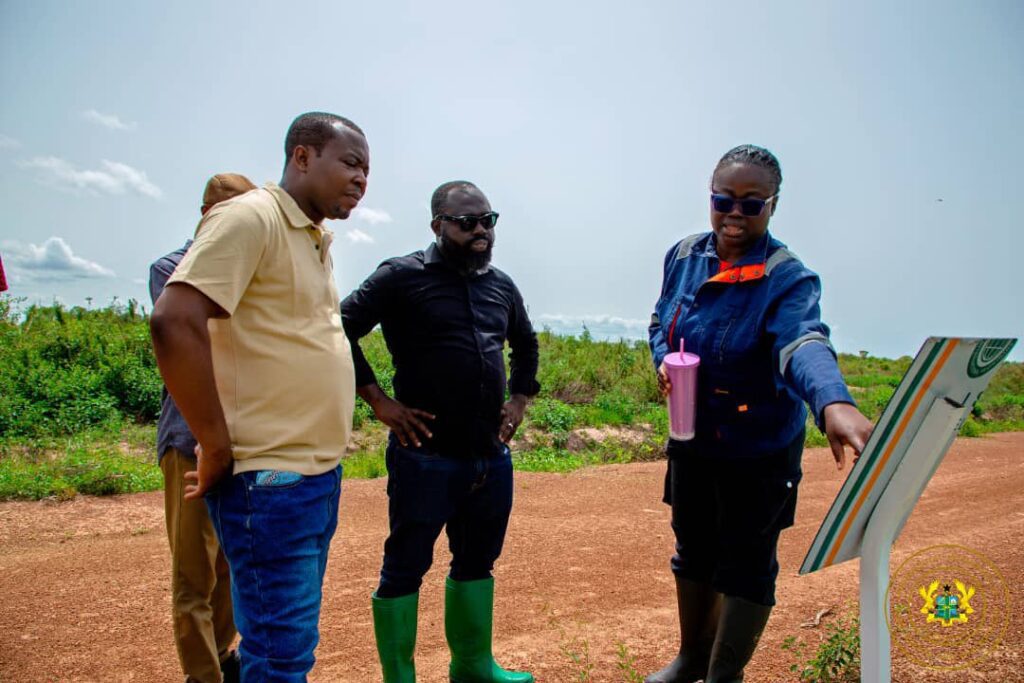
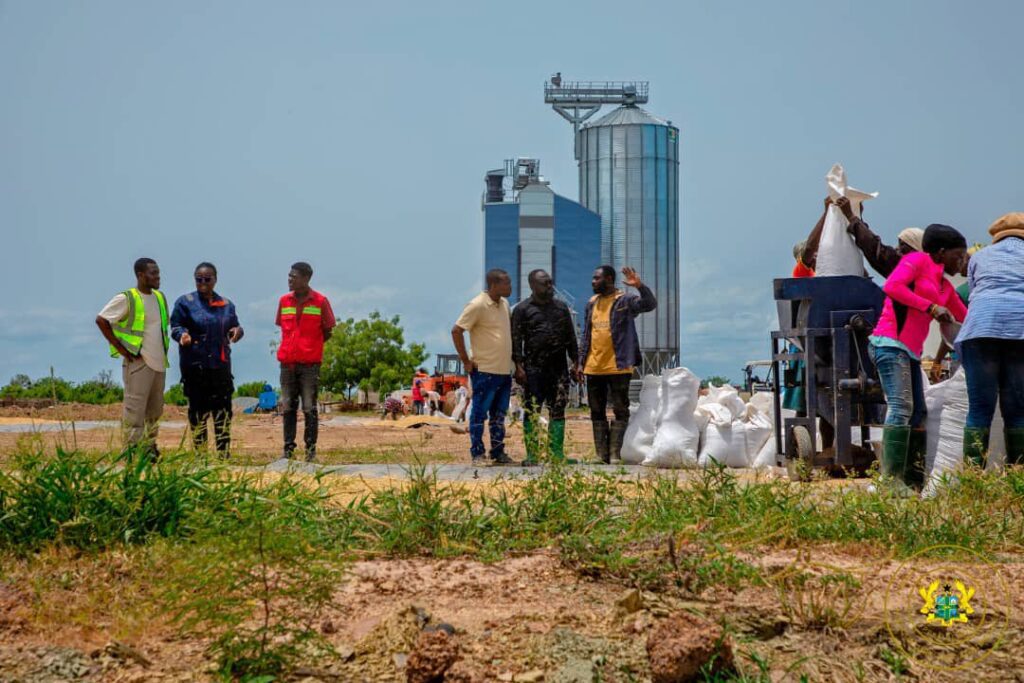
This revelation comes after the Presidential Initiative on Agriculture and Agribusiness (PIAA) conducted a high-level working visit to Nobi Farms, a massive 7,000-acre rice cultivation project located in Sikasu Dortopon, near Forifori in the Eastern Region.
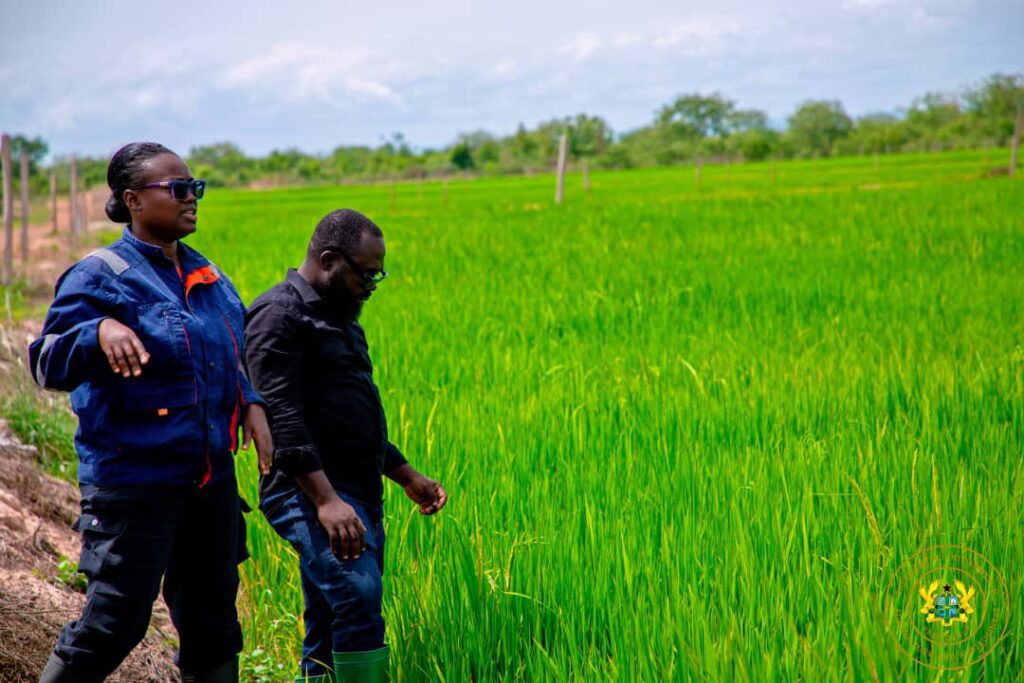
Led by the Initiative’s Director, Dr. Peter Boamah Otokunor, the visit served as a formal validation of what many are calling a benchmark for the next generation of Ghanaian agribusiness.
“I paid a working visit to Nobi Farms located at Sikasu Dortopon near Forifori in the Afram Plains of the Eastern Region. A remarkable testament of innovative agriculture envisioned by Hon. Awuah Darko. Nobi farms is uniquely surrounded by water that irrigates over 7,000 acres of land for rice cultivation”
Dr. Peter Boamah Otokunor, Director of the Presidential Initiative on Agriculture and Agribusiness
Under the vision of Hon. Awuah Darko, Nobi Farms has transitioned from a conceptual ambition into an industrial powerhouse.
In an era where the national discourse is dominated by the need for import substitution – specifically regarding rice, which remains one of Ghana’s most significant foreign exchange drains – the infrastructure at Nobi Farms provides a tangible blueprint for how engineering-heavy agriculture can solve systemic economic vulnerabilities.
The sheer scale of the operation at Nobi Farms is rooted in its sophisticated water management system. Unlike traditional rain-fed agriculture, which leaves farmers at the mercy of increasingly unpredictable weather patterns, Nobi Farms has engineered its way into a position of year-round productivity.
The facility is uniquely surrounded by natural water sources, which are harnessed through a massive 23-acre reservoir. This reservoir acts as the heart of the farm’s irrigation network, boasting a storage capacity of 1.2 million cubic meters of water.
However, storage is only half the battle. According to Dr. Otokunor, the true operational miracle lies in the farm’s pumping capacity. With an industrial-grade pump rate exceeding 1,500 cubic meters per minute, the farm is capable of ensuring that every one of its 7,000 acres receives the precise hydration required for premium rice cultivation.
This level of technical logistics effectively “future-proofs” the harvest, allowing for consistent yields regardless of the season.
Vertical Integration and the Rice Mill
One of the critical failures of past agricultural initiatives in the sub-region has been the lack of post-harvest infrastructure. For many farmers, a bumper crop often leads to heartbreak when lack of processing power results in post-harvest losses. Nobi Farms has bypassed this bottleneck through vertical integration.
The inclusion of an on-site Rice Mill means that the journey from paddy to polished grain happens within the same ecosystem, and by processing the rice where it is grown, the project significantly reduces transportation costs and ensures that the quality control remains strictly under the supervision of the farm’s management.
This integration is essential for creating a brand of Ghana rice that can compete with high-quality imports on the shelves of supermarkets in Accra and Kumasi. For Dr. Otokunor and the Presidential Initiative, this is the “missing link,” that turns a farm into a sustainable business enterprise.
The strategic importance of Nobi Farms was underscored a few weeks ago when H.E. John Dramani Mahama visited the site. The President’s presence at the Afram Plains facility was more than a ceremonial appearance; it was an indication that the administration views such innovative projects as the pillars of its broader industrialization agenda.
The Presidential Initiative on Agriculture and Agribusiness exists to identify and scale exactly these types of operations – those that combine vision with hard technical execution.
The visit by Dr. Otokunor was a follow-up to ensure that the momentum generated by the President’s visit is translated into sustained policy support, making sure that the narrative of the struggling Ghanaian farmer, is replaced by the image of the strategic agribusinessman.
Hon. Awuah Darko’s ability to combine hard work with high-level engineering has set a new standard for what private-sector leaders can achieve when they align their goals with national priorities.
For the local communities in the Eastern Region, Nobi Farms represents a new economic lifeline. The Afram Plains have often been sidelined due to infrastructure challenges, but the success of this project proves that with the right investment in irrigation and milling, the region can become the definitive breadbasket of West Africa.
The farm provides jobs not just for tillers, but for engineers, mill operators, logistics experts, and agronomists.
As the Presidential Initiative continues its work, the focus will remain on how to replicate the “Nobi model,” across other regions. The goal is to move beyond the 7,000-acre mark and create a network of such farms that, collectively, can end Ghana’s dependence on foreign rice.
The success of Nobi Farms provides the data points necessary to argue for more aggressive investment in irrigation infrastructure nationwide. As Dr. Otokunor noted during his visit, the innovation seen here is a “remarkable testament” to what is possible when vision is met with the discipline of execution.
He reiterated that with the 1.2 million cubic meter reservoir as its shield and a high-speed rice mill as its engine, Nobi Farms is well on its way to becoming a national icon of productivity.
READ ALSO: Free Primary Healthcare To Bridge Gaps In Assessing Health Services