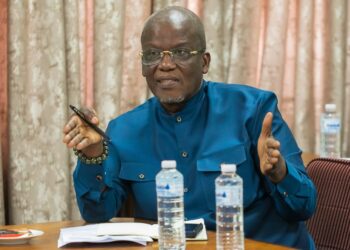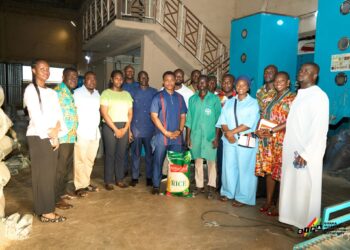

The Minister for Fisheries and Aquaculture Development, Hon. Emelia Arthur, has descended upon the clam-rich riverbanks of the Ada East District to supervise the industrialization of one of Ghana’s most significant inland micro-economies.
This engagement with the Lower Volta’s clam industry, the latest high-impact stop in her six-day nationwide tour, signals a transition from traditional subsistence harvesting to a high-turnover “Blue Economy” model.
The Ministry of Fisheries and Aquaculture Development (MoFAD) is moving to protect a trade that supports over 1,200 people in Ada alone, ensuring that the 1.62 million kilograms of clams harvested weekly are processed with modern technology rather than the grueling manual labor that has defined the sector for generations.
“As the Ministry prepares to launch Ghana’s first Inland Fisheries Management Plan, we are committed to safeguarding habitats against sediment mining and ensuring fair water access for our traditional clam farmers. This is more than just fishing – it’s about protecting our heritage and securing our future”
Ministry of Fisheries and Aquaculture Development
According to MoFAD, the clam industry in these zones is an economic powerhouse, with weekly landings valued at upwards of GHS 2.25 million. The Minister’s presence in the Kponkpo Kpanya and Ageke-Tsatsu Kope communities catalyzes the forthcoming Inland Fisheries Management Plan, especially since the true potential of this sector has historically been throttled by the pace of traditional processing.
Currently, cleaning and soaking clams to remove sediment can take up to three days. The Ministry is now pushing for the widespread adoption of depuration machines, which will reduce this timeframe to just a few hours, effectively multiplying the turnover capacity for the 50 canoes that land daily during peak seasons.
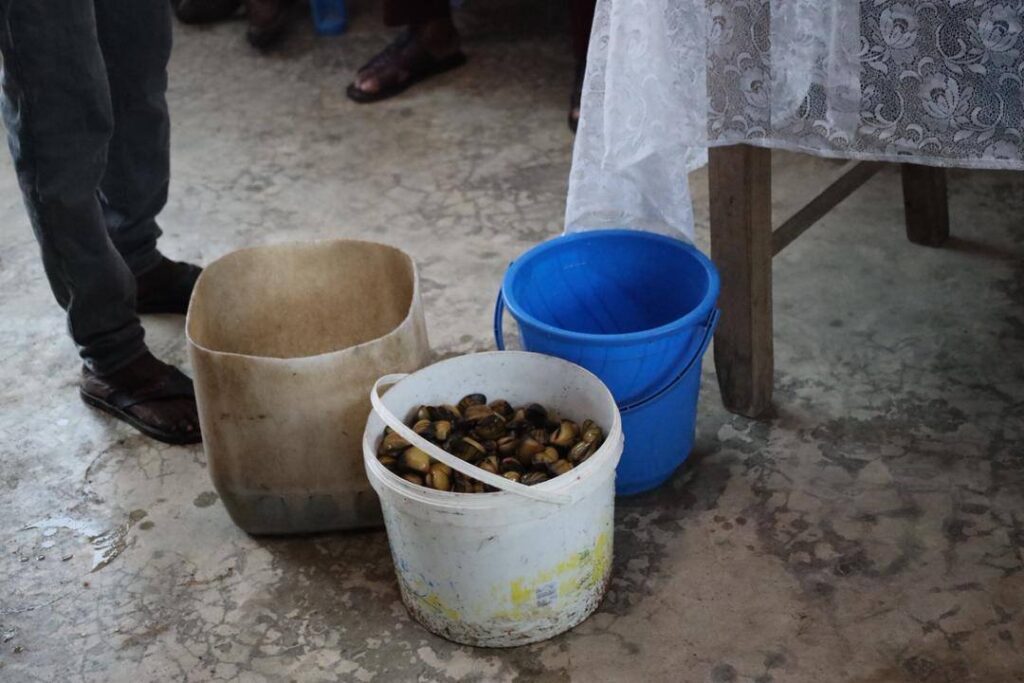
For MoFAD, this modernization is not merely about speed; it is about the total industrialization of the value chain. Hon. Arthur highlighted that the future of the sector lies in the utilization of every component of the harvest, including the shells.
In a move toward circular economic resilience, the Ministry is encouraging the use of clam shells as raw materials for the paint and animal feed industries, turning what was once environmental waste into a secondary revenue stream for processing communities. The approach is to provide local power to the harvesters who have long lacked the infrastructure to maximize their yields.
Environmental Threats and Stakeholder Demands
Despite the industrial optimism, the tour has uncovered significant hurdles that threaten the sustainability of the Volta River’s resources. During a high-level meeting with the Member of Parliament for Ada East, Hon. Comfort Doyoe Cudjoe Ghansah, and local clam harvesters, the Minister was briefed on the escalating crisis of land reclamation and the sale of waterfront lands.
These activities are encroaching on critical clam habitats, potentially destroying the very grounds that sustain 14 communities along the river. The stakeholders warned that without strict safeguarding against sediment mining and unfair land sales, the “Blue Economy” could be crippled before it fully matures.
Beyond the environmental threats, the fishers presented a rigorous list of operational requirements. The lack of outboard motors, inadequate supplies of premix fuel, and limited access to credit remain the primary barriers to entry for younger generations in the industry.
The Fisheries Minister acknowledged that while technological innovations like depuration are vital, they must be supported by foundational infrastructure. The call for modern processing facilities and safer landing sites at places like Lower Prampram Beach – where high tides frequently disrupt operations – has now been prioritized as the tour moves toward its next phase.
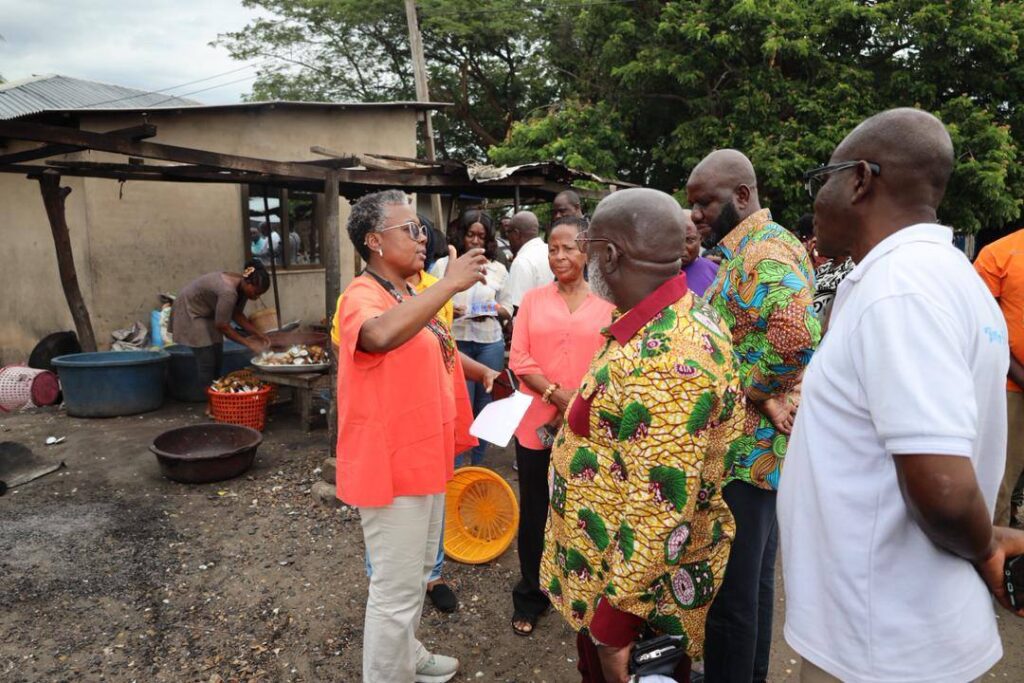
The intensity of the Ada engagement follows the tour’s sobering commencement in the Dangme East Zone, where Minister Arthur first established her “Fix-it-or-Replace-it” doctrine. Before arriving at the clam riverbanks, the Minister’s first order of business was a direct confrontation with the systemic neglect of state assets.
At the Ningo-Prampram District, she inspected an ice-making plant that was completed in 2012 but has remained idle for over a decade. The facility, which lacked electricity and a management structure, served as a stark reminder of the “untapped potential” that the Ministry is now determined to reactivate or decommission.
Hon. Arthur’s reaction to the silent machines at Ningo-Prampram set the tone for the entire nationwide mission. With her refusing to accept the status quo of abandoned infrastructure, she has signaled to district authorities and project managers that the period of administrative apathy is over.
The immediate technical audit she directed at Ningo-Prampram will serve as a test case for the Ministry’s new approach to asset management: if a facility cannot serve the fishing community, it will no longer be allowed to tie down public funds.
The ice plant was intended to support the cold chain for fishers at the Lower Prampram Landing Beach, yet its failure has forced local operators to find more expensive and less efficient ways to preserve their catch.
As Hon. Emelia Arthur concludes this leg of her tour, the focus remains on transforming the raw data of the landing beaches into the final text of the Inland Fisheries Management Plan. The tour has successfully mapped the economic scale of the region – from the 18,000 sacks of clams landed weekly to the silent, electricity-starved plants of the previous decade.

The Minister has been adamant that the forthcoming Inland Fisheries Conference will not be a gathering of theorists, but a forum for the practical resolution of the challenges faced by the 500 people directly employed in the clam trade and the thousands more who depend on them.
“The Minister reaffirmed that all concerns raised will inform discussions at the upcoming Inland Fisheries Conference, emphasizing that policy decisions must reflect the realities of fishing communities”
Ministry of Fisheries and Aquaculture Development
READ ALSO: Financial Stocks Index Extends Weekly Losses