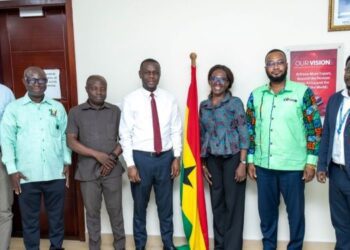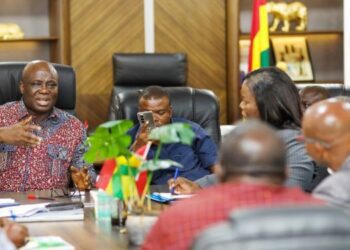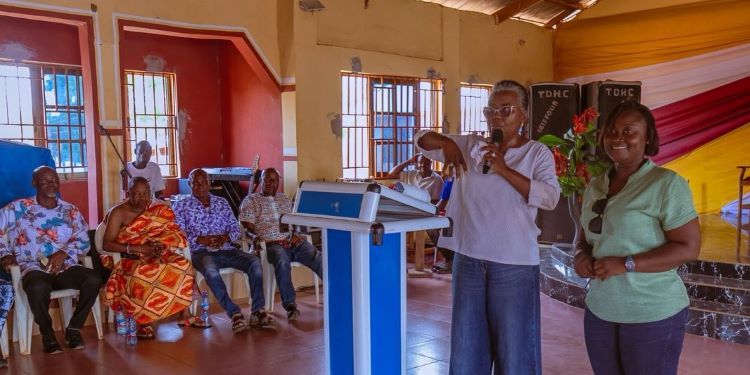
The Minister for Fisheries and Aquaculture Development, Hon. Emelia Arthur, has launched a comprehensive structural overhaul of the inland fisheries sector during a strategic field intervention across the Bono East Region, targeting the critical hubs of Kajeji and Yeji as part of her nationwide tour.
To dismantle the long-standing policy imbalance that has historically favored marine fisheries over the nation’s freshwater resources, the mission pivots toward a sustainable Blue Economy, treating inland water bodies not merely as local resources but as essential pillars of national food security and regional economic stability.
Engaging directly with fishers, processors, and traditional authorities, the Ministry of Fisheries and Aquaculture Development (MoFAD) is establishing a new governance framework to protect fisheries resources while professionalizing the livelihoods of millions of Ghanaian households dependent on the Volta Lake and its tributaries.
“Ensuring a stable supply and fair pricing for pre-mix fuel is essential to keep our boats moving. We are committed to fuel pricing transparency and strengthening the voices and livelihoods of those at the heart of this industry to ensure a thriving, long-term Blue Economy”
Hon. Emelia Arthur, Minister for Fisheries and Aquaculture Development
The shift in national priorities is grounded in a hard-news reality: while the marine sector dominates headlines, inland fisheries support livelihoods across all 16 regions of the country. In Yeji and Kajeji, this sector is the primary economic engine, yet it has faced systemic neglect regarding infrastructure and data-driven management.




Hon. Emelia Arthur’s visit to these areas underscored that the Ministry is now prioritizing regional parity. The Minister argued that the nutritional importance of fish and the economic resilience of inland communities are too significant to remain on the periphery of national development plans.
A central component of this intervention is the stabilization of the pre-mix fuel supply chain. During her engagement at the Pru East District Assembly, the Minister addressed the volatility of fuel pricing and the lack of transparency that has historically plagued fishing communities.
MoFAD’s new approach involves a direct-action mandate to ensure a stable supply and fair pricing for pre-mix fuel, which is the lifeblood of the inland fleet. Removing administrative bottlenecks and middleman interference that inflate costs, the government aims to keep boats moving and the “Blue Economy” profitable for individual fishermen.
Data Driven Resource Governance
Beyond the immediate logistics of fuel, the Minister emphasized the urgent need for a sophisticated data-gathering operation within inland fishing communities, as the lack of granular data on fish stocks, migration patterns, and the demographic profile of fishing communities hinders the implementation of effective conservation policies.
Hon. Emelia Arthur noted that responsible fishing practices cannot be enforced in a vacuum. The Ministry is therefore launching a collaboration with local government officials and traditional authorities to create a comprehensive database that will guide future interventions and resource protection.

This data-driven approach is the precursor to the proposed creation of protected areas within inland water bodies. Just as marine protected areas serve as nurseries for fish stocks, the Ministry is exploring the feasibility of restricted zones in the Volta Lake to allow for natural replenishment.
This move toward “responsible fishing” balances immediate economic needs with long-term ecological sustainability, involving traditional authorities to ensure these protected areas are respected at the community level, rather than being seen as distant mandates from Accra.
The Fisheries Minister also highlighted the critical role of fish processors – the majority of whom are women – in the national food supply chain. In Yeji and Kajeji, the processing sector adds value to the raw catch, ensuring that fish can be transported and sold in markets across the country.
The Minister’s tour included specific discussions on providing better support for these processors, including improved smoking technologies and access to credit. Through increasing the efficiency of the processing sector, the Ministry hopes to reduce post-harvest losses and increase the volume of high-quality protein available to the Ghanaian public.
This is expected to contribute to the resilience of the national food system, particularly in regions where fish is the most affordable and accessible source of animal protein. Hon. Arthur’s engagement with processors underscores the Ministry’s recognition that the “Blue Economy” is an integrated value chain that begins at the net and ends at the consumer’s plate.
The visit to the Pru East District Assembly served as the administrative anchor for the Bono East leg of the tour, with the involvement of local government officials meant to translate the Ministry’s national policies into local actions.

The collaboration with the District Assembly was highlighted as vital for enforcing sustainable growth policies and managing fuel distribution centers. Hon. Arthur argued that for the fisheries sector to thrive, there must be a seamless link between the Ministry’s technical expertise and the District’s operational capacity.
The Pru East tour concluded with a reaffirmed commitment to the “Blue Economy” as a framework for long-term prosperity. As the Ministry moves into the next phase of its nationwide tour, the focus remains on transforming inland fisheries into a professionalized, data-backed, and financially stable industry.
READ ALSO: Sammy Gyamfi Defends BoG Loss as Stabilization Cost, Slams Minority’s Misinformation