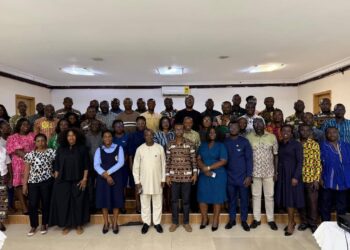
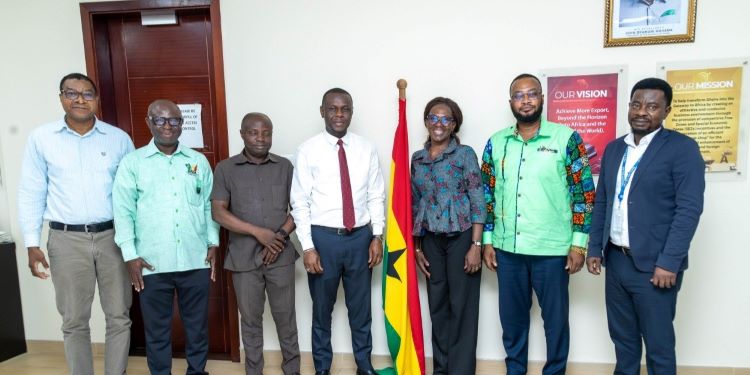
The Ghana Free Zones Authority (GFZA) has formally inaugurated a specialized seven-member committee to spearhead the technical operations of its newly formed Agribusiness Technical Working Group (TWG).
During a recent high-level maiden session held in Accra, the Authority moved to consolidate its industrial oversight by bringing together a multilateral coalition of state actors, international development partners, and private sector leaders to overhaul the mechanics of the Free Zones Programme.
Shifting focus toward a more aggressive and coordinated expansion of the nation’s agro-processing footprint, this dedicated technical steering body is intent on moving beyond general oversight and into the granular operationalization of agribusiness as a primary driver of non-traditional exports.
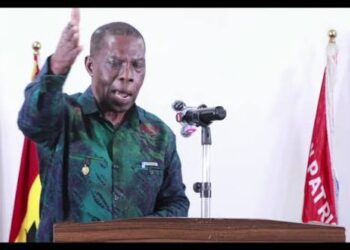
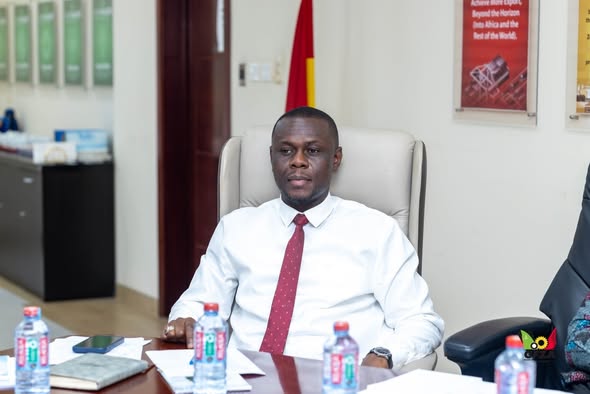
“Delivering remarks at the meeting, the Chairperson of the Technical Working Group and Deputy Chief Executive Officer in charge of Operations, Lateef Apau Wiredu, underscored the importance of clarity of purpose, clearly defined objectives, and effective institutional coordination in guiding the work of the group and ensuring the successful implementation of agribusiness initiatives and policies”
Ghana Free Zones Authority
The inauguration of the committee marks a significant departure from isolated ministerial planning, favoring instead a unified command structure that bridges the gap between agricultural production and industrial export. The composition of the group is particularly telling of the GFZA’s ambitions.
Integrating representatives from the Ministry of Trade, Agribusiness and Industry (MoTAI) and the Ministry of Food and Agriculture (MoFA) with international technical giants like the United Nations Industrial Development Organization (UNIDO) and GIZ, the Authority seeks to synchronize domestic policy with global industrial standards.
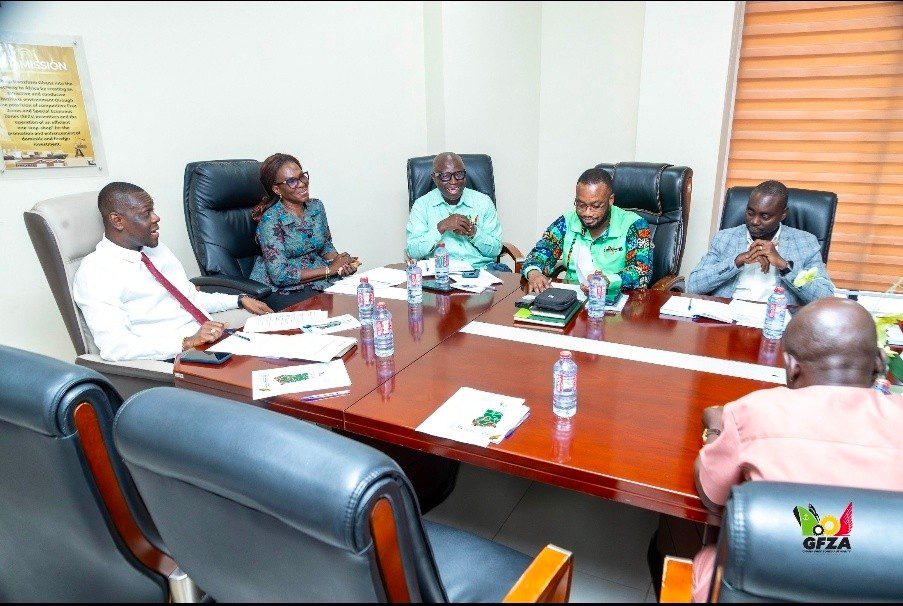
This inter-agency synergy is expected to streamline the regulatory environment for investors, ensuring that the incentives offered under the Free Zones regime are effectively matched with the technical requirements of modern, high-capacity agro-processing.
Mr. Wiredu emphasized that the group’s success would not be measured by the frequency of its meetings, but by the precision of its objectives and the effectiveness of its coordination. For the GFZA, the maiden meeting was an exercise in defining the “lane” in which the agribusiness sector must travel to achieve sub-regional competitiveness.
Mr. Wiredu argued that without a clear, disciplined approach to institutional collaboration, even the most well-funded industrial policies would fail to achieve their intended scale.
Developing the Agro-Industrial Landscape
Following the Chairperson’s mandate, the Director of Agribusiness, Dr. Abdul-Wahab Alhassan, outlined the technical priorities that will dominate the committee’s agenda for the 2026 fiscal year, noting that the primary focus is the development of dedicated agro-industrial parks.
These specialized zones are envisioned as high-efficiency clusters where manufacturers can benefit from shared infrastructure, reliable energy, and centralized logistics. The move is a key component of the GFZA’s strategy to lower the cost of production for exporters, making Ghanaian processed goods more competitive against international counterparts.
According to Dr. Alhassan, strengthening of agricultural value chains remains another critical pillar of the TWG’s mission. This involves a comprehensive mapping of the supply side to ensure that factories located within Free Zones have a consistent, high-quality supply of raw materials.
He further noted that the committee will work closely with MOFA to align crop production cycles with the processing capacities of the industrial parks – an integration vital for reducing the post-harvest loss that has traditionally plagued the sector, turning potential waste into refined, export-ready commodities.
A defining feature of this newly inaugurated committee is its multi-stakeholder governance model. The inclusion of the Chamber of Agribusiness Ghana ensures that the private sector is not just a recipient of policy, but an architect of it. This partnership allows the GFZA to gather real-time data on the challenges facing agribusinesses, from financing hurdles to logistical constraints.
Furthermore, the presence of the Presidential Initiatives in Agriculture and Agribusiness (PIAA) aligns the TWG’s work with the highest levels of national economic planning, ensuring that the group’s recommendations carry the necessary political weight for rapid implementation.
“Members of the Technical Working Group reaffirmed their commitment to fostering partnerships, improving value addition, and creating sustainable opportunities for agribusiness growth and export development, agreeing on the need for a coordinated and results-oriented approach”
Ghana Free Zones Authority
The maiden meeting and subsequent inauguration of the Agribusiness Technical Working Group committee represent a total mobilization of the GFZA’s industrial resources. Under the leadership of Lateef Apau Wiredu and the technical guidance of Dr. Abdul-Wahab Alhassan, the Authority has successfully bridged the gap between policy and practice.

As the committee moves from inauguration to implementation, the focus will remain on the rapid development of agro-industrial parks and the fortification of value chains.
READ ALSO: Mr Eazi Demands Equity and Artist Data from Afro Nation