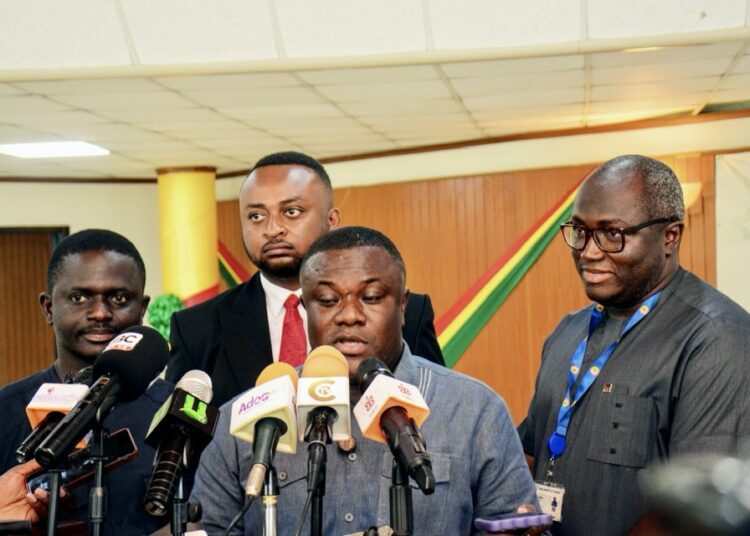
Minority Caucus in Parliament has raised alarms regarding the financial health of the nation’s energy sector, revealing that the government currently owes an outstanding debt of over $500 million to Independent Power Producers (IPPs).
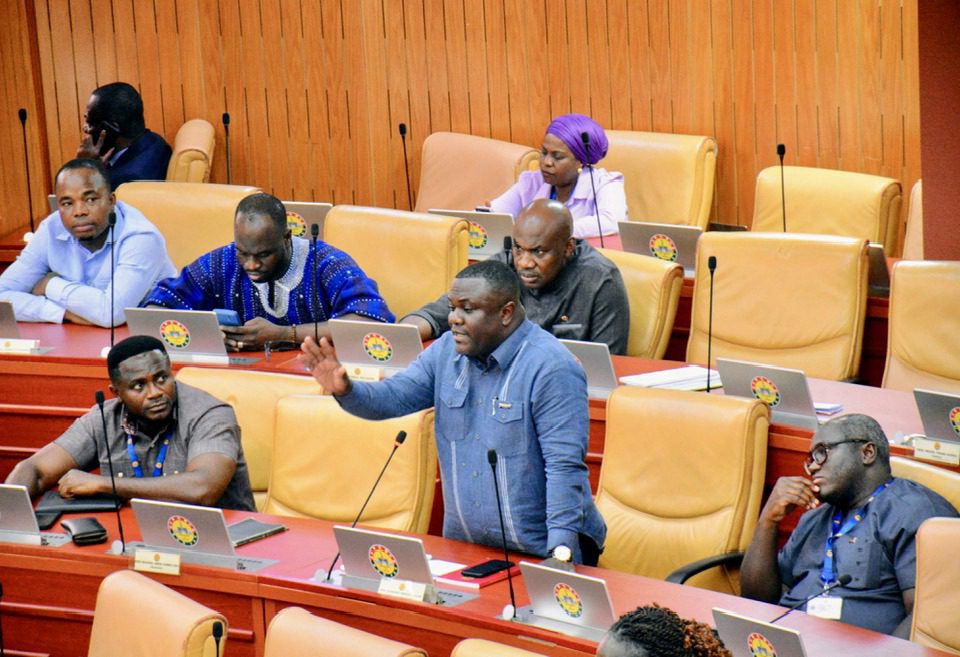
This disclosure, presented during a press briefing in Accra by the Deputy Energy Committee Ranking Member, Hon. Collins Adomako Mensah, challenges official narratives of financial recovery and highlights a persistent struggle to keep the power supply stable.
The Caucus argues that this mounting debt is not merely a technical issue but a consequence of severe fiscal mismanagement and a lack of transparency regarding specific energy-related revenue streams.
“The Ministry of Finance announced last year that it had cleared all the debts to IPPs. The government also credited itself with financial improvement at ECG. However, the data available to us is that the government owes IPPs over $500 million and over $200 million to companies that supply fuel for power generation.”
Hon. Collins Adomako
This revelation comes against the backdrop of the controversial “Dumsor Levy” a special tax of one Ghana cedi per litre of fuel imposed on citizens to purportedly finance the energy sector and address persistent power supply challenges.
Despite the additional financial burden placed on the public, the Minority notes that no report has been presented to Parliament, no independent audit has been published, and there has been no public accounting of the funds collected.
The lack of clarity surrounding the revenue specifically the total collected, the designated accounts, and the projects financed has fueled accusations of government opacity at a time when households and businesses are reeling from the combined pressures of the cost of living and unreliable electricity.
The Financial Strain on Energy Infrastructure
Beyond the $500 million owed to IPPs, the energy sector is further burdened by an additional $200 million debt to companies supplying fuel for power generation.
Experts note that this liquidity crisis is primarily driven by the inability of the Electricity Company of Ghana (ECG) to recover costs effectively, creating a “circular debt loop” that compromises the entire value chain.
When the state fails to settle these obligations, it triggers a reliance on emergency measures that are often more expensive than long-term, planned investments.
Furthermore, because these contracts are largely denominated in US dollars, the depreciation of the Ghanaian cedi against the dollar has caused the local currency value of these arrears to balloon, placing extreme pressure on the national budget and limiting the government’s ability to fund other essential services like health and education.
Reliability and the Cost of Inaction
The financial instability within the sector has direct and visible consequences on the stability of the grid.
Frequent power interruptions, often officially attributed to technical faults or maintenance, are frequently exacerbated by the inability to procure necessary fuel or spare parts due to funding gaps.
The depletion of security buffers, such as guarantees that protect against non-payment, has previously brought the nation to the brink of international default.
For businesses from small-scale artisans to large industrial firms this environment creates profound uncertainty.
The lack of consistent power, combined with the rising cost of fuel compounded by the very levy intended to solve the problem has significantly hampered economic productivity and driven up the cost of goods and services across the country.
A Call for Accountability
The Minority Caucus is now calling on the Minister for Energy and the Minister for Finance to provide full, transparent disclosure regarding the sector’s financial situation within the shortest possible time.
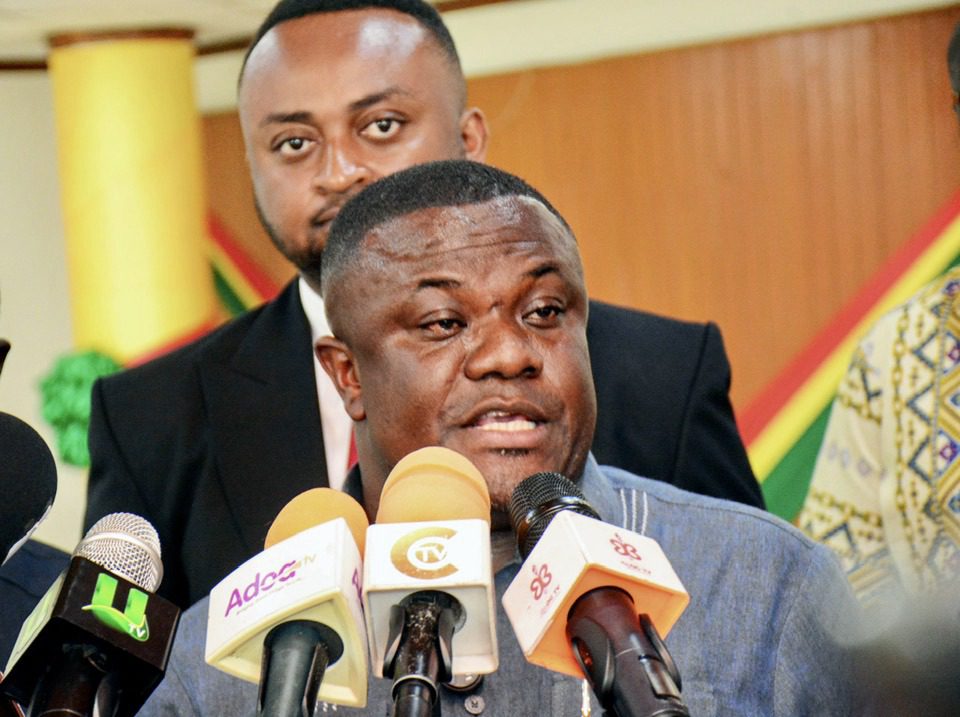
They are demanding a comprehensive breakdown of the levy’s performance, an update on the progress of the Energy Sector Recovery Programme, and a clear plan to settle the arrears owed to power and fuel providers.
As the sector faces a projected increase in financial liabilities, the Minority insists that the government must transition from rhetorical claims of financial improvement to tangible, audited accountability.
Without decisive, transparent action, they argue that the cycle of debt and the threat of prolonged power outages will continue to undermine both the energy sector and the broader macroeconomic stability of the nation.
READ ALSO: Government Has Not Accounted For The “Dumsor” Levy, Kojo Oppong-Nkrumah