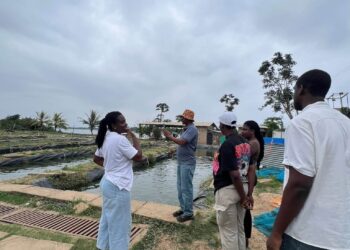

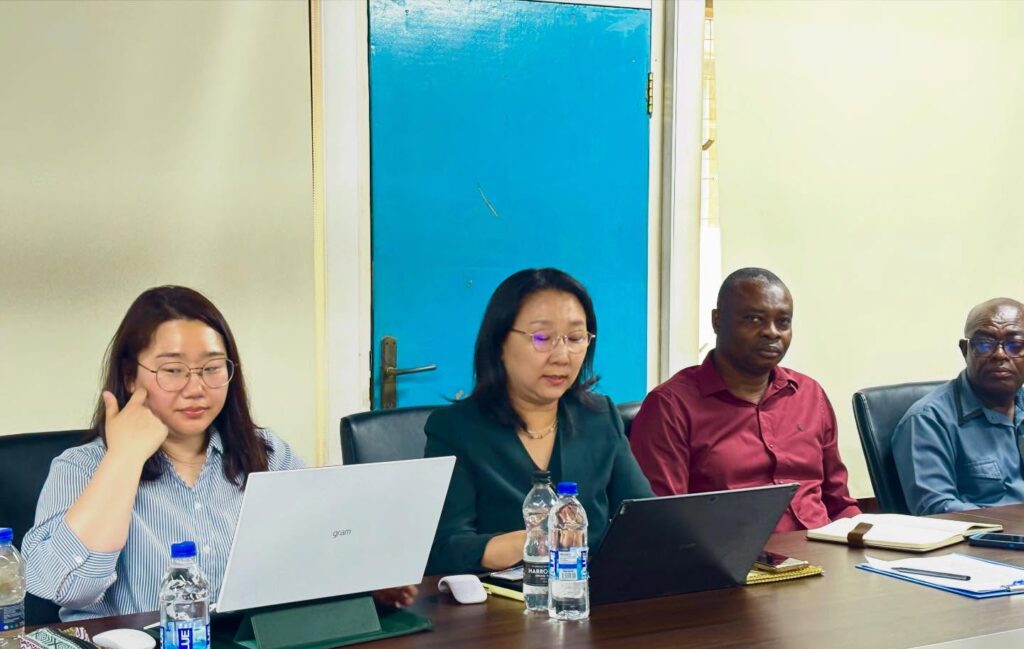
The Fisheries Commission has advanced its strategic agenda for national food security by recently hosting a high-level delegation from the Korean Maritime Institute (KMI). The meeting served as a critical review of the ongoing fish processing and distribution project in Tema, a cornerstone of the bilateral cooperation between Ghana and South Korea.
According to the Commission, the engagement, held in Accra, signals the transition of the project into a more intensive operational phase, focusing on the practical application of modernized technology within Ghana’s bustling maritime sector. The partnership originated in 2023 under the framework of South Korea’s Official Development Assistance (ODA) programme.
“The initiative is modernizing fish processing facilities and building the capacity of fish processors across Ghana. The upgraded Tema facility, now in its third phase, is designed to reduce post-harvest losses, improve food safety, and create stronger livelihoods for fisherwomen and youth along the fisheries value chain”
Fisheries Commission
Since its inception, the initiative sought to move beyond traditional aid by focusing on sustainable infrastructure and human capital development, bringing together Korean maritime expertise and Ghanaian coastal resources. The project aims to solve long-standing inefficiencies in how fish are handled, preserved, and moved from the docks to the dinner table.
The official third phase of the Tema processing facility represents a significant leap in technical sophistication for the region. The Commission and the KMI delegation reviewed the upgrades made to the facility’s cold chain management and processing lines to drastically reduce post-harvest losses, which have since plagued the sector.

Moving away from inadequate refrigeration and primitive processing methods, the Tema hub transformed into a model for the rest of the country, integrating modern Korean processing techniques. The facility is poised to become a center for excellence where Ghanaian technicians and processors learn advanced food safety protocols.
These improvements will ensure that fish processed in Tema meet both local and international health standards, effectively opening new market opportunities for Ghanaian seafood. The third phase also emphasizes the distribution network, ensuring that the “freshness” captured at the facility reaches inland markets without degradation.
Strategic Impact
The economic weight of the fisheries sector in Ghana cannot be overstated, yet it frequently suffers from high wastage rates. The Fisheries Commission identified post-harvest loss as a primary threat to the Blue Economy.
The partnership with KMI addressed this head-on by introducing systems designed to extend the shelf life of the national catch. During the Accra meeting, officials noted that every percentage-point reduction in post-harvest losses translates directly into increased revenue for local fishing communities and lower prices for consumers.
This technical intervention also has a direct impact on food safety. Traditional drying and smoking methods, while culturally significant, often lack the consistency required for large-scale commercial distribution. The modernized Tema facility introduces controlled environments that eliminate contaminants and ensure a uniform quality of product.
This shift is expected to move Ghana’s fisheries value chain away from subsistence-level operations and toward a robust, industrial-scale economy that can withstand seasonal fluctuations in supply.
Another major pillar of the Commission’s presentation to the Korean delegation focused on the social dimensions of the project.
The fisheries value chain in Ghana is unique because of the dominant role played by women, often referred to as “fish mothers,” who manage the processing and retail aspects of the industry, and the ODA programme specifically targets these women and the coastal youth – providing them with the tools and training necessary to operate modern machinery.
This focus on inclusivity ensures that technological progress does not leave the traditional workforce behind. Fisherwomen in Tema and surrounding areas have received specialized training in hygienic handling and business management, transforming their role from simple laborers to stakeholders in a modernized industry.
For the youth, the project is creating a pathway into the maritime sector that involves technical skills rather than just manual labor, offering a more resilient future in an increasingly digital and mechanized global economy.
Furthermore, the collaboration between the Fisheries Commission and the KMI represents a broader shift in Ghana’s agricultural policy, as the government moves toward a model of strategic partnerships to bridge the infrastructure gap.
By leveraging Korea’s advanced maritime history, Ghana is essentially fast-tracking its own industrialization process in the fisheries sector. The delegates discussed how the current Tema model could eventually be replicated in other major landing sites like Takoradi and Elmina.
Resilience was the recurring theme of the meeting. As global climate patterns shift and impact traditional fishing grounds, the ability to process and store fish efficiently has become a matter of national security. The Commission argued that a modernized value chain acts as a buffer against periods of lean catch.
As the meeting concluded, both parties reaffirmed their dedication to the sustainability of the project. The Fisheries Commission stressed that the goal is for Ghanaian experts to eventually manage these facilities independently, without the need for constant external oversight.
The Korean delegation expressed satisfaction with the progress made since 2023 and indicated a willingness to explore further avenues of cooperation in marine research and sustainable harvesting techniques.
READ ALSO: BoG Losses Saved Ghana Economy From Collapse- Economist