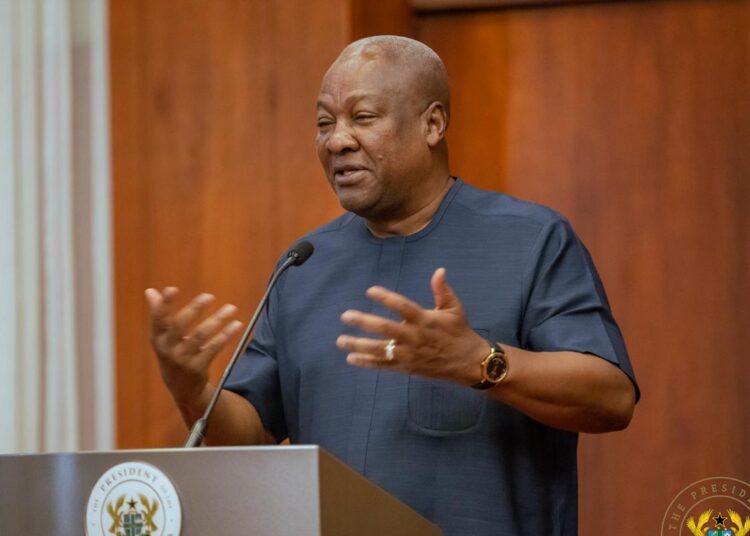
At the 2026 May Day celebration held in Koforidua in the Eastern Region, President John Dramani Mahama outlined a renewed economic direction focused on job creation and sustainable livelihoods.
A key announcement from the address was the introduction of a new economic policy that will soon be presented to Cabinet and Parliament by the Minister of Finance.
According to the President, the policy will focus on investing one percent of the country’s Gross Domestic Product annually in selected sectors that have a high potential for job creation.
This targeted investment approach, he explained, is intended to accelerate growth in areas that can deliver measurable employment outcomes. By directing resources into high impact sectors, the government aims to ensure that economic expansion leads directly to increased job opportunities for the workforce.
The President indicated that this initiative forms part of a broader strategy to convert economic stability into practical opportunities. He maintained that sustained investment in productive sectors will help bridge the gap between policy objectives and real economic benefits for citizens.
Addressing workers across the country, the President aligned his speech with the theme of the event, which emphasised growth, employment, and long term economic stability beyond macroeconomic gains.
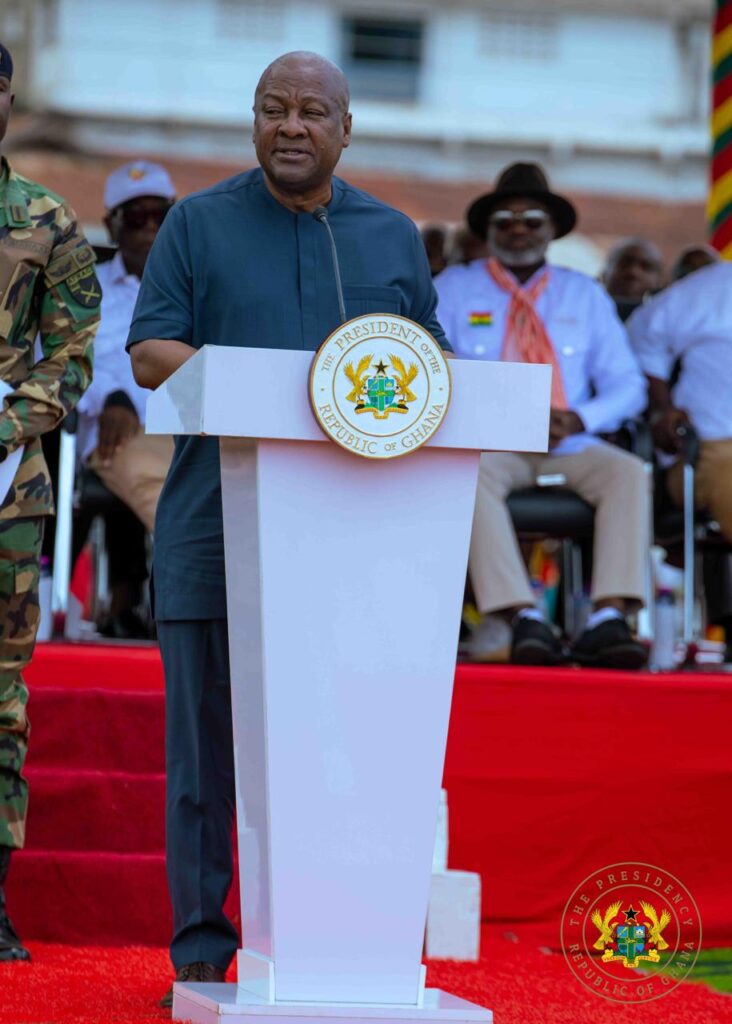
He indicated that the theme reflects the broader roadmap of his administration as it transitions from stabilising the economy to expanding opportunities for citizens.
The President recalled the economic challenges his government encountered upon taking office, noting that the immediate priority was to stabilise key indicators. According to him, efforts were directed at restoring fiscal discipline, stabilising the national currency, reducing inflationary pressures, and lowering interest rates.
He referenced his remarks from the previous May Day celebration in Accra, stating that the government has since made measurable progress in achieving those initial targets.
Progress on Economic Stability
President Mahama reported that the economy has seen improvements in several areas, including renewed investor confidence and reduced financial instability. He described these gains as modest but significant, marking what he called a turning point for the country’s economic trajectory.
The administration, he said, is gradually moving from a period of economic fragility toward resilience and transformation. Despite these improvements, the President emphasised that macroeconomic stability alone is not sufficient.
He explained that while stability provides a necessary foundation, it does not automatically translate into improved living conditions for citizens. In his remarks, he stressed that the goal of the government is to build on that foundation to create a more inclusive and productive economy.
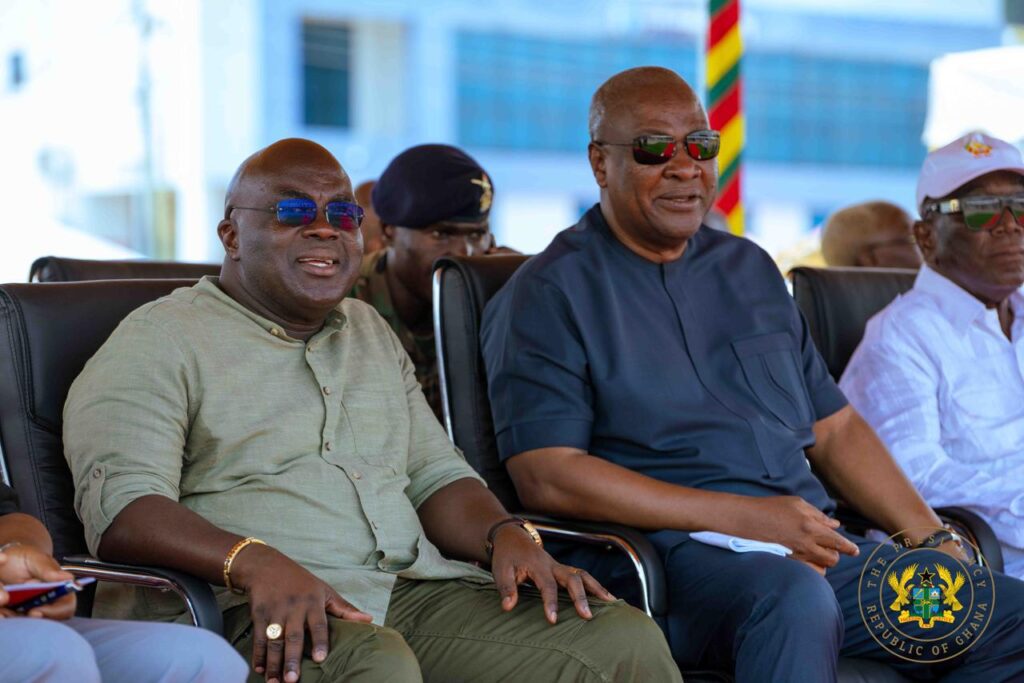
He further noted that economic stability should not limit ambition or access to opportunity. According to him, capital should not be a barrier for individuals seeking to improve their livelihoods. Instead, the focus should be on creating an environment where people can move beyond basic survival toward sustained growth and prosperity.
Shift Toward Growth and Job Creation
Having laid the groundwork for stability, the President stated that his administration is now turning its attention to growth and employment. He indicated that the government’s strategy is to expand the economy rather than simply manage it.
This approach, he explained, is intended to generate jobs and improve the overall quality of life for Ghanaians. Central to this strategy is the government’s Resetting Ghana agenda, which prioritises job creation, particularly for the youth.
President Mahama highlighted plans to invest in value addition across key sectors and to strengthen the digital economy. He said these efforts are designed not only to create employment but also to empower workers with skills and opportunities that can sustain long term development.
The President reiterated that the ultimate aim of economic policy is to improve the lives of citizens. He emphasised that a stable economy must translate into tangible benefits for families, including better income opportunities and improved standards of living.
24-Hour Economy as Flagship Initiative
President Mahama also highlighted the recently approved 24-hour economy policy as a central component of the government’s growth strategy. The policy, which has received parliamentary approval, seeks to extend economic activity beyond the traditional eight-hour workday.
Under this initiative, the manufacturing sector is expected to play a leading role. The government plans to provide tax incentives and reduce power costs for companies that operate multiple shifts.
According to the President, these measures are designed to encourage increased production and create more employment opportunities across industries.
He explained that the policy reflects a broader effort to maximise productivity and make better use of available resources. By supporting continuous operations in key sectors, the government aims to stimulate economic activity and generate sustained job growth.
President Mahama’s May Day address underscored a shift in economic focus from stabilisation to expansion. While acknowledging the progress made in restoring macroeconomic balance, he emphasised the need to translate these gains into meaningful opportunities for workers.
Through targeted investment, policy reforms, and initiatives such as the 24 hour economy, the administration aims to create jobs and improve livelihoods across the country. The proposed one percent GDP investment plan is expected to play a central role in advancing this agenda.
READ ALSO: OSP Authorization Row: Supreme Court Urged to Act Fast