Ghana’s economic outlook for 2026 has come under renewed scrutiny after Fitch Solutions revised the country’s growth forecast downward, citing mounting global pressures, rising fuel prices, and persistent inflationary concerns.
The latest assessment has sparked conversations across financial circles, policy institutions, and among investors who have closely followed Ghana’s recent economic recovery story.
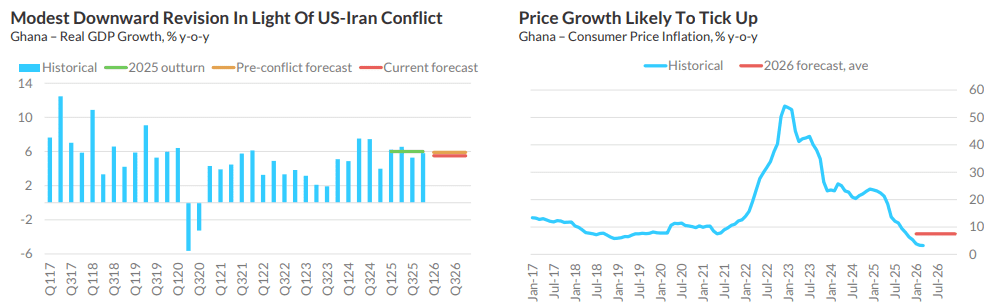
The new projection places Ghana’s economic growth at 5.5 percent for 2026, down from an earlier forecast of 5.9 percent. While the revised figure still points to a relatively strong expansion compared to several economies in the region, it signals that external shocks are beginning to weigh on Ghana’s growth momentum.
A Strong Recovery Faces New Global Challenges
Ghana entered 2026 with renewed optimism following an impressive economic performance in 2025. The country recorded a real Gross Domestic Product growth rate of 6.0 percent last year, outperforming expectations and demonstrating resilience despite lingering macroeconomic challenges.



Much of that growth was powered by the services sector and non oil industries, which posted significant gains during the first three quarters of the year. Non oil GDP growth surged to 7.5 percent, reflecting strong activity across telecommunications, financial services, trade, transportation, and manufacturing.
For many analysts, the strong 2025 performance represented evidence that Ghana was gradually turning the corner after years of economic instability, debt restructuring challenges, and inflationary pressures.
However, new geopolitical developments have begun to cast a shadow over that optimism.
US Iran Conflict Raises Economic Concerns
According to Fitch Solutions, the ongoing tensions between the United States and Iran are creating ripple effects across global energy markets, pushing oil prices upward and raising concerns for import dependent economies such as Ghana.
The report notes that higher global fuel prices are expected to feed into domestic inflation, increase transportation costs, and weaken consumer spending power.
“We have nudged down our 2026 growth projection from 5.9 percent to 5.5 percent as stronger than expected price pressures have slightly softened the outlook for consumer spending,” the report stated.
This assessment highlights how closely Ghana’s economic fortunes remain tied to developments in global commodity markets.

Fuel Prices Trigger Fresh Inflation Risks
One of the biggest concerns raised in the report is the rising cost of petroleum products.
Major oil marketing companies in Ghana reportedly increased petrol and diesel prices by between 10 percent and 15 percent in March 2026. This adjustment has already begun affecting transport fares, food distribution costs, and production expenses for businesses.
For households, the impact is immediate.
Families already coping with elevated living costs are now facing additional pressure on disposable income. Consumer purchasing power could weaken further if inflation accelerates in the coming months.
For businesses, especially small and medium enterprises, rising energy and transport costs may squeeze profit margins and force pricing adjustments.
Inflation Expected To Tick Up
Although the report projects inflation will end 2026 at around 9 percent year on year, analysts say the path to that target may not be smooth.
Fitch Solutions believes inflation in Ghana will remain lower than levels experienced during the severe energy price shocks of 2022 and 2023, when global markets were disrupted by the Russian invasion of Ukraine.
Still, the report warns that price growth is likely to rise moderately due to imported inflation pressures.
Economists say the ability of policymakers to manage inflation expectations will play a crucial role in maintaining investor confidence and protecting household purchasing power.
Why Ghana Still Has Reasons For Optimism
Despite the downward revision, the latest forecast is far from a crisis signal.
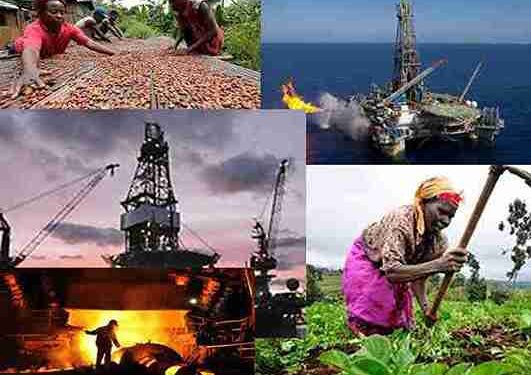
A projected growth rate of 5.5 percent still places Ghana among some of the stronger performing economies in the region. The country’s expanding services sector, ongoing infrastructure investments, digital innovation, and improving investor sentiment continue to provide strong support.
The resilience shown by non oil sectors also suggests that Ghana’s economic foundation is becoming broader and less dependent on commodity exports alone.
Financial analysts believe that if global tensions ease and fuel prices stabilize, Ghana could outperform current projections.
Investors Watching Closely
The revised forecast is expected to influence investment decisions in sectors such as banking, manufacturing, telecommunications, and consumer goods.
Both local and international investors will now be monitoring inflation data, fuel pricing trends, exchange rate stability, and fiscal policy decisions closely.
Government policymakers may also face increased pressure to strengthen economic buffers, protect vulnerable households, and sustain growth momentum through targeted reforms.
As Ghana moves deeper into 2026, the balance between global uncertainty and domestic resilience will determine whether the country can maintain its recovery path.
All in all, Ghana’s economy remains on a growth path, but new global pressures are testing its strength.
READ ALSO: Inflation Hits 3% In Europe