United Nations has warned of a renewed global focus on nuclear threat, as rising geopolitical tensions and emerging technologies bring the threat of nuclear conflict back into sharper view.
Long overshadowed by concerns such as climate change and artificial intelligence, nuclear weapons are once again becoming central to international security discussions, prompting fresh efforts to engage younger generations in disarmament debates.
For decades, the possibility of a catastrophic confrontation between the United States and the Soviet Union defined global fears. Although the end of the Cold War reduced the immediacy of that threat, it never fully disappeared.
The Nuclear Non-Proliferation Treaty (NPT), in place for more than half a century, has been instrumental in limiting the spread of nuclear weapons and preventing their use since the bombings of Hiroshima and Nagasaki in 1945.
However, recent conflicts and shifting global dynamics have revived nuclear rhetoric. Younger generations, who did not experience Cold War tensions firsthand, are now being drawn into conversations about disarmament as the risks become more visible in the context of ongoing crises.
According to Natalie Chen, a UK-based arts producer from Hong Kong, “disarmament is definitely a major concern, in the context of current conflicts such as the war in Ukraine, Gaza and Iran.”
In response, UN has expanded initiatives such as the Youth Leader Fund(YLF) for a World without Nuclear Weapons, aimed at equipping young people with the knowledge needed to engage in policy discussions and advocacy.
The programme also seeks to make technical aspects of disarmament more accessible through creative tools like art and digital media.
One of the YLF participants of the programme stated that, “I’ve learned how the political process can be powerful if we, as young people, are part of that process,” adding, “the language of disarmament can be very technical, and I have learned how to use art to make it understandable.”
At the same time, UN officials caution that today’s nuclear risks are evolving. Izumi Nakamitsu, head of the UN Office for Disarmament Affairs, said that while the post-Cold War period saw reduced concern, new threats are emerging that complicate the security landscape.
“For about 30 years, following the end of the Cold War, we were fortunate not to have to worry too much about nuclear weapons. But geopolitical tensions have returned, and there are new challenges, such as the integration of AI into nuclear command and control, that are very scary to talk about.”
Izumi Nakamitsu
She added that, the technical language can be hard to follow, but the half-century-old treaty remains as important as ever.
“A world without the NPT would be much less secure because many more countries would be looking to possess nuclear weapons, which would make their use much more likely. Before the treaty was agreed, it was predicted that there would be 30 or 40 nuclear-weapon states. That didn’t happen because of the NPT.”
Izumi Nakamitsu
This issue is being discussed as part of the ongoing review conference of the NPT at UN headquarters in New York.
While the treaty remains a cornerstone of global non-proliferation efforts, concerns are growing over the increasing normalisation of nuclear weapons in political discourse, including arguments around the potential use of so-called low-yield devices.
Nuclear Treaty Faces Growing Strain as Global Security Risks Intensify
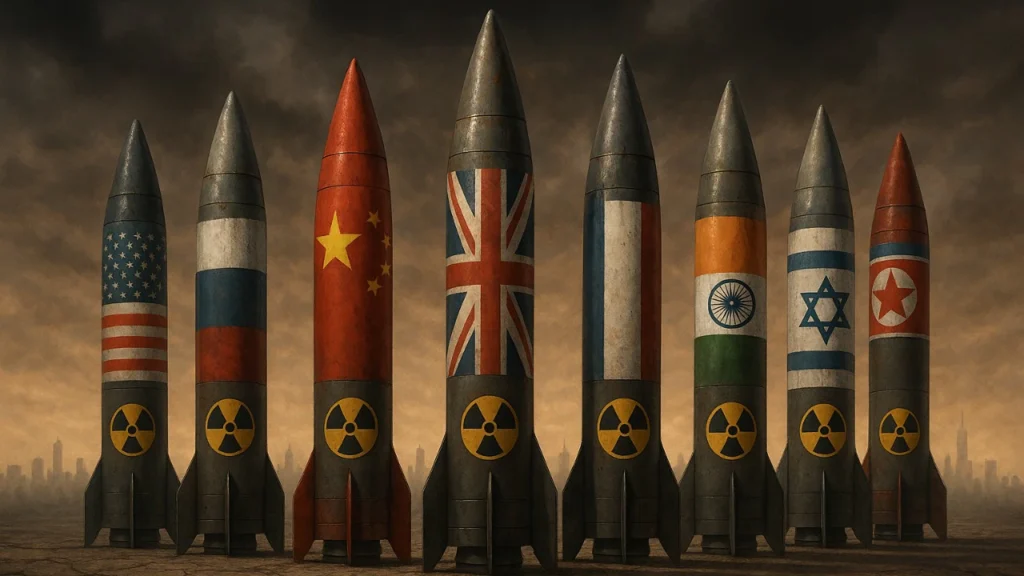
Meanwhile, the global framework governing nuclear weapons is facing mounting strain, as key arms control agreements lapse and geopolitical divisions deepen, raising fresh concerns about the future of nuclear restraint.
At the centre of this uncertainty is the Nuclear Non-Proliferation Treaty (NPT), a decades-old pact widely seen as a cornerstone of international security but now confronting one of its most difficult periods in recent history.
In force since 1970 and backed by 191 countries, the NPT was designed to prevent the spread of nuclear weapons, promote disarmament and support the peaceful use of nuclear energy.
It has played a critical role in limiting the number of nuclear-armed states and ensuring that atomic weapons have not been used in conflict since the bombings of Hiroshima and Nagasaki in 1945.
For decades, the treaty has underpinned efforts to maintain global stability by balancing security concerns with commitments to reduce nuclear arsenals.
However, that balance is increasingly under pressure. Several Cold War-era agreements that reinforced the treaty’s objectives have either expired or been abandoned.
Among them is the New START Treaty, which placed limits on strategic nuclear warheads held by the United States and Russia. Its expiration earlier this year, without a successor agreement, has left the world without legally binding constraints on the two largest nuclear arsenals.
The growing uncertainty has been reflected in recent NPT review conferences, including those in 2015 and 2022, which ended without agreement on an outcome document.
The lack of consensus has highlighted widening divisions among states over disarmament commitments, security priorities, and the treaty’s path forward.
Now, diplomats are once again assessing the treaty’s performance and exploring whether progress can be made in a more fragmented global environment.
The current review is expected to examine how effectively the NPT can respond to evolving threats and whether it can remain a viable foundation for nuclear cooperation and restraint.
READ ALSO : Mahama: Government Believes in Effective OSP with Prosecution Powers