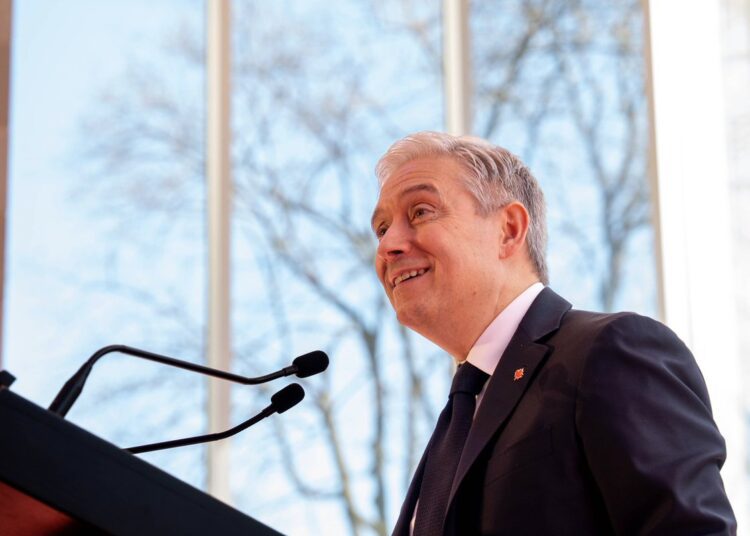
Canada has taken a significant step toward reshaping how allied nations finance defence and security, following the conclusion of multilateral negotiations in Montréal on the creation of the Defence, Security and Resilience Bank (DSRB).
The proposed institution is intended to provide long-term, low-cost financing for defence, security, and resilience projects, with a focus on strengthening supply chains and supporting small- and medium-sized enterprises.
According to François-Philippe Champagne, Minister of Finance and National Revenue, “its time to act is now.“
“We are very pleased with the progress made during recent negotiations in Montréal to establish the Defence, Security, and Resilience Bank. These negotiations are a crucial step in taking the DSRB from idea to reality and launching this new defence-focused multilateral bank”
François-Philippe Champagne
The initiative comes at a time when governments are under increasing pressure to modernise defence capabilities while managing economic constraints and fragmented global supply chains.
Traditional funding models largely reliant on national budgets have struggled to keep pace with the scale and urgency of current security demands.
Against this backdrop, the DSRB is being positioned as a multilateral solution that can mobilise capital more efficiently, enabling faster investment in key sectors while reducing duplication among allied nations.
Its scope is expected to extend beyond conventional military spending to include broader resilience measures, particularly in industrial and technological supply chains that underpin defence readiness.
A central outcome of the talks is the unanimous backing for Canada to host the future headquarters of the DSRB, once the institution’s charter is formally ratified. This decision reflects confidence among participating countries in Canada’s financial and regulatory capacity, while also reinforcing its growing role in international defence cooperation.
Moreover, the initiative is also closely tied to Canada’s wider defence policy agenda. The government has committed more than $80 billion in defence spending under its latest budget, alongside the launch of a Defence Industrial Strategy aimed at modernising procurement and strengthening domestic capabilities.
DSRB: A New Model for Defence Financing

The proposed Defence, Security and Resilience Bank represents a departure from traditional approaches to defence funding, introducing a model built on multilateral cooperation and long-term investment.
Rather than relying solely on national budgets and short-term procurement cycles, the bank is designed to pool resources from participating countries and channel them into strategic projects across the defence ecosystem. This structure is intended to provide greater financial stability and predictability, enabling industries to plan and invest with more confidence.
At the heart of the initiative is the recognition that modern defence challenges require sustained investment across complex and interconnected supply chains. From advanced manufacturing to emerging technologies, the sectors that support defence capabilities often demand significant upfront capital and long development timelines.
For smaller firms in particular, access to affordable financing has been a persistent barrier. The DSRB aims to address this by lowering borrowing costs and providing funding over longer horizons, making it easier for these companies to participate in large-scale projects.
Honourable David McGuinty, Minister of National Defence indicated that, Canada is taking decisive action to strengthen our collective defence and security alongside our partners.
“We welcome the constructive discussions in Montréal, which represent a meaningful step toward establishing the Defence, Security and Resilience Bank.
“This initiative will enable faster, more targeted investments, strengthen critical capacity, and “support a more resilient and responsive defence industrial base for Canada and our Allies
David McGuinty
The bank is also expected to play a role in attracting private-sector investment into defence-related industries. By reducing risk through multilateral backing, it could encourage financial institutions to support projects that might otherwise struggle to secure funding.
This blended finance approach combining public and private capital has become an increasingly important tool in large-scale infrastructure and development projects, and policymakers see potential for similar success in the defence sector.
According to Honourable Anita Anand, Minister of Foreign Affairs, “Canada is working with allies and partners to establish the Defence, Security, and Resilience Bank an ambitious initiative to mobilize private capital at scale, deliver long-term, low-cost financing, and accelerate defence production.”

She added that, “the DSRB will support Member nation defence industries and close financing gaps across supply chains to ensure we are ready to defend our territory, our people, and our values.”
Canada’s leadership in advancing the DSRB is supported by a series of domestic policy initiatives aimed at strengthening its own industrial base.
The recently launched Defence Industrial Strategy outlines plans to transform procurement through a “Build-Partner-Buy” framework, invest in innovation, and secure supply chains through closer collaboration with domestic and international partners.
These efforts are complemented by Canada’s commitment to meeting NATO spending targets, including reaching 2 per cent of GDP and setting a pathway toward 5 per cent by 2035.
READ ALSO : Trump Weighs Troop Cut in Germany
.