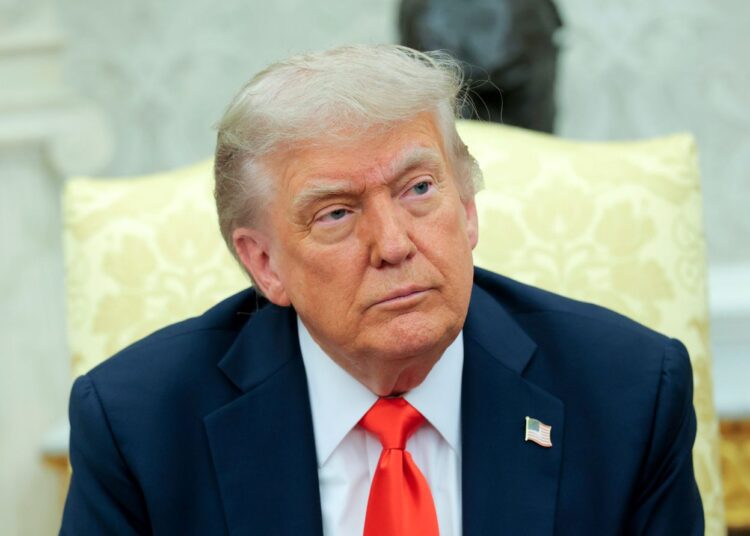
President Donald Trump has suggested that he could soon reduce the US military presence in Germany.
This marks a new threat against NATO ally Germany, as Trump continues to feud with Chancellor Friedrich Merz over the US-Israel war against Iran.
“The United States is studying and reviewing the possible reduction of Troops in Germany, with a determination to be made over the next short period of time.”
Donald Trump
Trump made the threat after Merz said earlier this week that the US was being “humiliated” by the Iranian leadership and criticized Washington’s lack of strategy in the war. Trump has also repeatedly railed against NATO for the alliance’s refusal to assist the US in its war against Iran.
Trump, for his part, has hardly been containing his frustration with Merz. Responding to Merz’s comment on Iran humiliating US, Trump noted on social media, “The Chancellor of Germany, Friedrich Merz, thinks it’s OK for Iran to have a Nuclear Weapon.” “He doesn’t know what he’s talking about!” he added. Trump also said that it was no surprise “that Germany is doing so poorly, both economically and in other respects!”
Merz met with Trump at the White House in March, just days after the US and Israel began their bombardment of Iran. At the time, Merz told Trump that Germany was eager to work with the US on a strategy for when the current Iranian government no longer exists.
Merz also expressed concern that an extended conflict could do great damage to the global economy. His concern, like many other European leaders, has only grown as the US and Iran have yet to come to a deal to reopen the Strait of Hormuz, the critical waterway through which about 20% of the world global oil supply had flowed prior to the start of the war. It has been effectively closed since the conflict began on February 28, 2026.

The US has several major military facilities in the country, including the headquarters for US European Command and US Africa Command, Ramstein Air Base and Landstuhl Regional Medical Center, the largest American hospital outside the United States.
The potential reduction of US troops in Germany would represent a significant development in transatlantic relations. Germany has long been a central hub for American military operations in Europe, hosting bases that support not only regional defense but also broader global missions. US forces stationed in Germany play a key role in logistics, training and coordination within NATO, as well as in maintaining a forward presence on the continent.
Any decision to scale back troop numbers could have implications for the alliance’s collective defense posture, particularly at a time when security concerns in Europe remain elevated due to ongoing conflicts and geopolitical tensions.
The reduction in troop numbers could signal a shift in how Washington prioritizes its global military commitments, particularly as it focuses on ongoing conflicts in other regions. It could also prompt discussions within NATO about how to adjust to changes in US force posture and whether European members may need to take on greater responsibility for regional security.
Trump’s statement did not specify how many troops could be withdrawn or provide a timeline for potential reductions beyond indicating that a decision would be made soon. It also remains unclear whether any discussions have taken place with German officials regarding the possible changes.
During his first term in the White House, Trump also moved to cut US troops in Germany because he said the country spent too little on defense. In June 2020, Trump announced he was going to pull out about 9,500 of the roughly 34,500 US troops who were then stationed in Germany, but the process never actually started. Democratic President Joe Biden formally stopped the planned withdrawal soon after taking office in 2021.
Merz Claims Good Relationship With Trump
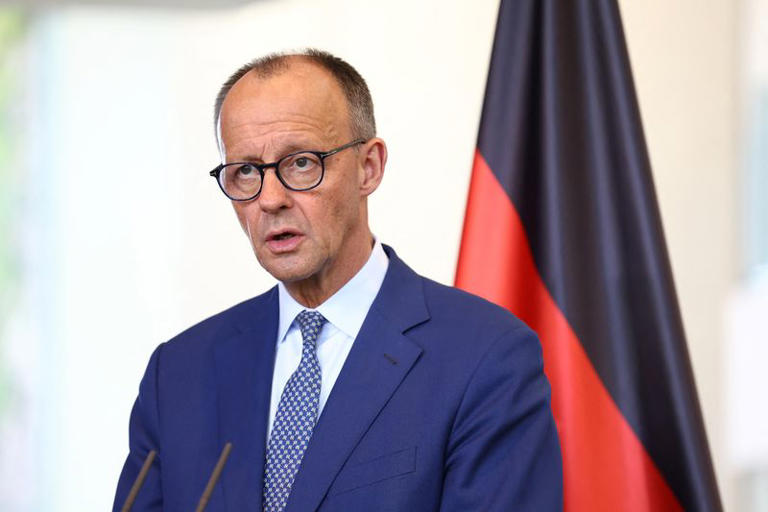
Meanwhile, Merz had said earlier on Wednesday that his personal relationship with Trump remained “as good as ever,” but he had “had doubts from the very beginning about what was started there with the war in Iran.”
Hours before Trump posted his threat on social media, Merz bemoaned Europe’s challenges caused by the Strait of Hormuz closure.
“We are suffering considerably in Germany and in Europe from the consequences of, for example, the closure of the Strait of Hormuz and in that regard, I urge that this conflict be resolved.”
Friedrich Merz
Merz added that his government was “on good speaking terms” with the Trump administration.
The coming weeks are likely to determine whether Trump’s statement leads to concrete action or remains part of broader political messaging tied to ongoing disputes between Washington and its allies.
READ ALSO: Hegseth Faces Questions On Economic Costs Of War With Iran