
In a direct bid to insulate Ghanaian households from escalating retail food inflation and reduce reliance on fragile commercial food supply chains, the Ministry of Food and Agriculture (MoFA) is spearheading a decentralized micro-cultivation strategy.
Alhaji Yussif Fuseini Amuda, the Tamale Metropolitan Director of Agriculture in-charge of Crops, has issued an urgent directive calling on families nationwide to transform residential spaces into productive agricultural hubs. The policy shifts the responsibility of food security from large-scale commercial farms directly to individual backyards, framing micro-farming as a necessary element of national economic defense.
“At least one ingredient in the food you eat, whether lunch or dinner, should come from your backyard. It could be tomatoes, peppers, or any vegetable. It does not take much to grow them. You can even use containers or gallons filled with soil to cultivate food for your family”
Alhaji Yussif Fuseini Amuda, Tamale Metropolitan Director of Agriculture in-charge of Crops
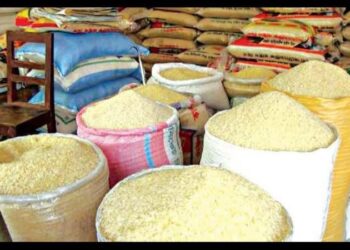
The initiative emerges as logistical bottlenecks, fuel price adjustments, and market structural inefficiencies continue to drive up the retail cost of dietary staples, treating domestic backyards, balconies, and urban spaces as unexploited assets to establish a grassroots buffer against external supply shocks.
This strategy intends to lower overall household expenditure, build localized food reserves, and transform citizens from passive commodity consumers into active micro-producers. The core operational metric of this civic agricultural campaign is a zero-barrier, highly structured framework to dismantle the common belief that food cultivation requires vast tracts of rural land.
Recognizing that rapid urbanization has severely restricted traditional farming spaces in regional hubs like Accra, Kumasi, and Tamale, MoFA is promoting alternative urban agriculture methodologies. The directive establishes an absolute minimum threshold for household participation, challenging families to eliminate market reliance on at least one staple ingredient per meal.

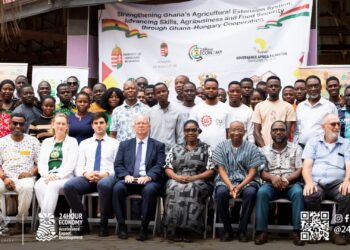
Addressing stakeholders and community leaders in Tamale, Alhaji Amuda outlined how simple container-based cultivation can completely bypass space limitations.
He stressed that by utilizing readily available urban items – such as discarded plastic gallons, wooden crates, and soil-filled containers – households can immediately secure a continuous supply of vital agricultural products without needing formal capital investments or commercial plots.
This practical approach is a significant shift away from overly theoretical government programs that rely on expensive imported fertilizers and machinery, to significantly reduce the seasonal price spikes that regularly hit local markets for commodities like tomatoes and chili peppers.
Alhaji Amuda added that through stabilizing household demand at the community level, the country can ease the pressure on internal food transport networks, saving vital energy and logistics resources.
Baseline For National Development
For Alhaji Amuda, the justification for this grassroots agricultural push goes far beyond simple household cost-cutting as it targets the historical and developmental foundations of state sovereignty.
In an era dominated by rapid digitalization, financial technology, and services-driven economic planning, public sector focus has frequently drifted away from primary production. The agricultural directorate is strongly challenging this trend, reminding policy makers that no country can build a sustainable modern economy without first securing its food foundation.
Linking modern economic challenges to historical developmental timelines, Alhaji Amuda emphasized that institutional frameworks like schools, hospitals, and financial systems are secondary structures that depend entirely on a well-fed population. Without absolute food security, investments in human capital and industrialization are inherently vulnerable to external economic shocks.

“If you look at how humanity started, there were no Hospitals, no schools and many of the institutions we have today did not exist, but humanity has never lived without agriculture. To develop as a nation, we must start with agriculture”
Alhaji Yussif Fuseini Amuda, Tamale Metropolitan Director of Agriculture in-charge of Crops
This perspective demands a major rethink of how national budgets and municipal development frameworks are structured, prioritizing agricultural self-sufficiency to protect foreign exchange reserves and keep industrial labor costs stable.
For Ghana to achieve long-term economic independence, its citizen workforce must be anchored by stable, locally managed food supplies rather than remaining exposed to volatile international commodity markets.
According to Alhaji Amuda, the backyard farming campaign is also meant to match international development benchmarks, serving as a direct mechanism to localize the United Nations Sustainable Development Goals (SDGs).
While global development strategies are often written as abstract manifestos at high-level summits, their actual success depends on real-world adoption within municipal and district assemblies. Among the 17 global goals, agricultural authorities identify Goal 2 – Zero Hunger – as the central pillar that determines the outcome of all other developmental indicators.
The focus on ending hunger at the household level recognizes that nutritional security directly impacts public health expenditures, educational achievement, and overall labor productivity. A population suffering from nutritional deficits or food insecurity cannot “effectively participate in advanced industrial or technological sectors.”
By localizing these sustainable goals through household-level production, the state can bypass the expensive distribution systems that often slow down national welfare initiatives. Instead of waiting for large-scale agricultural projects to mature, individual families can immediately improve their nutritional health by growing fresh, pesticide-free vegetables right outside their doors.

This decentralized approach creates a resilient public health shield, reducing the incidence of lifestyle diseases and nutritional deficiencies that drain national healthcare budgets.
The success of Ghana’s decentralized agricultural plan does not depend on land availability or technical tools, but on overcoming a deep-seated cultural attitude that views farming purely as a low-status, rural activity.
READ ALSO: Financial Autonomy Key To Stronger Local Governance — Osae-Kwapong