The Food and Agriculture Organization of the United Nations (FAO) and the United Nations Satellite Centre (UNOSAT) have warned that only 3% of the Gaza Strip’s cropland remains both accessible and undamaged.
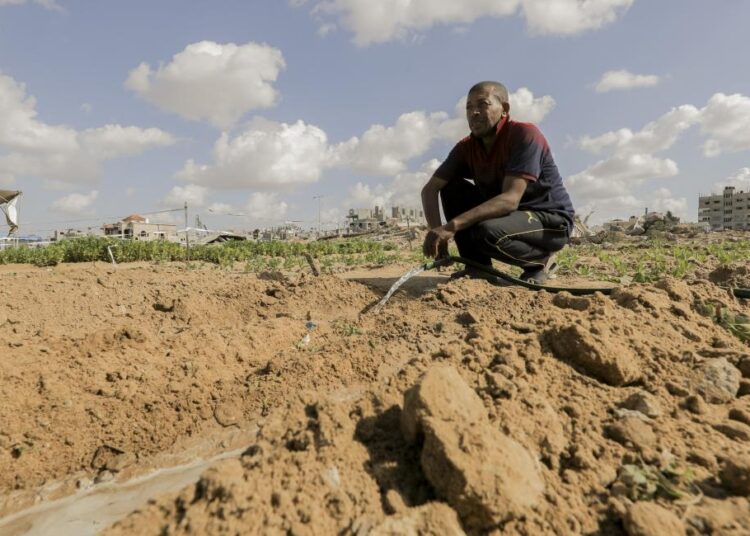
A new geospatial assessment by the two United Nations agencies found that, as of 24 June 2026, 4,091 hectares, representing 27% of Gaza’s total cropland, remained accessible. However, only 448 hectares were both accessible and undamaged, while the remaining 3,643 accessible hectares had sustained damage and would require rehabilitation before cultivation could resume.
The assessment points to a sharp deterioration in the amount of agricultural land that farmers can realistically use. Since October 2025, the area classified as both accessible and undamaged has fallen from 601 hectares to 448 hectares, representing a loss of 153 hectares, or 25.5%.
According to the UN agencies, the decline has been driven primarily by reduced access to agricultural land rather than additional physical damage since October 2025. The change has been associated mainly with the westward expansion of the so-called “Yellow Line” which separates the ceasefire zone from the military-controlled area.
The situation is particularly severe in Rafah, where 97.2% of cropland is inaccessible. Access to greenhouse facilities is similarly restricted, with 98.4% of greenhouse areas in the governorate unavailable.
Meanwhile, the areas with the greatest physical agricultural damage are still North Gaza and the Gaza governorates.
The declining agricultural area is part of a larger food security crisis in Gaza, where the destruction and inaccessibility of farmland, agricultural infrastructure, and productive assets have significantly reduced local people’ capacity to produce food.
FAO Director-General Dongyu Qu has previously stressed that restoring local production is essential to rebuilding food security in the territory.
Moreover, recent UN assessments have likewise found that food security conditions can improve where humanitarian assistance and commercial flows increase, but that progress remains fragile while large areas of agricultural land remain inaccessible.
According to Rein Paulsen, Director of FAO’s Office of Emergencies and Resilience, “this latest assessment paints a stark picture of the continued deterioration of Gaza’s agriculture sector.”
“The loss of access to farmland is further shrinking the space available for farmers to produce food, even where agricultural assets remain physically intact. Farmers in Gaza have shown time and again that when land and inputs are available, production is possible.
“But without urgent action to restore safe access and provide farmers with the support they need, opportunities to restore local food production will continue to diminish.”
Rein Paulsen
The deterioration is also visible in Gaza’s greenhouse sector. The assessment found that 224 hectares, equivalent to 16.6%t of the total greenhouse area, remained both accessible and undamaged by 24 June. That represents a decline from 226 hectares, or 17.3%, recorded in October 2025.
The most accessible and undamaged greenhouse area was lost at Deir al-Balah.
The issue for farmers goes beyond the accessibility of land. Production is increasingly limited by shortages of seeds, fertilisers, irrigation equipment, gasoline, and other vital agricultural supplies, even in cases where farms and greenhouses are still physically intact.
Similar challenges are faced by livestock goalkeepers, who have restricted access to veterinary supplies, animal health services, and animal nutrition.
Gaza’s Agricultural Recovery Faces Mounting Barriers
The scale of the agricultural challenge becomes clearer when measured against the importance of farming to Gaza’s economy and communities before the escalation of hostilities.
Before October 2023, agriculture accounted for approximately 10% of Gaza’s economy and supported the livelihoods of more than 560,000 people through crop production, livestock rearing and fishing.
The destruction and loss of access to agricultural assets therefore threaten not only the territory’s food supply but also one of its important sources of employment and household income.
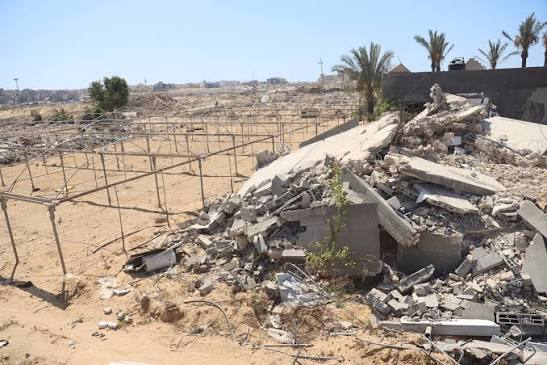
FAO and UNOSAT’s latest assessment shows that physical damage remains extensive in several parts of Gaza. However, the finding that reduced access has become the main driver of declining agricultural land availability since October 2025 introduces another dimension to the crisis.
Land that remains physically intact cannot contribute to food production if farmers are unable to safely reach it.
This distinction is crucial for recovery planning because repairing damaged farms won’t be enough to restore agricultural productivity. Conditions that let farmers to return to their fields, maintain irrigation systems, access markets, and acquire the inputs required for land cultivation will also be necessary.
In order to stop the decline, FAO has called for immediate and persistent action. In addition to facilitating the entry of necessary agricultural inputs, such as commercial imports of non-dual-use commodities, and supporting the restoration of damaged farmland, the agency is calling for actions to guarantee farmers have safe access to their land.
READ ALSO: Afenyo-Markin Alleges Grand Conspiracy by Baffoe-Bonnie to Remove Torkorno