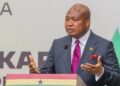
The Bank of Ghana has delivered a strong message of optimism to investors, businesses, and Ghanaians after revealing that the heavy financial pressures that shook the Central Bank in 2025 are expected to ease significantly in 2026.
Governor Johnson Pandit Asiama has assured the public that the Bank’s costly open market operations, which contributed heavily to its operating losses, will become far less expensive as inflation continues to decline and macroeconomic stability improves.
The announcement comes at a time when confidence in Ghana’s economic recovery is gradually strengthening following years of financial turbulence, currency instability, and aggressive monetary tightening.
BoG Signals End to Costly Financial Strain
According to Governor Asiama, the extraordinary conditions that forced the Central Bank into massive spending to control inflation are no longer as severe as they were in 2025.
The Governor explained that the Bank had to undertake extensive open market operations to absorb excess liquidity from the economy and stabilize prices during a period of elevated inflationary pressures. These operations, while necessary, came at a significant financial cost to the Central Bank.
However, he stressed that the situation has changed dramatically.
Inflation has now fallen below the lower limit of the medium-term target band of 8±2 per cent, reducing the urgency for aggressive monetary interventions. This means the Bank is unlikely to spend at the same level it did previously to maintain stability in the economy.
The Governor’s comments have sparked renewed optimism among market watchers who believe Ghana may finally be entering a more stable economic era.

Cedi Movements Could Bring Financial Relief
Another major factor behind the Bank’s losses in 2025 was the sharp appreciation of the Ghana cedi, which triggered substantial revaluation losses on the Central Bank’s balance sheet.
Governor Asiama disclosed that exchange rate dynamics are now shifting in a way that could potentially generate revaluation gains instead of losses.
He revealed that as of December 31, 2025, the Bank’s financial statements reflected a dollar selling rate of GHS10.4. However, the cedi has since moved to around GHS11.5 to the dollar, significantly altering the Bank’s financial outlook.
According to him, if the same financial statements were published under current market conditions, the picture would look completely different.
The remarks suggest the Central Bank is beginning to benefit from a more balanced exchange rate environment after enduring the painful effects of sharp currency swings in previous years.
DDEP Impact Still Fresh
Governor Asiama also pointed to the lingering effects of the Domestic Debt Exchange Programme (DDEP), which significantly affected the Bank’s revenues and contributed to the large losses recorded in 2025.
The DDEP formed part of Ghana’s broader economic restructuring programme aimed at restoring debt sustainability and rebuilding investor confidence. While the programme was considered necessary for long-term economic recovery, it imposed immediate financial pain on several institutions, including the Central Bank.
Despite the losses, the Governor insisted the sacrifices were essential to stabilize the economy and create a stronger foundation for future growth.
He described the stability achieved as a “necessary cost” and a “reset” that cannot easily be measured in monetary terms alone.
BoG Defends Its Stability Agenda
The Central Bank Governor made it clear that maintaining economic stability remains the institution’s top priority, even if difficult decisions are required along the way.
According to him, the most important task now is preserving the gains already achieved so that businesses, investors, and households can operate in a predictable economic environment.
He emphasized that stability is the foundation upon which sustainable growth, job creation, and investment expansion can be built.
Governor Asiama added that the Bank would continue implementing policies aimed at protecting the value of the cedi, controlling inflation, and strengthening confidence in Ghana’s financial system.
His comments are likely to reassure investors who have been closely monitoring Ghana’s economic reforms and fiscal adjustment programme.
Assurance to Ghanaians and Investors
In one of his strongest reassurances yet, Governor Asiama urged Ghanaians not to fear for the viability of the Central Bank.
He firmly stated that the Bank of Ghana remains fully solvent and capable of carrying out its constitutional mandate of maintaining price stability and supporting economic growth.
The Governor also pledged greater transparency and stronger communication with the public moving forward.
According to him, an informed public will better appreciate the realities behind the Bank’s financial performance and understand the direction the institution is taking.
His remarks signal a renewed effort by the Central Bank to rebuild public trust after facing criticism over its recent financial losses.
Hopes Rise for Economic Recovery
The latest projections from the Bank of Ghana are already fueling hopes that 2026 could mark a turning point for the country’s economic recovery journey.
With inflation easing, market intervention costs expected to decline, and the cedi showing signs of relative stability, analysts believe the economy may finally be transitioning from crisis management toward sustainable growth.
For businesses and investors, the prospect of lower financial volatility and improved monetary conditions could open the door to stronger investment activity and renewed confidence across key sectors of the economy.
As Ghana continues navigating its recovery path, all eyes will remain on the Bank of Ghana and its ability to maintain the stability gains achieved at such a high cost.
READ ALSO: MPR Hold at 14%: Analyst Warns of Prolonged Tight Liquidity Pressuring Ghanaian Equities