The Canadian Government has unveiled a comprehensive Nuclear Energy Strategy aimed at strengthening energy security, expanding domestic capacity, and positioning the country as a global leader in nuclear power at a time of accelerating global energy demand.
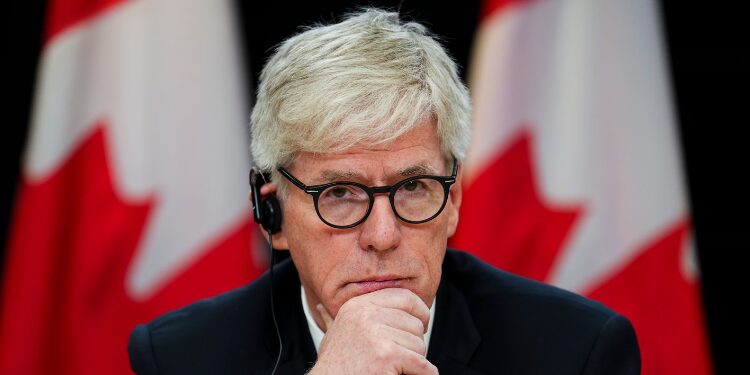
Speaking at the Canadian Nuclear Association Conference, Tim Hodgson, Minister of Energy and Natural Resource confirmed that Natural Resources Canada is developing the strategy, which is expected to be released by the end of 2026.
The proposed strategy builds on decades of domestic expertise and infrastructure, including the development and deployment of CANDU reactors, the country’s substantial uranium reserves, and a globally recognised safety and regulatory framework.
According to the government, these advantages position Canada to expand both its domestic energy capacity and its international role in a rapidly growing global market.
“Canada has long been a nuclear leader but we will not remain one by standing still. Our government is moving at speeds not seen in generations to get big things done, and nuclear energy is no exception.
“We must move urgently and strategically to remain at the forefront of innovation, working shoulder to shoulder with key partners to bring clean electricity, affordable bills and economic growth and security to all Canadians.”
Tim Hodgson
At its core, the strategy is designed to address what the government describes as a changing global landscape, where energy security is increasingly tied to national sovereignty and economic resilience. Policymakers argue that strengthening the nuclear sector will help ensure stable, affordable electricity while reducing reliance on external energy sources.
Also, the strategy will be structured around four key pillars: enabling new nuclear builds across Canada, positioning the country as a global supplier and exporter of nuclear technology and expertise, expanding uranium production and fuel opportunities, and advancing innovation in both fission and fusion technologies. Together, these priorities are intended to create a more integrated and competitive nuclear ecosystem.
This strategy will be implemented in collaboration with provinces and territories, utilities, industry stakeholders, Indigenous partners, and labour organisations, and will support the expansion of electricity grids, accelerate the electrification of the economy, and create thousands of jobs across multiple sectors.
The government also emphasised the economic potential of the global nuclear market, which is projected to grow significantly in the coming years. By strengthening its domestic capabilities, Canada aims to capture a larger share of this market while supporting trade diversification and long-term economic growth.
Nuclear energy already plays a notable role in the country’s energy mix, accounting for approximately 13 percent of electricity generation through 17 reactors located in Ontario and New Brunswick. The sector contributes around $22 billion annually to the national economy, highlighting its importance as both an energy source and an economic driver.
Canada is also a major player in global uranium production, with output representing roughly 24 percent of total global supply in 2024.
Defence Investment and Research Funding Reinforce Nuclear Expansion Plans

Alongside the strategy announcement, the federal government outlined a series of targeted investments aimed at strengthening both national defence capabilities and scientific research within the nuclear sector, signalling a broader effort to integrate energy policy with security and innovation priorities.
The Canadian government has announced an initial $40 million investment for 2026–2027 through the Department of National Defence to assess the feasibility of a Canadian-controlled microreactor. The technology is intended to provide heat and electricity to remote and northern facilities operated by the Canadian Armed Forces, particularly in regions where traditional energy infrastructure is limited.
The proposed microreactor initiative reflects a growing focus on ensuring operational resilience in remote environments, including the Arctic, where reliable energy supply is critical for defence and sovereignty.
According to Minister of National Defence, David J. McGuinty, “in the ever-evolving global threat landscape, Canada must strengthen its domestic capabilities to defend our interests, secure our sovereignty and shape our future.”
“This feasibility program is an important step in supporting Canadian-controlled nuclear energy technology and enabling a sustained defence presence in the Arctic and the North.”
David J.McGuinty
The government also highlighted long-term investments in research and innovation, including a commitment of $2.2 billion over ten years for infrastructure at Chalk River Laboratories, operated by Atomic Energy of Canada Limited.
This funding will support the development of modern research facilities, including an Advanced Materials Research Centre, and consolidate capabilities from older infrastructure into a more advanced, integrated campus.
These investments are expected to strengthen Canada’s position in key areas such as nuclear safety, security, reactor design, and fuel development. They will also support emerging technologies, including small modular reactors, and help extend the lifespan and reliability of existing nuclear systems.
Early-stage funding has already been allocated to support the microreactor feasibility programme, including investments in research and development at Chalk River Laboratories.
READ ALSO: GoldBod Reports ¢5.55bn Revenue in 2025