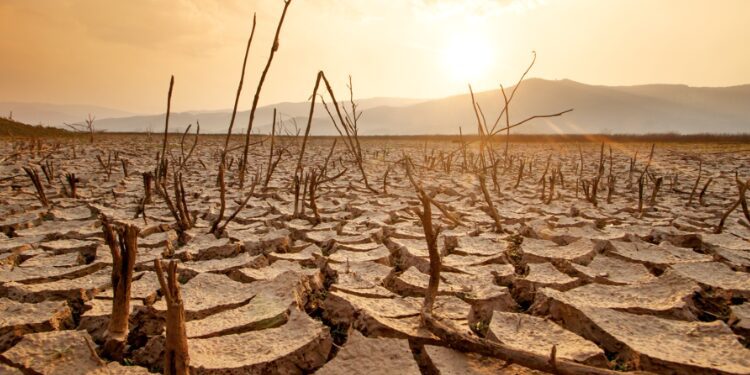
World Meteorological Organization (WMO) has warned that a new El Niño event is likely to develop in the coming months, increasing the risk of droughts, floods, heatwaves and other extreme weather events across large parts of the world as global temperatures continue to rise.
According to the UN weather agency, there is an 80% probability that El Niño conditions will emerge between June and August 2026, with a 90% chance that the phenomenon will persist through at least November. Forecast models indicate that the event is likely to be at least moderate in strength, although some projections suggest it could become significantly stronger.
The warning comes as scientists continue to monitor unusually warm ocean temperatures in the tropical Pacific, which are creating conditions favourable for the development of El Niño.
The climate pattern, which occurs every few years and typically lasts between nine and 12 months, is known for disrupting weather systems around the globe by altering atmospheric circulation and ocean temperatures.
According to UN Secretary-General António Guterres, “the science is clear: El Niño is arriving on our doorstep in the coming months with 90% certainty.”
“The world must treat it as the urgent climate warning it is. El Niño conditions will pour fuel on the fire of a warming world. Impacts will hit even harder, travel even farther, and cross borders with devastating speed.
“The only effective response is climate action equal to the crisis ending the addiction to fossil fuels, accelerating the shift to renewables, protecting the most vulnerable, and delivering early warning systems for all.”
António Guterres
WMO highlighted that sea surface temperatures in key parts of the central and eastern equatorial Pacific have been steadily rising and are now approaching El Niño thresholds. These warmer surface waters are being reinforced by unusually high subsurface temperatures across the tropical Pacific, where readings have exceeded average levels by more than six degrees Celsius in some locations.
Scientists explained that this vast reservoir of heat beneath the ocean surface is gradually feeding into the upper layers of the Pacific, accelerating the warming process and increasing confidence that El Niño conditions will become established during the coming months.
Atmospheric indicators are also showing signs consistent with El Niño development. The Southern Oscillation Index, a key measure used to monitor the atmospheric component of the phenomenon, has shifted toward patterns typically associated with the onset of an El Niño event.
The most recent El Niño, which occurred in 2023–24, ranked among the five strongest on record and contributed to unprecedented global heat in 2024, a year that set multiple temperature records worldwide.
Climate experts have warned that the return of El Niño could once again amplify the effects of human-induced climate change by pushing global temperatures even higher.
According to WMO Secretary-General, Celeste Saulo,“we need to prepare for a potentially strong El Niño event which will exacerbate drought and heavy rainfall and increase the risk of heatwaves both on land and in the ocean.”
“The most recent El Niño, in 2023-24, was one of the five strongest on record and it played a role in the record global temperatures we saw in 2024.”
Celeste Saulo
The UN agency also warned that above-average temperatures are expected across most regions of the world over the next three months. In addition to raising the likelihood of heatwaves, El Niño can significantly alter rainfall patterns, creating wetter-than-normal conditions in some regions while triggering severe drought elsewhere.
Rising Pacific Temperatures Signal Possible Return of El Niño
Historically, El Niño has been associated with increased rainfall in parts of South America, the southern United States, the Horn of Africa and Central Asia. Conversely, drier conditions are often experienced across Central America, northern parts of South America, the Caribbean, Australia, Indonesia and sections of South Asia.
The warming of Pacific Ocean waters can also influence tropical storm activity. El Niño conditions generally increase the likelihood of hurricanes forming in the central and eastern Pacific while suppressing storm development in the Atlantic basin.
The latest warning follows an unusually warm spring across several parts of Europe. Western Europe recently experienced record-breaking temperatures for May, with new monthly records reported in both the United Kingdom and Ireland.
Last week, WMO and UK Met Office warned that a new global temperature record is highly likely before the end of the decade, with the return of El Niño potentially accelerating that timeline.
Beyond weather impacts, climate experts are increasingly concerned about the implications for food security. Agricultural systems in many regions are already under pressure from rising temperatures, shifting rainfall patterns, and geopolitical disruptions affecting fertiliser supplies and food production.
The WMO indicated that its climate monitoring community will continue closely tracking developments in the Pacific Ocean and updating governments, humanitarian organisations, and climate-sensitive sectors as conditions evolve.
“The WMO community will be carefully monitoring conditions in the coming months to inform decision-making by governments, humanitarian agencies and climate-sensitive sectors.”
Celeste Saulo
WMO Secretary-General Celeste Saulo added that, “advance seasonal forecasts and early warnings are vital to save lives and cushion the impact on our economies and our communities.”
READ ALSO: Africa Deserves Seat on UN Security Council, President Mahama Insists