United Nations has warned that Haiti’s worsening security crisis cannot be solved through military operations alone, urging a broader international strategy that combines security efforts, political engagement, humanitarian assistance and long-term institution building to restore peace and stability in the Caribbean nation.
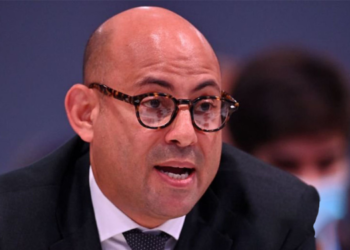
Addressing the Security Council, Carlos Ruiz Massieu, the Secretary-General’s representative leading BINUH, stressed that success in Haiti depends on multiple efforts moving together rather than relying solely on security operations.
Massieu warned that while restoring security is essential, it cannot deliver lasting peace without addressing the deeper conditions allowing criminal networks to expand their influence.
According to Massieu, Haiti needs a comprehensive strategy that lessens the influence and attractiveness of armed groups, fortifies governmental and judicial institutions, and provides chances for communities especially women and children that have been decimated by years of violence.
The warning coincides with Haiti’s ongoing struggle with the influence of strong armed organisations, especially in and around Port-au-Prince, the country’s capital. Up until recently, the estimated 26 gangs that operate throughout the nation seemed to be restricting humanitarian access, contesting government authority, and extending their territorial control.
UN officials contend that these groups now constitute a threat that goes beyond typical criminal activity.
The head of the UN Office on Drugs and Crime, Monica Juma, informed the Security Council that gangs are making more and more attempts to take over the networks that support daily life, such as food distribution chains, fuel supply, and transportation networks.
Speaking following a recent visit to Haiti, Juma claimed that armed groups were now trying to seize control of the nation’s administration and economic systems rather than just seize territory.
“Organized crime” she said is reshaping, and in some cases replacing, the authority of the State, creating what she described as “a governance crisis driven by organized crime, with consequences for the upcoming elections, humanitarian response and long-term prosperity.”
The growing influence of criminal networks has raised concerns about Haiti’s political future, particularly as the country prepares for eventual elections and continues efforts to rebuild democratic institutions following years of instability.
UN-Backed Force Makes Early Gains as Humanitarian Crisis Deepens
A major development in Haiti’s security response has been the deployment of the Gang Suppression Force, a UN-backed operation created to help Haitian authorities confront armed groups and restore control over affected communities.
The force began patrol operations in Port-au-Prince in June and has already carried out several missions targeting gang networks, according to UN officials.
Jack Christofides, head of the mission, informed the Security Council that the deployment of the GSF was progressing steadily and had shown encouraging early signs.
The force has conducted three major operations aimed at seizing weapons and ammunition, dismantling explosive devices and arresting individuals suspected of involvement in gang violence.
“No one should claim that Haiti’s security challenges will be solved overnight. But this is why continued support matters.”
Jack Christofides
UN has stressed that sustained international assistance will be critical if early security gains are to become permanent improvements rather than temporary setbacks.
Beyond the immediate security issues, Haiti’s crisis continues to have serious humanitarian repercussions.
UN agencies estimate that 6.4 million people in Haiti need humanitarian aid, and that about 1.5 million people have been forced to leave their homes, with children making up about half of those affected.
Acute hunger is predicted to affect over 5.8 million people this year, adding to the strain on communities already dealing with economic hardship, insecurity, and restricted access to essential services.
At a time when needs are still growing, humanitarian agencies have cautioned that their capacity to respond is being threatened by a lack of funds.
Children continue to be among the most vulnerable populations impacted by the violence. Young people in Haiti are being targeted, manipulated, and used by armed organisations, Vanessa Frazier, the Secretary-General’s representative for children and armed conflict, told the Security Council.
The UN confirmed 2,088 serious abuses against 1,661 children in 2025, including sexual assault, kidnappings, deaths, injuries, and recruitment.
According to UN estimates, children may make up over half of some gang groups. They frequently join gangs due to compulsion, poverty, dislocation, and a lack of safety.
Frazier highlighted that, in accordance with international standards, youngsters connected to gangs should be viewed primarily as victims in need of protection and assistance rather than just as offenders.
UN has repeatedly called for greater investment in education, child protection services, community programmes and economic opportunities to prevent young people from being drawn into criminal networks.
For Haiti, the challenge now extends beyond restoring security in the streets. The country faces the difficult task of rebuilding public trust, strengthening institutions and ensuring that communities affected by years of violence have a meaningful path toward recovery.
READ ALSO: AngloGold Ashanti, Perenti Reaches Agreement over Mine Contract