
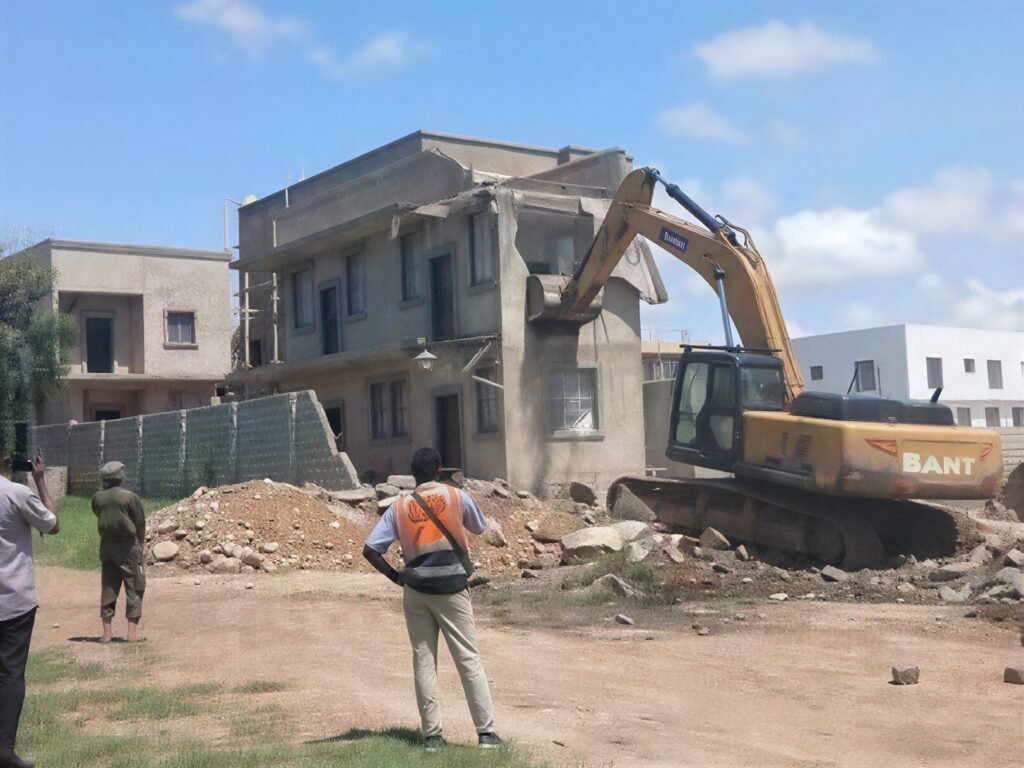
Prominent engineer, Michael Kosi Edey has criticised the recurring nature of building clearances within the Ramsar Site, describing them as more of a public spectacle than a sustainable urban planning solution.
He noted that a similar demolition exercise took place just last year under the Regional Minister and questioned why local assemblies continue to allow new structures to emerge shortly after such clearing efforts.
According to Mr Edey, fresh construction activities have sprung up near the Port Roundabout despite previous enforcement actions.
He highlighted that portions of water bodies have recently been filled to create land for new developments.



He further pointed to heavy traffic congestion in the area, attributing it to newly constructed warehouses situated opposite residential flats.
He questioned whether these large-scale developments possess legitimate state issued documentation.
Mr Edey insisted that public officials must account for how such structures receive approval within protected ecological zones.
He argued that the current system allows developers to encroach on waterways without facing immediate sanctions.
Expressing frustration over the cyclical nature of these exercises, he suggested that the lack of lasting results reflects systemic failure.
“So this demolition exercise is becoming like show business, where every year we go out there, we are demolishing, and then we come back, and the systems we have set up to prevent building in those waterways don’t seem to work.”
Michael Kosi Edey
He argued that the state appears more focused on the optics of demolition than on addressing the root causes of illegal construction.
Mr Edey further criticised local authorities for treating building permits as revenue-generating tools rather than regulatory instruments.
According to him, assemblies prioritise fee collection over the protection of environmentally sensitive areas.
He also alleged that political appointees often evade accountability even when they fail to safeguard Ramsar Site boundaries, adding that this culture undermines environmental protection.
Transferring underperforming officials between districts, he said, does little to resolve the problem.
He called instead for stricter penalties against those who authorise illegal developments in water zones.
The engineer described the state of the capital as indicative of a breakdown in discipline and governance.
He noted that visitors are often confronted with disorder and traffic chaos immediately upon leaving the airport.
He added that disregard for road regulations, coupled with the excessive use of sirens, reflects a wider failure in law enforcement and urban management.
Mr Edey called for a comprehensive overhaul of how protected lands are managed, stressing that repeated demolitions do not address underlying sanitation and environmental challenges.
He warned that plastic waste continues to flow into the sea due to the absence of a coherent control strategy and emphasised the need for accountability at every level of public administration.
He maintained that effective governance requires enforcing regulations before illegal structures are completed, not after the damage has already been done.
According to him, authorities must demonstrate a genuine commitment to environmental protection over political and financial interests.
He urged the Regional Minister to move beyond what he described as the “temporary theatre” of demolition exercises.
Municipal Assemblies Must Be Held Accountable – Kosi Edey
Michael Kosi Edey has called on the state to hold Municipal Chief Executives accountable for illegal developments within their jurisdictions, particularly in areas encroaching on the Ramsar Site.
He argued that these officials directly oversee the affected areas and must explain why assemblies remain inactive while developers continue to fill protected lagoons.
Mr Edey questioned the competence of local authorities, accusing them of prioritising revenue collection over public health, safety, and environmental protection.
He noted that developers are often allowed to build in restricted zones once they pay administrative fees.
He further criticised the need for Regional Ministers to lead enforcement task forces, stating that such responsibilities should ordinarily fall within the mandate of local assemblies.
He stressed that accountability is essential to breaking the cycle of illegal construction followed by demolition and urged the government to take disciplinary action against officials who fail in their duties.
“Who is going to ensure that if some of these people have paid legitimate fees to the Assemblies, those monies are refunded? If the monies are not refunded, who will be held accountable for issuing them with permits?”
Michael Kosi Edey

Mr Edey called for a thorough investigation into the financial processes within assembly permit departments and questioned whether the state intends to compensate individuals who held official permits for demolished structures.
He warned that failing to punish those who issue improper permits only entrenches corruption, adding that simple staff transfers do not constitute accountability.
The engineer also linked the disorder on Accra’s streets to weak local governance, arguing that poor enforcement of basic regulations contributes to a broader perception of lawlessness.
He criticised the behaviour of public officials who disregard traffic rules, noting that the misuse of sirens and privileges sets a negative example for citizens.
Mr Edey emphasised that land management issues require urgent and transparent intervention and rejected the notion that periodic demolitions represent effective policy.
He insisted that public officers must be held responsible for both their actions and inaction, warning that continued negligence will further degrade the country’s environmental and urban systems.
He also connected the environmental crisis along the coast to poor governance, noting that choked waterways continue to carry plastic waste into the sea.
According to him, Ghana needs leadership that prioritises long term urban sustainability over short term financial gains.
READ ALSO: Suhuyini Defends Bank Professionals Against Baseless Political Allegations