Five athletes carrying the hopes of displaced communities across Africa are set to compete for the Athlete Refugee Team (ART) at the 24th African Senior Athletics Championship in Accra, as stories of survival, sacrifice and ambition take centre stage alongside the competition.
Kun Waar Liem, Solomon Okeny, Lokoro Dario, Perina Nakang, all South Sudanese and Ethiopian Abdifatah Aden Hassan are the five-member contingent set to compete in Accra across different sprint and long-distance races.
The team, supported by World Athletics, will compete from May 12 to 17 at the University of Ghana Stadium in Legon, with athletes drawn from refugee camps in Kenya and South Sudan.
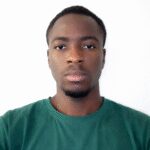
For South Sudanese sprinter Kun Waar Liem, the championship represents another opportunity to prove that refugees can compete at the highest level despite the hardships that forced them from their homes.
Kun will line up in the men’s 200m after months of training in Nairobi under coach Duncan Ayiemba alongside Ferdinand Omanyala.
“He mentors us a lot on how to progress in sprinting. When we are in training, we just try to catch up with him, and that’s how we gain.”
Kun Waar Liem
His teammate, Solomon Okeny, also from South Sudan, discovered athletics accidentally while living in Kakuma Refugee Camp after initially focusing on football. The sprinter recalled joining a local race because winners were rewarded with water and glucose. “In Kakuma’s heat, that was enough,” Okeny said. “I joined and that’s how I discovered I could run.”

Training in Nairobi has become a turning point for the refugee sprinters, who now share tracks and sessions with elite Kenyan athletes preparing for international competitions. The group is coached by Ayiemba, whose guidance has helped shape the development of the refugee athletes as they prepare for their first major continental championship.
Okeny, a fan of Wayde van Niekerk, said his athletics journey has become bigger than personal ambition, especially with the responsibility of caring for his younger siblings.
“I left school to take care of my sisters,” he explained. When free education ended in Kakuma and fees were introduced, I worried they might be pushed into early marriage. So I chose to lift them up through education.”
Solomon Okeny
While the sprint team trains in Nairobi, the middle and long-distance athletes are based in Kaptagat under the guidance of 2007 world 800m champion Janeth Jepkosgei.
Ethiopian-born Abdifatah Aden Hassan, who fled conflict in 2009 and still does not know where his parents are will also run for the Refugee Athlete Team. “When the war started, people scattered,” Hassan said. “I’ve been searching for my parents ever since, but I haven’t been successful yet.”
The 1500m runner grew up in Dadaab Refugee Camp after escaping with relatives and later found support through the IOC Refugee Athlete Scholarship programme and the Tegla Loroupe Peace Foundation.
“We Are Refugees by Name, Not by Choice”
Hassan believes the African Championships in Accra will allow the athletes to show that they are defined by their talent and determination rather than displacement. “We are refugees by name, not by choice,” he said. “Let’s live like others and work towards our goals; my dream for Accra is to be the best version of myself.”
South Sudan’s Lokoro Dario and Perina Nakang add international experience to the squad after previously competing on the global stage.
Dario featured at the World Athletics U20 Championships in Lima and is aiming to improve his personal best in the men’s 5000m.
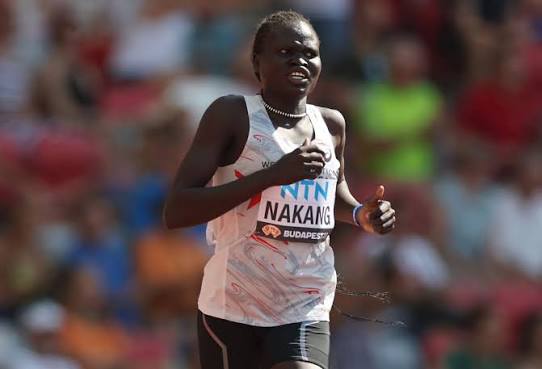
Nakang, meanwhile, heads into the women’s 800m after appearances at two World Athletics Championships and the Paris 2024 Olympic Games.
Her journey also began in conflict after fleeing South Sudan with her aunt during the war before eventually reuniting with her mother six years later in Kakuma. “The training has been going well,” Nakang remarked. “I am just fine-tuning a few things.”
Although Susan Nakiro will miss the championship through injury, her story remains part of the team’s inspiration. Forced to care for five siblings after war separated them from their parents, Nakiro survived harsh conditions in Kakuma before emerging as a promising middle-distance athlete.
As the African Championships begin in Accra, the Athlete Refugee Team arrives with more than medals in mind. For them, every race is also a statement of resilience, survival and hope for a future beyond conflict.
READ ALSO: Legal Education Law Could Expand Opportunities For Graduates — Kwame Adofo