Honourable Nana Agyei Baffour Awuah, Member of Parliament for Manhyia South
The Member of Parliament for Manhyia South, Honourable Awuah has backed ongoing reforms within Ghana’s legal education system while cautioning that unresolved concerns may affect access to professional law training. He argued that the country’s legal framework required adjustment due to changes in population growth, economic expansion and the emergence of new areas of commerce over the years.
The lawyer indicated that consensus exists on the need to improve legal education. He explained, however, that stakeholders remain divided on the most suitable framework for delivering professional training.
“There is no dispute that there is the need for the system to be reformed. The question in our case was always: what should be the approach in terms of the reform?”
Hon. Nana Agyei Baffour Awuah
Speaking about the legal education bill, the Lawyer noted that several countries had adjusted their legal education systems to meet changing demands. He referred to developments in the United Kingdom where professional legal training moved from the Inns of Court to accredited universities and institutions.
The Manhyia South MP recalled that some stakeholders had proposed expanding the Ghana School of Law while others preferred allowing universities to handle professional training. He added that successive governments examined different proposals as part of efforts to improve access to legal education.
ADVERTISEMENT
He also mentioned that land had been acquired in parts of the country under the previous administration to support expansion plans for legal training. Consequently, he described the latest reforms as part of a long standing national effort to reshape legal education.
“This has emerged as the latest attempt to reform the system. The question is whether this is going to resolve our challenges and whether it will prove to be the best approach in our quest to reform legal education. In some respects, one could say we should allow it to operate for some time, after which we would be in a position to review it and determine whether this is indeed what we want or whether amendments may be needed to improve it. For me, that would be a more conservative, or if you like, even a more progressive approach.”
Hon. Nana Agyei Baffour Awuah
Honourable Nana Agyei Baffour Awuah, Member of Parliament for Manhyia South
Additionally, he argued that Ghana had not conducted a comprehensive assessment of its legal manpower needs before introducing the reforms. In his view, the country requires specialised professionals within the legal sector beyond lawyers alone.
He therefore proposed the development of programmes for legal secretaries and other support professionals within the justice system. Such initiatives, he explained, could strengthen legal services across different sectors of the economy.
Pressure Mounts For Clarity On Professional Law Admissions
Honourable Awuah addressed concerns surrounding entrance examinations and admissions into professional law programmes. He observed that sections of the public had created the impression that the reforms completely removed examinations from the admission process.
The lawyer clarified that the legislation establishes separate accreditation systems for undergraduate law degrees and the Legal Practice Course. According to him, some institutions may receive approval to run LLB programmes without authorisation to offer professional legal training.
ADVERTISEMENT
He explained that graduates from such institutions would still need to seek admission into accredited centres offering the Legal Practice Course. Consequently, he noted that possession of an LLB degree may not guarantee automatic progression into professional training.
The Manhyia South MP also raised concerns about institutional capacity under the revised arrangement. He indicated that universities offering professional law training may face increasing pressure as more qualified applicants compete for limited spaces.
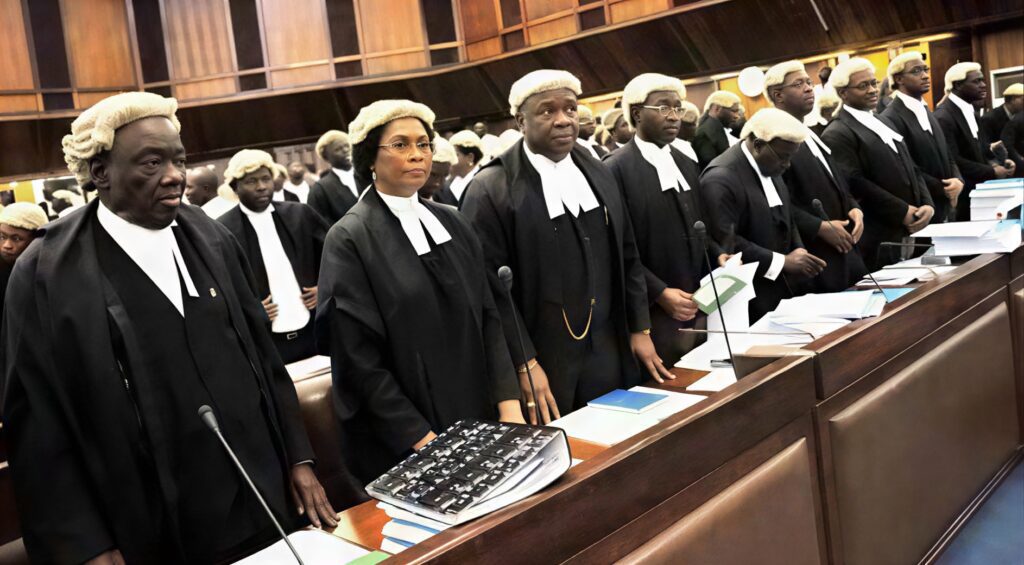
Ghanaian Legal Practitioners
In his view, infrastructure constraints could continue to affect admissions despite the expansion of accredited institutions. He added that competition for placement may become more pronounced as the reforms take full effect across universities.
ADVERTISEMENT
Despite those concerns, Honourable Awuah acknowledged that the reforms could improve accountability and transparency within the admission process. He suggested that the participation of more institutions may gradually strengthen confidence in legal education.
Honourable Nana Agyei Baffour Awuah, Member of Parliament for Manhyia South
Furthermore, he urged Parliament and stakeholders to approach discussions on legal reforms with greater objectivity. He added that national conversations should focus on practical challenges confronting students and professional training institutions.
The lawyer also called for clearer administrative guidelines on admissions and accreditation procedures. He argued that greater clarity from regulators would help students and institutions better understand the implementation of the new framework.