
The executive apparatus has initiated an aggressive fiscal intervention within the agricultural sector, executing a rapid release of state funds to insulate the domestic food supply chain and drive rural industrialization.
In a decisive policy announcement that shows a commitment to immediate field execution, the government has officially released GHS 1.677 billion to the Ministry of Food and Agriculture (MoFA), representing 85 percent of the Ministry’s total approved 2026 budget for Goods and Services as well as Capital Expenditure (CAPEX).
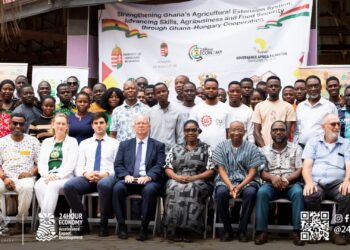
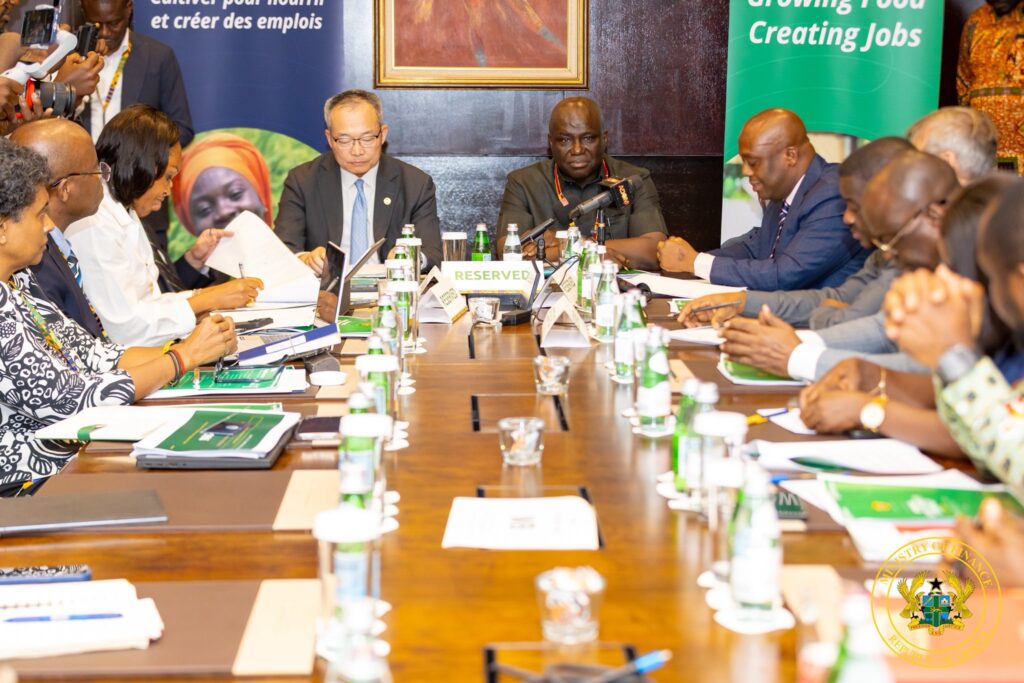
The development was disclosed by the Deputy Minister for Finance, Hon. Thomas Nyarko Ampem, during the high-profile launch of the Ghana National Pact for Agriculture and Economic Transformation, Food Security and Employment, widely known as the AGRICONNECT Compact, in Accra.
“Hon. Thomas Nyarko Ampem disclosed that the government released the funds to accelerate food production, strengthen agro-industrialisation, and improve food security across the country. He said the release demonstrated the government’s strong commitment to transforming the agriculture sector into a major driver of economic growth and job creation”
Ministry of Finance
This unprecedented acceleration of budgetary disbursements represents a deliberate macroeconomic strategy to position agribusiness as the primary engine for national economic growth, trade stabilization, and mass employment generation, bypassing traditional administrative delays and front-loading the majority of the annual agricultural budget.
The Ministry of Finance noted that Ghana is attempting to insulate local food production structures from global input volatility and climate uncertainty, while aggressively lowering the nation’s reliance on foreign food imports.
The disbursement is aligned with targeted value-chain interventions to upgrade agricultural capacity from subsistence operations to high-yield commercial enterprises. Rather than dispersing funds across generalized administrative lines, the Ministry of Finance has synchronized these releases with specific, measurable infrastructural and input programs.
Hon. Ampem clarified that a major portion of the funding has been committed directly to the farm mechanization pipeline, with GHS 581.4 million explicitly allocated for the establishment and operationalization of 50 comprehensive Farmer Service Centres across the country.
These centers are to become localized machinery hubs, giving smallholders and commercial farmers immediate access to modern tractors, processing equipment, and technical extension support to improve field productivity.
Simultaneously, the government is addressing the persistent challenge of water security and seasonal production caps by allocating GHS 110 million toward the expansion and modernization of irrigation infrastructure nationwide.
This infrastructural investment is intended to break the sector’s historical dependency on rain-fed agriculture, allowing for continuous, multi-season cultivation cycles that can guarantee a steady flow of primary commodities to domestic agro-processors and consumer markets throughout the fiscal year.
Input Subsidies and Protections
Beyond long-term physical infrastructure, the newly released capital addresses the immediate operational costs faced by rural producers, as the government earmarked GHS 515.3 million for the direct procurement and subsidized distribution of top-tier fertilizers and certified seeds.
This massive input pipeline is engineered to optimize crop yields per hectare, lowering production costs for local farmers and ensuring that domestic staples can compete effectively against imported alternatives on both price and quality.

Furthermore, Hon. Ampem highlighted targeting Ghana’s highly vulnerable livestock sector with a specialized funding allocation of GHS 244.9 million dedicated exclusively to the Poultry Farm-to-Table Project, commercially known as the Nkoko Nkitinkiti initiative.
This targeted capitalization is structured to rebuild the domestic poultry value chain, providing local poultry farmers with the necessary feed, veterinary inputs, and processing facilities to capture a significant share of the domestic meat market, which has historically been dominated by high-volume foreign imports.
To stabilize the commercial side of this production surge, an additional GHS 200 million has been injected directly into the National Food Buffer Stock Company, ensuring that the state can actively purchase excess domestic yields, prevent post-harvest losses, maintain floor prices for local producers, and efficiently manage strategic food reserves.
The financial framework underpinning the AGRICONNECT Compact reflects a broader fiscal strategy to correct structural trade imbalances that have long drained Ghana’s foreign exchange reserves.
During the Accra briefing, the Ministry of Finance emphasized that the country can no longer justify the annual expenditure of billions of dollars on importing basic food products that can be successfully cultivated within local ecological zones.
The current budgetary alignment represents a systemic effort to transform farming from a default survival activity into a highly lucrative, commercially viable agribusiness sector capable of absorbing a significant portion of Ghana’s youthful labor force.
“We are no longer interested in budget approvals that sit on paper. The focus now is execution, impact, and accountability. Agriculture must pay, and it must pay sustainably for our farmers and for the economy”
Hon. Thomas Nyarko Ampem, Deputy Minister for Finance

Recognizing that massive capital injections must be matched by equally stringent management frameworks to prevent waste, the Ministry of Finance is partnering with MoFA to implement rigorous monitoring and evaluation protocols across all implementing agencies.
The traditional model of unmonitored budgetary allocations is being completely replaced by an output-driven governance system where funding longevity is tied directly to performance benchmarks and strict project timelines.
To eliminate financial leakages and ensure administrative transparency, the state is rolling out a dedicated digital tracking system specifically designed to audit the disbursement and field utilization of agricultural funds down to the district level.
This digital oversight platform allows central treasury monitors to verify that inputs, equipment allocations, and project funds reach their intended beneficiaries without bureaucratic diversion.
READ ALSO: Without Quorum, Parliament Cannot Take A Decision — Former Deputy Speaker