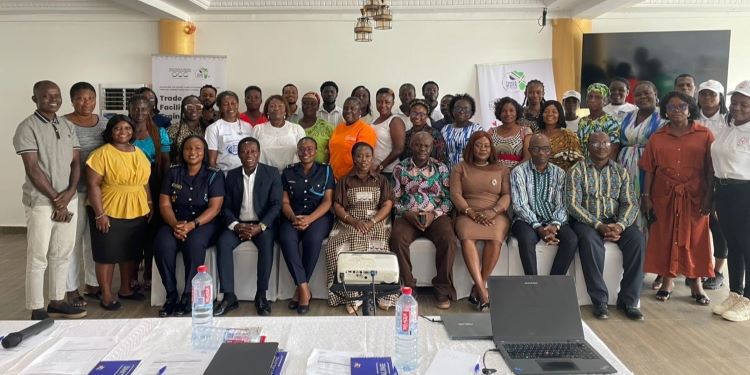
The Ghana National Chamber of Commerce and Industry Women and Youth Wing (GNCCI-WAY), in strategic partnership with TradeMark Africa (TMA), has concluded an intensive series of decentralized training workshops designed to dismantle the technical barriers hindering Small and Medium-Sized Enterprises (SMEs) from accessing global markets.
Spanning across three critical economic hubs – Cape Coast, Tarkwa, and Sekondi-Takoradi – the initiative directly addressed the competitiveness gap that often leaves local producers sidelined in international trade, moving beyond the capital and engaging 110 women and youth entrepreneurs in their own regional environments.
According to the GNCCI-WAY and TMA, this intervention is meant to effectively transition the national trade discourse from theoretical potential to operational execution, with the focus on institutional capacity being the primary lever for export growth.
“The initiative was designed to enhance participant’s skills, knowledge, and confidence in navigating the complexities of international trade and ultimately fostering economic growth in the export sector. The sessions provided practical, hands-on insights into the export process and to demystify key requirements for accessing international markets”
Ghana National Chamber of Commerce and Industry Women and Youth Wing
For many SMEs, the obstacle to international trade is not a lack of quality product, but a lack of technical literacy regarding the regulatory and logistical frameworks that govern global commerce.
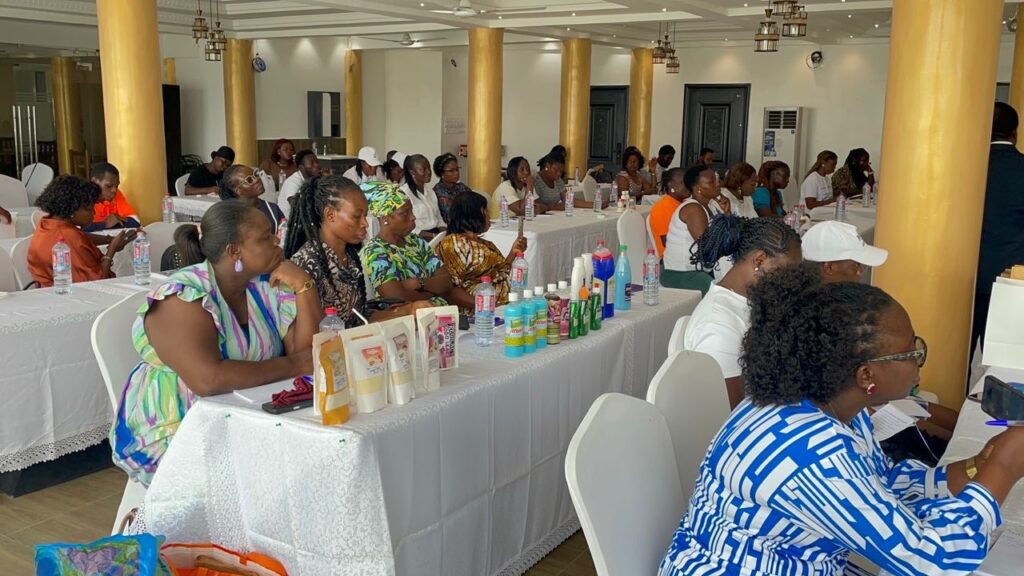
The workshops provided a rigorous deep dive into the complexities of international trade, focusing on the hard skills required to survive in a high-standard environment, by demystifying the requirements for entering foreign markets to equip the next generation of Ghanaian exporters with the tools necessary to compete on a level playing field.
A significant portion of the curriculum was dedicated to the logistical and financial architecture of trade, specifically covering INCOTERMS (International Commercial Terms), SME trade finance, and risk management. These are the critical “invisible” components of a successful export contract.
For an entrepreneur in Tarkwa or Sekondi-Takoradi, understanding INCOTERMS is the difference between a profitable shipment and a catastrophic financial loss due to misunderstood shipping responsibilities or insurance liabilities. Grounding the training in these technical realities ensured that the 110 participants were not just “export-aware,” but “export-capable.”
Furthermore, the emphasis on production audits, packaging, and regulatory compliance addressed the persistent issue of product rejection in international markets, as high-value markets in Europe, North America, and other parts of Africa have non-negotiable standards regarding quality and safety.
The workshops’ focus on certifications and quality standards ensured that Ghanaian SMEs are able to achieve the necessary compliance-readiness to maintain long-term relationships with international buyers. This technical arming is essential for diversifying Ghana’s export basket away from raw commodities toward value-added manufactured goods.
“The theme for the Training Workshop was ‘Enhancing the Export Competitiveness of Ghanaian SMEs through strengthened Institutional Capacity.’ Participants were taken through a range of critical trade facilitation topics, including an introduction to export, SME trade finance, understanding trade agreements, exporter registration processes, INCOTERMS, and regulatory compliance”
Ghana National Chamber of Commerce and Industry Women and Youth Wing

Decentralization and the AfCFTA Opportunity
The decision to host these workshops in the Western and Central regions was a strategic recognition of where Ghana’s actual production happens. Tarkwa, Cape Coast, and Sekondi-Takoradi are hubs for agribusiness, light manufacturing, and creative industries – sectors with high export potential for women and youth.
Decentralizing this training ensured that export intelligence was not a metropolitan luxury but a national resource. The regional focus allowed the GNCCI-WAY to capture a more diverse range of products and entrepreneurs who might otherwise be excluded from high-level trade dialogues in Accra.
A pivotal moment in the workshops was the presence of the Ghana Revenue Authority (GRA) to facilitate immediate exporter registration. This move provided the regulatory teeth to the training sessions.
For many SMEs, the paperwork required for formal export can be daunting. The GRA’s presence at the training sites transformed a theoretical learning exercise into a functional business milestone.
This was particularly significant for businesses looking to trade under the African Continental Free Trade Area (AfCFTA) framework, which offers unprecedented access to the regional market but requires strict compliance with rules of origin and registration protocols.
The direction of this partnership between GNCCI-WAY and TradeMark Africa is the creation of a resilient, inclusive, and professionalized private sector, targeting women and youth to address the demographic segments that often face the highest barriers to finance and formal trade networks.

The “strong engagement” recorded across all locations suggests a massive appetite for professional growth among these entrepreneurs. The feedback from participants indicates that the training has significantly bolstered their confidence, which is the final, essential ingredient for market expansion.
For the GNCCI-WAY, ultimately, the goal is to position Ghanaian SMEs to thrive within a rapidly evolving global trade landscape. As regional integration through the AfCFTA matures, the ability of local firms to understand trade agreements and documentation will determine who wins and who loses in the new continental economy.
Through these targeted capacity-building programs, the Chamber remains focused on ensuring that Ghanaian businesses are the primary beneficiaries of trade liberalization.
READ ALSO: Inflation and Hardship, Not Manifestos, Decide Elections – Analyst