
Fresh political data released by Global InfoAnalytics has reignited national debate over the economic factors that shape voter behaviour, with new analysis suggesting that inflation, rising living costs, and public perceptions about economic hardship remain the strongest determinants of electoral outcomes in Ghana, often outweighing campaign promises and political messaging.
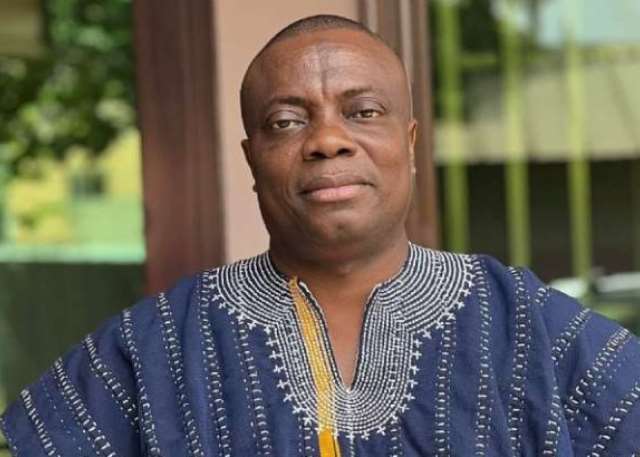
The analysis, presented by Mussa Dankwa, comes amid an ongoing public exchange between senior political actors over the role of economic stability in electoral politics.
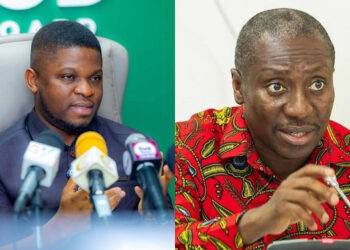
The discussion was triggered after Nana Akomea, a leading member of the New Patriotic Party and Chair of Dr. Bawumia’s Policy Committee on Communications, argued that “Ghanaians do not eat stability and low inflation,” a comment that quickly drew strong reactions from political opponents.
Among those who responded was Felix Kwakye Ofosu, who dismissed the assertion and argued that Ghanaians equally “do not eat instability,” while blaming the previous administration for what he described as economic mismanagement and collapse.
Against this politically charged backdrop, Mussa Dankwa stepped into the debate with what he described as hard polling evidence from the months leading to Ghana’s 2024 general election, insisting that the numbers tell a much clearer story about how voters make decisions when they head to the ballot box.
October 2024 Poll Reveals Economic Dissatisfaction
According to Mr Dankwa, the polling data was collected in October 2024, nearly three months before the national elections, and focused on how voters assessed the performance of the then government across key economic indicators.

He said the findings showed deep public dissatisfaction with economic management, particularly on issues directly affecting household welfare. “For voters, inflation and cost of living, which forms part of the broader economy, perhaps is the key decider when they head to the polls,” Mussa Dankwa stated.
He explained that in 2024, when voters were asked to rate the government’s performance on the economy, 41 percent described it as poor or very poor. Even more striking, 56 percent rated the government’s management of inflation and cost of living as poor or very poor.
Mr Dankwa argued that these figures reflected a growing disconnect between macroeconomic messaging and the lived realities of ordinary citizens, many of whom were grappling with rising food prices, transport costs, rent pressures, and declining purchasing power.
According to him, while governments may point to indicators such as exchange rate stability, declining inflation, or improved fiscal balances, voters often evaluate economic performance through a far more personal lens.
Living Standards Emerged as a Critical Election Variable
Beyond general economic perceptions, Dankwa said the survey also explored how voters felt about their own living standards compared to the previous year.
The findings, he noted, painted an equally troubling picture for the incumbent administration at the time. “When voters were asked to compare their standard of living with a year before, 46 percent said life had gotten worse just three months before the election,” he revealed.
For political analysts, such numbers often serve as early warning signs for incumbent governments, especially in democracies where economic conditions heavily influence electoral choices. Mr Dankwa noted that voter optimism was also notably weak during the survey period.

When respondents were asked whether they believed their standard of living would improve over the next twelve months while the government remained in office, only 40 percent answered in the affirmative. Twenty percent said no, while another 40 percent said they were uncertain.
He suggested that this lack of optimism may have significantly shaped the eventual electoral outcome. “We all saw what happened in the 2024 elections,” he remarked.
Direction of the Country Matters More Than Campaign Messaging
Perhaps the most politically significant aspect of Mussa Dankwa’s analysis relates to how voters perceive the overall direction of the country. Drawing on polling trends between January 2022 and January 2024, Mr Dankwa argued that there is a direct relationship between national sentiment and electoral outcomes.
He said when citizens believe a country is moving in the wrong direction, that perception often becomes politically fatal for incumbent administrations. “There is a direct correlation between the direction of the country and the outcome of general elections,” he stated.
He added that if the majority of voters believe the country is headed in the wrong direction three months before an election, the governing party is highly likely to lose power. “Your manifesto is very unlikely to change your destiny,” Dankwa concluded.
Economic Debate Likely to Shape Future Campaigns
The Executive Director Global InfoAnalytics, Mussa Dankwa’s latest intervention is expected to fuel broader political discussions as parties begin repositioning ahead of future electoral contests.
His data driven analysis reinforces a growing consensus among political analysts that economic realities, particularly inflation, employment, and living conditions, remain central to Ghana’s democratic decision making.
While campaign promises, policy documents, and party branding continue to play important roles, Mr Dankwa’s findings suggest that voters ultimately judge governments by how economic conditions affect their daily lives.
As Ghana’s political class continues debating the meaning of stability, one message emerging from the latest polling appears difficult to ignore. When voters feel economic pain, ballot choices often follow.
READ ALSO: Taylor Swift Dominates Nominations in the 52nd American Music Award