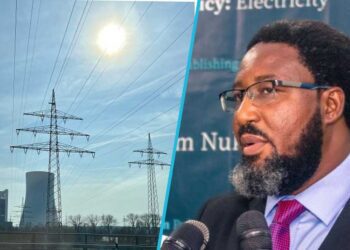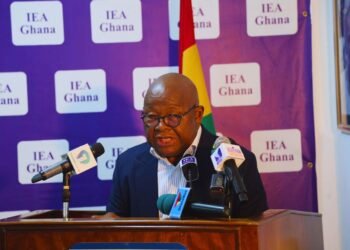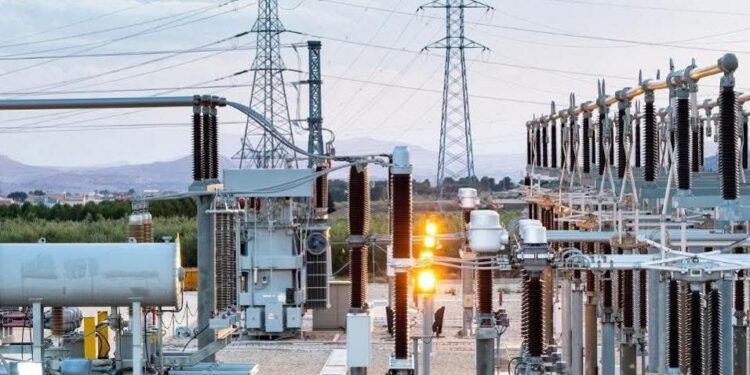
Lom Nuku Ahlijah, energy expert and lecturer, has hinted that the persistent structural and financial challenges plaguing the nation’s energy sector currently constitute the most severe threat to the macroeconomic stability and growth of Ghana.
He explained that this structural vulnerability remains an unresolved impediment to long-term national development, transcending political administrations and directly undermining broader fiscal interventions.
Ahlijah noted that while major state milestones, including the completion of the country’s $3 billion International Monetary Fund (IMF) Extended Credit Facility programme, are designed to stabilize the domestic economy, the financial magnitude of the energy sector’s liabilities completely matches or offsets these critical interventions.
The expert emphasized that until comprehensive and sustainable technical and structural solutions are aggressively implemented across the value chain, the power sector will continue to bottleneck national growth and create severe fiscal pressures.



“For example, the last NDC administration, before this one, already started working with the U.S. government on the Millennium Challenge Programme. A significant part of that funding was to reform the energy sector, which continued into the NPP administration, and of course, we are still back at that conversation right now. The reason is because the energy sector challenges is the greatest threat currently to the economy of Ghana.”
Lom Nuku Ahlijah, energy expert

Ahlijah indicated that the accumulated financial debt within the energy sector has reached an estimated $3 billion, a figure that highlights the severe imbalance in state enterprise operations.
He pointed out that historical efforts to reform the sector date back significantly, noting that the previous National Democratic Congress (NDC) administration initiated extensive collaboration with the United States government under the Millennium Challenge Programme, specifically targeting power sector capitalization and structural restructuring.
This critical financial and regulatory framework subsequently carried over into the succeeding New New Patriotic Party (NPP) administration, yet the fundamental operational deficits have persisted into the current year’s economic discourse.
The expert further observed that the core of this ongoing crisis is tied closely to the inherent inefficiencies of the power transmission and distribution infrastructure, where substantial amounts of generated power are lost before ever reaching the end consumer.
Systemic Losses and State Enterprise Inefficiencies
The financial hemorrhage within the domestic power pool is heavily exacerbated by both technical and commercial losses recorded by state-owned utilities.
In the power distribution network, the Electricity Company of Ghana (ECG) has historically faced high system losses, with recent performance indicators revealing that up to 32% of total electricity purchased by the distributor is lost before billing.
These losses are split between unavoidable technical dissipation—resulting from aging infrastructure, overloaded transformers, and long-distance transmission line sagging—and non-technical commercial losses, which include widespread power theft, inaccurate metering, and structural billing anomalies.
On the transmission side, the Ghana Grid Company (GRIDCo) also contends with high network transmission losses that impact the efficiency of high-voltage power transport across the country.
Ahlijah noted that while complete elimination of natural power dissipation is technically impossible, targeted capital investments, quality equipment procurement, and the deployment of advanced grid-stabilizing technologies by GRIDCo and ECG are essential to drive system losses down to internationally acceptable regulatory benchmarks.
The Burden of Sector Liabilities on Macroeconomic Stability
The staggering $3 billion debt overhang within the energy sector functions as a direct impediment to the state’s fiscal consolidation efforts, creating major contingent liabilities for the central government.
Because state-owned enterprises (SOEs) in the energy value chain consistently fail to achieve full cost recovery due to low collection rates and high system losses, the Ministry of Finance is frequently forced to deploy scarce public revenues to clear legacy arrears and cover generation shortfalls.
This persistent drain on the national treasury diverts vital capital away from critical social spending, infrastructure development, and youth employment initiatives.

Furthermore, the massive accumulation of energy sector debt severely weakens the balance sheets of domestic commercial banks and independent power producers (IPPs), which limits credit expansion and elevates financial sector vulnerabilities.
This structural imbalance undermines investor confidence, complicates public debt sustainability trajectories, and risks neutralizing the hard-won stabilization gains achieved under successive international economic assistance programmes.
Structural Reforms for National Grid Resilience
Addressing the systemic challenges of the energy sector requires a multi-faceted approach centered on infrastructure modernization, enhanced payment discipline, and private sector participation in the distribution segment.
Minimizing the technical loss margin requires substantial capital expenditure to upgrade old transmission corridors, replace obsolete distribution transformers, and implement smart metering systems across industrial and residential hubs.
Ahlijah illustrated the technical limits of power transport by explaining that “you can’t carry power from Accra to Tamale and then what you left Accra with will be the signal to Tamale,” pointing to the natural loss of signal and energy over vast distances.
To mitigate these natural constraints, energy experts advocate for localized generation, improved grid balancing, and the enforcement of stricter procurement standards for high-quality grid equipment.
Long-term sustainability will ultimately depend on enforcing strict corporate governance, finalized restructuring of retail distribution, and clearing the legacy debt cycle to ensure that the energy sector drives rather than diminishes Ghana’s economic growth.
READ ALSO: President Mahama Challenges WHO: Reform Must Be Real, Not Ritual